Average Cost To Build A House 2026 UK Guide
Welcome to our complete guide on the average cost to build a house in 2026 UK, where you’ll find a detailed breakdown of the expenses involved in turning a new home project into reality. With construction costs continuing to change due to labour rates, material prices, inflation, and regional market conditions, understanding what to budget has never been more important. Whether you are planning a self-build, working with a main contractor, or exploring the feasibility of a future project, this guide explains the key cost factors, typical price ranges, hidden expenses, and practical budgeting considerations that can help you make informed decisions. By the end, you will have a clearer understanding of current UK house building costs and the steps you can take to plan your project with greater confidence and financial certainty.
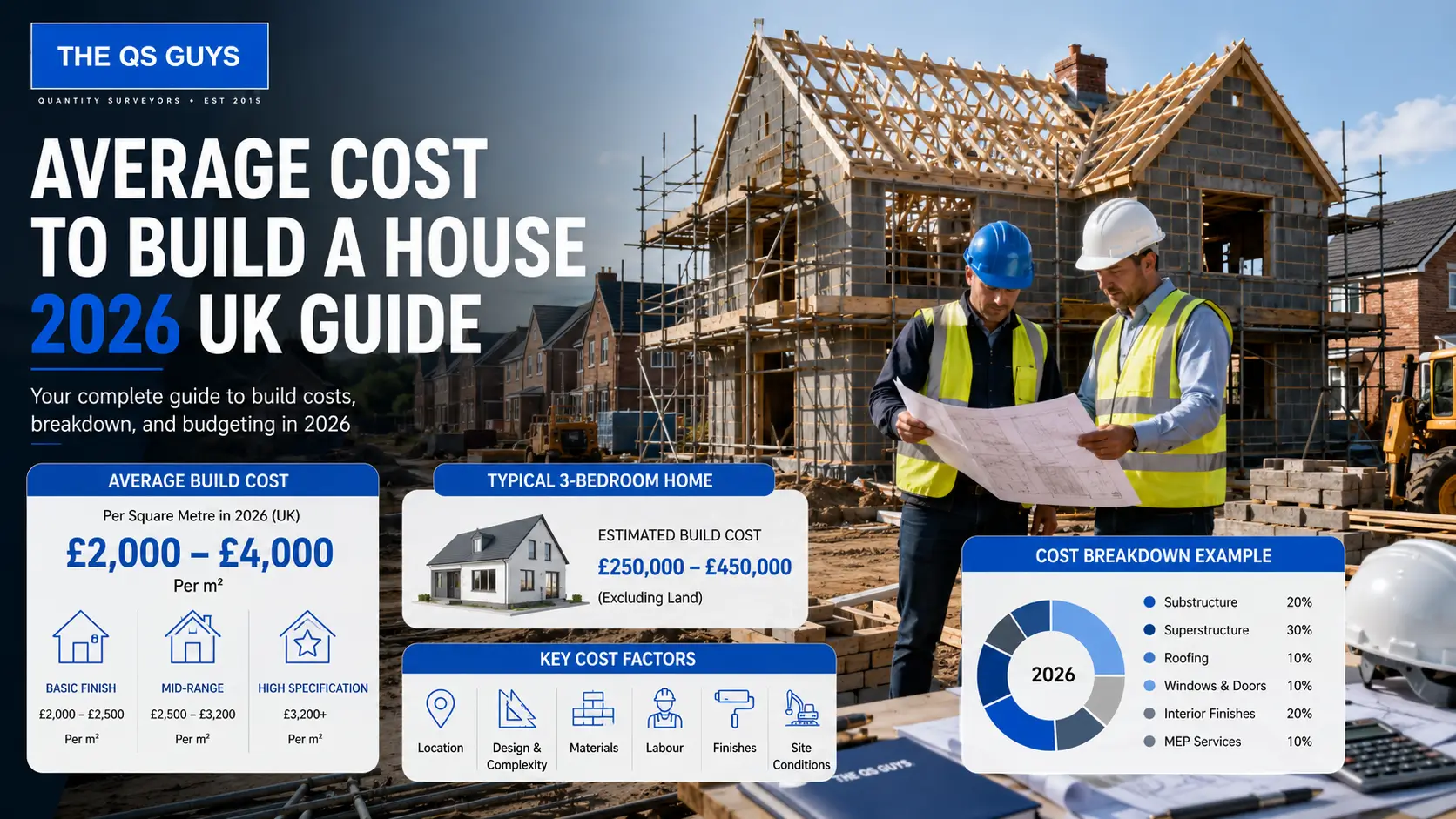
The average cost to build a house in 2026 UK is expected to range from £2,000 to £4,000 per square metre, depending on location, design complexity, specification level, and labour costs. A typical three-bedroom home may cost between £250,000 and £450,000 to build, excluding land purchase costs.
What Is The Average Cost To Build A House In The UK In 2026?
Understanding the average cost to build a house in the UK in 2026 is essential for anyone planning a new-build project. Construction costs continue to be influenced by material prices, labour availability, inflation, and regional market conditions. While every project is unique, knowing the typical cost ranges can help homeowners, self-builders, and developers create realistic budgets and avoid unexpected financial challenges during construction.
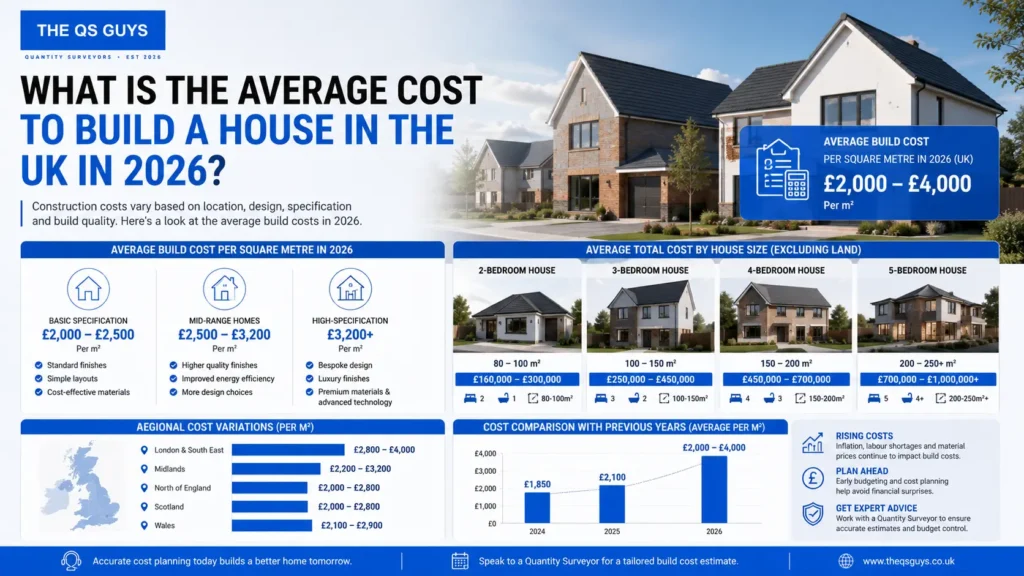
Average Cost Per Square Metre In 2026
One of the most common ways to estimate house building costs is by using the cost per square metre. This method provides a useful starting point for calculating potential project expenses before detailed plans and specifications are finalised.
In 2026, the average cost to build a house in the UK is expected to range between £2,000 and £4,000 per square metre. The final figure depends on factors such as design complexity, quality of materials, site conditions, and location.
- Basic Specification Homes: Typically range from £2,000 to £2,500 per square metre and often feature standard finishes, simple layouts, and cost-effective materials.
- Mid-Range Homes: Usually cost between £2,500 and £3,200 per square metre and include higher-quality finishes, improved energy efficiency, and more customised design features.
- High-Specification Homes: Frequently exceed £3,200 per square metre and may include bespoke architecture, luxury finishes, premium materials, and advanced home technology systems.
Regional location plays a significant role in construction pricing throughout the UK.
- London And South East: Generally experience the highest construction costs due to increased labour rates, strong demand, and higher operating expenses.
- Midlands And Northern England: Often offer more competitive build costs while still providing access to skilled trades and suppliers.
- Scotland And Wales: Costs can vary depending on local market conditions, accessibility, and labour availability.
While square metre rates provide a useful benchmark, they should always be viewed as estimates rather than fixed costs. A detailed cost plan is necessary for accurate budgeting.
Average Total Cost By House Size
The overall cost of building a house depends largely on the size of the property. Larger homes require more materials, labour, and construction time, resulting in higher total project costs.
Small House (2-Bedroom)
A typical two-bedroom home ranging from 80 to 100 square metres may cost between £160,000 and £300,000 to build, excluding land acquisition costs.
Several factors influence pricing:
- Design Simplicity: Compact layouts often reduce construction complexity and labour requirements.
- Material Choices: Standard specifications can help keep costs under control.
- Energy Performance: Modern insulation and energy-efficient systems may increase initial costs but reduce long-term operating expenses.
Two-bedroom homes are often popular among first-time self-builders because they provide a manageable balance between affordability and functionality.
Medium House (3-Bedroom)
Three-bedroom properties remain one of the most common house types built across the UK. A typical three-bedroom home measuring between 100 and 150 square metres may cost between £250,000 and £450,000 to construct.
Key cost drivers include:
- Floor Area: Larger homes require greater quantities of materials and labour.
- Interior Specifications: Kitchens, bathrooms, flooring, and joinery can significantly affect final costs.
- Structural Complexity: Open-plan layouts, vaulted ceilings, and custom features often increase budgets.
For many families, a three-bedroom property offers the best balance between living space and construction cost.
Large Family Home (4-5 Bedrooms)
Large family homes ranging from 180 to 250 square metres or more can cost anywhere from £450,000 to £1 million or higher, depending on the level of specification.
Major cost considerations include:
- Premium Finishes: High-end kitchens, luxury bathrooms, and custom-built features contribute substantially to project costs.
- Complex Design Elements: Multiple storeys, large glazing systems, and bespoke architectural details require specialised construction expertise.
- Additional Features: Home offices, entertainment rooms, integrated technology systems, and sustainable energy solutions increase overall investment.
Larger homes often benefit from careful cost planning to ensure budgets remain aligned with project goals throughout the construction process.
Cost Comparison With Previous Years
House building costs have experienced notable changes over recent years. Comparing 2026 costs with previous years provides valuable insight into current market conditions and future budgeting considerations.
How 2026 Compares With 2024 And 2025
Construction costs in 2026 are expected to remain higher than those seen in 2024 and 2025. While the sharp price increases experienced during earlier supply chain disruptions have moderated, several factors continue to place upward pressure on construction budgets.
Recent trends include:
- Higher Labour Costs: Ongoing demand for skilled trades continues to drive wage growth across the construction sector.
- Material Price Adjustments: Some material categories have stabilised, while others remain affected by global supply and manufacturing costs.
- Stricter Building Standards: Enhanced energy-efficiency requirements may increase upfront construction expenses.
As a result, projects that may have cost a certain amount in 2024 could require noticeably larger budgets in 2026.
Impact Of Inflation And Construction Market Trends
Inflation remains one of the most significant influences on construction costs. Rising prices affect nearly every aspect of a building project, from raw materials and transportation to labour and professional services.
Current market factors shaping costs include:
- General Inflation: Increased operating expenses throughout the construction supply chain.
- Labour Shortages: Competition for experienced tradespeople can push labour rates higher.
- Energy Costs: Manufacturing and transportation expenses continue to affect material pricing.
- Sustainability Requirements: Demand for energy-efficient construction methods and materials may increase project costs while improving long-term property performance.
Understanding these trends allows homeowners and developers to make informed decisions and establish realistic budgets before construction begins.
Building a house in the UK in 2026 requires careful planning, accurate budgeting, and a clear understanding of the factors influencing construction costs. By evaluating cost per square metre, considering property size, and recognising current market conditions, you can develop a more realistic financial plan and reduce the likelihood of costly surprises as your project progresses.
Key Factors That Affect House Building Costs
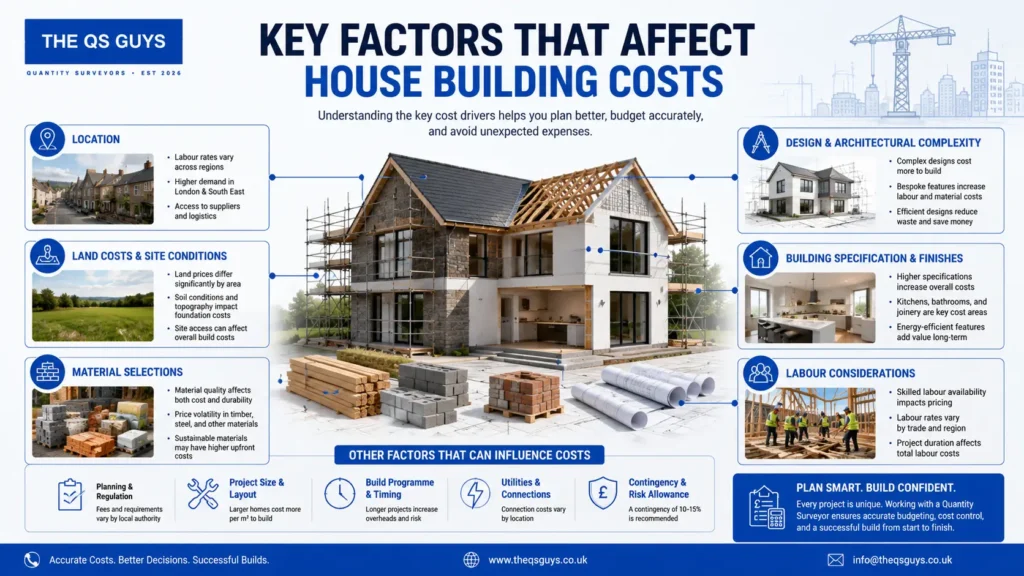
The average cost to build a house in the UK can vary significantly from one project to another. While many people focus on the final construction price, several factors influence the overall budget long before work begins on site. Location, land costs, design choices, build quality, and finish levels all play a major role in determining how much a project will cost. Understanding these factors can help homeowners create a more realistic budget and avoid unexpected expenses during construction.
Location And Regional Construction Costs
One of the biggest influences on house building costs is location. Labour rates, material availability, demand for contractors, and local market conditions can all affect pricing. Even two similar homes built to the same specification may have very different costs depending on where they are located.
London Vs South East
London and the South East remain among the most expensive areas in the UK for residential construction. Higher labour costs, increased demand for skilled trades, limited site access in urban areas, and higher operating expenses for contractors often contribute to increased project costs.
Some of the common cost drivers in these regions include:
- Higher Labour Rates: Skilled tradespeople generally command higher wages due to increased demand and living costs.
- Site Constraints: Urban developments often face access restrictions, parking limitations, and logistical challenges.
- Greater Demand: Strong competition for experienced contractors can increase pricing and extend project timelines.
Midlands
The Midlands often offers a more balanced construction market compared to London and the South East. Land values are generally lower, and labour rates can be more competitive, making the region attractive for self-build and residential development projects.
While costs are often lower, factors such as project size, local contractor availability, and material transportation can still influence final budgets.
North England
Many parts of Northern England continue to provide cost advantages for house builders. Lower land values and competitive labour markets can reduce overall project expenses. However, pricing can vary between major cities and rural areas.
Projects in growing cities may experience higher costs due to increased development activity and contractor demand, while rural locations may face additional transportation and infrastructure expenses.
Scotland
House building costs in Scotland can vary considerably depending on location. Projects in major urban centres may experience pricing similar to other UK cities, while remote regions can encounter additional expenses related to transportation, logistics, and contractor availability.
Weather conditions may also affect construction schedules, potentially influencing labour costs and project duration.
Wales
Wales offers a diverse construction market with costs varying between urban and rural locations. Some areas provide relatively affordable land opportunities, while remote sites may require additional investment in access roads, utilities, and groundwork preparation.
Local planning requirements and site-specific conditions can also influence project budgets across different parts of Wales.
Plot And Land Costs
Before construction begins, securing a suitable plot is often one of the largest financial commitments. The cost of land extends beyond the purchase price and can have a major impact on the overall feasibility of a project.
Land Purchase Considerations
The price of land varies significantly across the UK and is often influenced by location, planning status, local demand, and development potential.
Important considerations include:
- Planning Permission Status: Plots with existing planning approval often command higher prices.
- Development Potential: Larger plots or sites with expansion opportunities may carry a premium.
- Local Market Demand: Popular residential areas typically experience higher land values.
- Utility Availability: Access to essential services can influence both purchase price and development costs.
A seemingly affordable plot may require substantial additional investment if utilities, access, or planning requirements are not already in place.
Site Accessibility
Site access is often overlooked during the early planning stages but can significantly affect construction costs. Difficult-to-access sites can increase labour expenses, material delivery costs, and project timelines.
Common access-related challenges include:
- Restricted Entry Points: Narrow roads or limited vehicle access can complicate deliveries.
- Remote Locations: Longer travel distances may increase transportation expenses.
- Neighbouring Properties: Close proximity to existing buildings can limit construction activities.
Early site assessments can help identify potential issues before work begins.
Ground Conditions
Ground conditions play a critical role in foundation design and site preparation costs. Problems discovered during excavation can quickly increase project budgets if they require additional engineering solutions.
Examples include:
- Poor Soil Stability: Weak ground may require reinforced foundations.
- High Water Tables: Additional drainage systems may be necessary.
- Rock Excavation: Removing rock can significantly increase excavation costs.
- Contaminated Land: Specialist remediation work may be required before construction can proceed.
Professional ground investigations provide valuable insight into site conditions and help reduce financial uncertainty.
House Size And Design Complexity
The size and complexity of a home have a direct impact on construction costs. Larger properties require more materials, more labour, and longer construction periods. Design choices can further influence costs through engineering requirements and construction methods.
Simple Layouts Vs Bespoke Designs
Simple house designs are generally more cost-effective to build because they use straightforward construction methods and standard building components.
Features that often help control costs include:
- Rectangular Floor Plans: Easier and faster to construct.
- Standard Roof Shapes: Simpler structures reduce labour requirements.
- Efficient Room Layouts: Minimise unnecessary structural complexity.
Bespoke homes often require custom detailing, specialist materials, and additional design coordination, which can increase both construction and professional fees.
Number Of Storeys
The number of storeys affects structural requirements, access considerations, and overall construction complexity.
A two-storey home may provide more living space without increasing the building footprint, but additional costs may arise from:
- Structural Engineering Requirements: Additional load-bearing considerations.
- Staircase Installation: A significant construction component.
- Safety Measures: Increased labour and access requirements during construction.
The most cost-effective solution often depends on the specific site and design objectives.
Architectural Features
Architectural features can add visual appeal and improve functionality, but they often come with higher construction costs.
Examples include:
- Large Glazed Areas: Premium glazing systems and structural support.
- Vaulted Ceilings: Increased engineering and finishing requirements.
- Complex Roof Designs: Additional labour and materials.
- Feature Staircases: Bespoke manufacturing and installation costs.
Careful consideration of these features can help balance aesthetics with budget requirements.
Specification And Finish Levels
The specification level chosen for a project can dramatically influence final costs. Two homes with identical layouts may have very different budgets based solely on material and finish selections.
Standard Finishes
Standard finishes are typically selected to provide durability and functionality while maintaining cost control. These options are commonly used in many residential developments.
Examples include:
- Standard Kitchen Units: Functional and cost-effective.
- Basic Flooring Materials: Practical and widely available.
- Conventional Heating Systems: Proven and affordable solutions.
These selections can help keep construction budgets manageable without sacrificing quality.
Mid-Range Specifications
Mid-range specifications offer a balance between affordability and enhanced appearance. Many homeowners choose this level to improve long-term value while maintaining reasonable costs.
Typical upgrades may include:
- Improved Flooring Products: Greater durability and visual appeal.
- Higher Quality Kitchens: Better materials and storage solutions.
- Enhanced Energy-Efficient Features: Improved insulation and heating performance.
These upgrades often provide strong value for money and improved living comfort.
Luxury Finishes
Luxury specifications can significantly increase construction costs but deliver a premium living experience and unique design features.
Examples often include:
- Bespoke Joinery: Custom-built cabinetry and storage solutions.
- Premium Natural Materials: Stone, hardwood, and designer finishes.
- Smart Home Technology: Integrated automation systems.
- High-End Bathrooms And Kitchens: Luxury fixtures and fittings.
While luxury finishes increase upfront costs, they may enhance long-term property value and appeal to future buyers.
Understanding the factors that affect house building costs allows homeowners to make informed decisions before construction begins. By carefully evaluating location, land characteristics, design complexity, and finish levels, it becomes much easier to establish a realistic budget and reduce the risk of costly surprises throughout the building process.
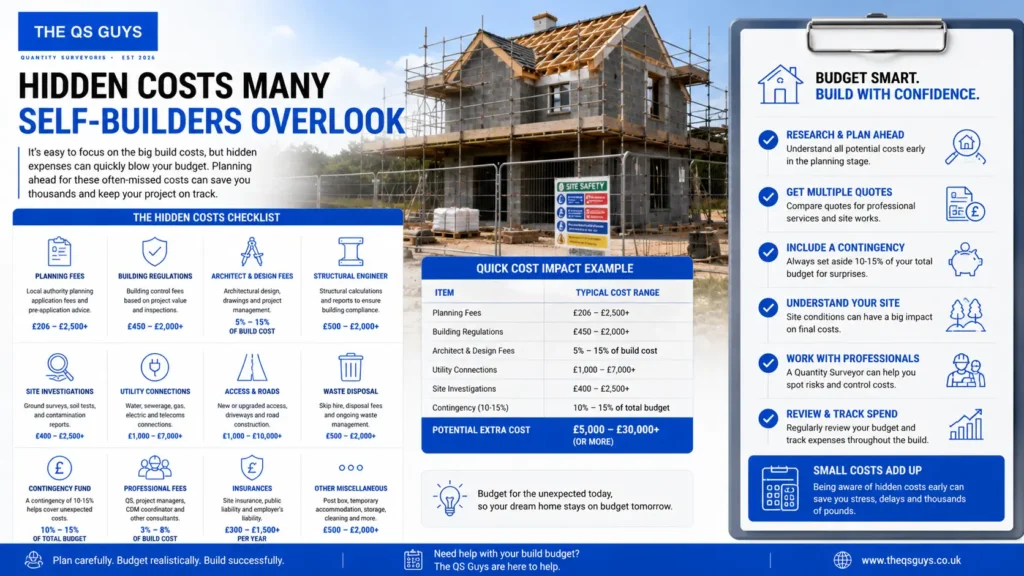
Detailed Breakdown Of House Building Costs
Understanding where your budget is allocated is one of the most important parts of planning a new-build home. House construction costs are made up of several stages, each contributing to the overall project budget. From preparing the site and laying foundations to installing heating systems and completing interior finishes, every element plays a role in determining the final cost. A detailed understanding of these cost categories can help homeowners make informed decisions, identify potential savings, and avoid unexpected expenses during construction.
Groundworks And Site Preparation
Groundworks and site preparation form the foundation of every successful construction project. Before any visible building work begins, the site must be prepared to support the structure safely and comply with building regulations. Costs at this stage can vary significantly depending on site conditions, accessibility, and ground stability.
Excavation
Excavation involves clearing the site and removing soil to create space for foundations and underground services. The complexity of excavation work depends on factors such as terrain, soil type, and the presence of existing structures or vegetation.
- Site Clearance: Removal of trees, vegetation, debris, and any existing structures before construction begins.
- Ground Conditions: Rocky ground, clay-heavy soil, or sloping sites often require additional machinery and labour.
- Access Requirements: Sites with limited access may increase excavation costs due to equipment restrictions.
Foundations
Foundations provide structural support and transfer the weight of the house safely into the ground. The type of foundation required depends on the ground conditions and structural design of the property.
- Strip Foundations: Commonly used for standard residential construction on stable ground.
- Raft Foundations: Often selected where soil conditions require greater load distribution.
- Specialist Solutions: Pile foundations may be necessary for challenging sites with poor ground stability.
Drainage
A properly designed drainage system protects the property from water-related issues and ensures compliance with local regulations.
- Surface Water Drainage: Directs rainwater away from the building and surrounding areas.
- Foul Water Systems: Connects toilets, kitchens, and bathrooms to the main sewer network.
- Site Protection: Effective drainage reduces the risk of flooding and long-term structural damage.
Utility Connections
Connecting essential services to the property is often overlooked during early budgeting stages.
- Water Supply: Installation and connection of mains water services.
- Electricity Connection: Bringing power from the local network to the property.
- Telecommunications: Internet and communication infrastructure for modern living.
- Gas Services: Where available, connection to the local gas network.
Structural Frame And Building Shell
The structural frame and building shell represent a significant portion of total construction costs. This stage creates the physical structure of the home and establishes its strength, durability, and energy performance.
Brick And Block Construction
Brick and block remains one of the most widely used construction methods throughout the UK.
- Durability: Long-lasting construction with strong resistance to weather conditions.
- Thermal Performance: Provides good insulation when combined with modern building materials.
- Market Familiarity: Most contractors have extensive experience working with brick-and-block systems.
Timber Frame Systems
Timber-frame construction has grown in popularity due to speed of installation and energy efficiency.
- Faster Build Times: Components are often manufactured off-site and assembled quickly.
- Energy Efficiency: High-performance insulation can be integrated within the frame structure.
- Reduced Labour Time: Shorter construction programmes can help control labour costs.
Steel Frame Options
Steel-frame systems are commonly used for larger or architecturally complex residential projects.
- Structural Strength: Supports wider spans and open-plan layouts.
- Design Flexibility: Suitable for modern and custom-designed homes.
- Precision Manufacturing: Off-site fabrication can improve construction accuracy.
Roofing Costs
The roof protects the home from the elements while contributing to energy efficiency, appearance, and long-term maintenance requirements. Roofing costs vary depending on materials, complexity, and insulation standards.
Roof Structure
The roof structure forms the framework that supports all roofing materials.
- Traditional Roof Construction: Built on-site using timber trusses and rafters.
- Prefabricated Trusses: Factory-produced systems that can reduce installation time.
- Design Complexity: Multiple roof angles and features increase labour and material costs.
Roof Coverings
The choice of roof covering affects both appearance and longevity.
- Concrete Tiles: Cost-effective and widely used throughout the UK.
- Clay Tiles: Durable and often chosen for premium residential properties.
- Slate Roofing: Long-lasting option with a distinctive appearance and higher upfront costs.
Insulation Requirements
Modern building regulations place significant emphasis on thermal efficiency.
- Energy Performance: Quality insulation reduces heat loss and energy consumption.
- Compliance Standards: New homes must meet strict insulation requirements.
- Long-Term Savings: Better insulation can lower heating costs throughout the property’s lifespan.
Windows And External Doors
Windows and external doors influence energy efficiency, security, natural light, and overall appearance. Material selection often balances budget considerations with performance expectations.
uPVC Options
uPVC remains one of the most popular choices for residential construction.
- Cost-Effective Solution: Generally offers the lowest upfront cost.
- Low Maintenance: Requires minimal upkeep throughout its lifespan.
- Good Thermal Performance: Helps improve energy efficiency when correctly installed.
Aluminium Systems
Aluminium windows and doors have become increasingly popular in contemporary home design.
- Modern Appearance: Slim frames allow larger glass areas and improved aesthetics.
- Durability: Resistant to corrosion and weather exposure.
- Long Service Life: Often provides excellent long-term value despite higher initial costs.
Energy-Efficient Glazing
Glazing performance plays a major role in meeting energy-efficiency standards.
- Double Glazing: Standard option for most new-build homes.
- Triple Glazing: Provides additional insulation and noise reduction benefits.
- Lower Energy Bills: Improved thermal performance contributes to reduced heating demand.
Internal Construction And Finishing
Internal finishes transform a structural shell into a comfortable and functional living space. This stage often provides homeowners with opportunities to tailor the property to their preferences and budget.
Plastering
Plastering creates smooth wall and ceiling surfaces ready for decoration.
- Internal Appearance: Provides a clean finish for painting and decorating.
- Quality Standards: Skilled workmanship is essential for achieving professional results.
- Preparation Work: Proper plastering improves the durability of interior finishes.
Flooring
Flooring choices can significantly influence overall project costs.
- Budget Options: Laminate and vinyl products offer cost-effective solutions.
- Mid-Range Choices: Engineered timber and quality carpets provide a balance of value and appearance.
- Premium Finishes: Natural stone and hardwood flooring increase project costs but may add long-term value.
Joinery
Joinery includes many of the fitted components within a home.
- Internal Doors: Available in a wide range of styles and materials.
- Staircases: Often become a key design feature within the property.
- Built-In Storage: Custom joinery can improve functionality and space utilisation.
Decorating
Decoration completes the interior and enhances the property’s overall appearance.
- Painting: Internal walls, ceilings, and woodwork require finishing.
- Surface Preparation: Proper preparation ensures long-lasting results.
- Material Quality: Higher-grade paints and finishes often provide better durability.
Mechanical And Electrical Installation
Mechanical and electrical systems are essential for comfort, safety, and everyday functionality. These installations represent a substantial portion of modern house-building costs and should be planned carefully during the design stage.
Plumbing Systems
Plumbing infrastructure delivers water throughout the property and supports key household functions.
- Water Distribution: Supplies kitchens, bathrooms, and utility areas.
- Waste Systems: Removes wastewater safely and efficiently.
- Future Flexibility: Proper planning allows for future upgrades and modifications.
Electrical Wiring
Electrical systems power the entire home and support modern technology requirements.
- Power Distribution: Supplies electricity throughout the property.
- Lighting Systems: Includes internal and external lighting installations.
- Smart Home Features: Increasingly incorporated into modern residential projects.
Heating Systems
Heating solutions affect both installation costs and long-term running expenses.
- Gas Boilers: Common option where mains gas is available.
- Heat Pumps: Increasingly popular due to energy-efficiency benefits.
- Underfloor Heating: Often selected for comfort and design flexibility.
Renewable Energy Options
Many homeowners are investing in renewable-energy technologies to reduce future energy costs.
- Solar Panels: Generate electricity from sunlight and reduce reliance on grid power.
- Battery Storage: Stores excess energy for later use.
- Sustainability Benefits: Supports lower carbon emissions and long-term energy savings.
Understanding how each construction stage contributes to the overall budget allows homeowners to plan more effectively and avoid costly surprises. By considering site conditions, construction methods, material choices, and building systems early in the process, it becomes easier to establish realistic budgets and make informed decisions that support a successful and financially controlled house-building project.
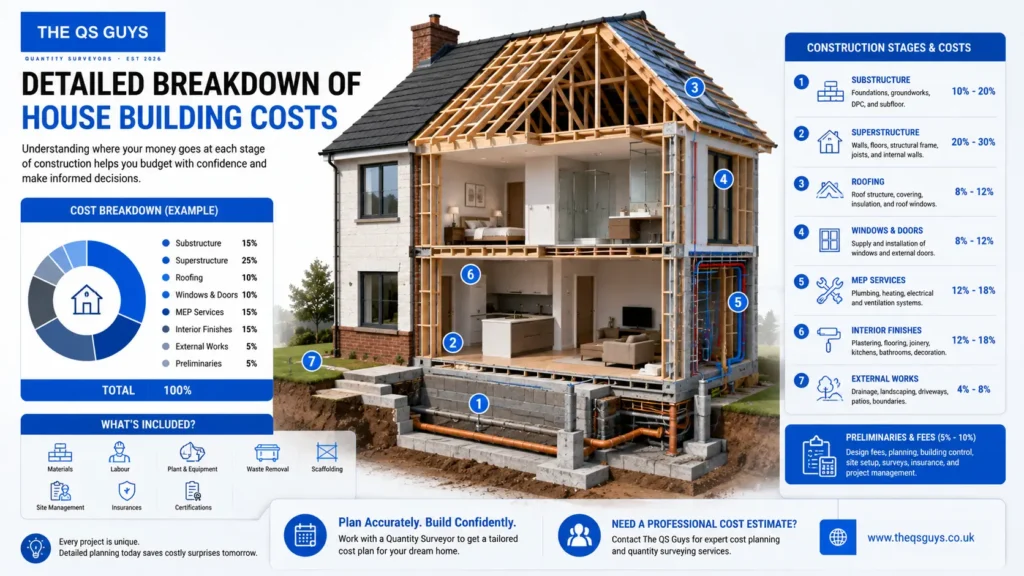
Labour Costs For Building A House In 2026
Labour costs remain one of the largest components of any residential construction budget in 2026. While material prices often attract attention, the cost of skilled trades can significantly influence the final price of a new-build home. Labour expenses vary depending on location, project complexity, availability of workers, and overall market demand. Understanding current labour rates and the factors driving these costs can help homeowners, developers, and self-builders create more accurate budgets and avoid unexpected financial pressure during construction.
Current UK Labour Rates
The cost of hiring skilled construction professionals continues to rise as demand for experienced workers remains strong across many parts of the UK. Labour rates can differ based on region, experience level, and the type of project being undertaken.
Builders
Builders typically oversee general construction work and coordinate multiple stages of a project. Daily rates for experienced builders can range from £180 to £350 per day, depending on location and project requirements. Larger projects often require teams of builders working together, making labour one of the most significant cost categories within the overall house construction budget.
- Project Management: Many builders also coordinate subcontractors and site activities, adding value beyond physical construction work.
- Experience Level: Highly experienced builders often command higher rates due to their ability to maintain quality standards and avoid costly mistakes.
- Project Complexity: Bespoke homes and architect-designed properties generally require more labour hours than standard house designs.
Bricklayers
Bricklayers play a critical role in constructing walls, foundations, and structural elements. Their expertise directly affects both the appearance and structural integrity of a property.
- Average Rates: Bricklayers commonly charge between £180 and £300 per day depending on experience and region.
- Productivity Factors: Weather conditions, site access, and design complexity can affect the speed of work and overall labour costs.
- Specialist Work: Decorative brickwork and intricate architectural features often require additional time and expertise.
Carpenters
Carpenters are involved throughout the construction process, from structural framing to interior finishing work. Their contribution extends well beyond timber installation.
- Average Rates: Many carpenters charge between £180 and £320 per day.
- Structural Work: Roof structures, floor systems, and timber frames require precise workmanship.
- Finishing Work: Internal doors, staircases, skirting boards, and cabinetry can significantly increase labour requirements on high-specification homes.
Electricians
Electrical installations have become more complex as modern homes incorporate advanced technology, energy-efficient systems, and smart-home features.
- Average Rates: Qualified electricians typically charge between £250 and £450 per day.
- Compliance Requirements: All electrical work must meet current UK building regulations and safety standards.
- Technology Integration: Electric vehicle charging points, solar systems, and smart-home installations often increase labour costs.
Plumbers
Plumbers are responsible for water supply systems, drainage, heating systems, and bathroom installations. Their work is essential to the functionality and comfort of a completed home.
- Average Rates: Professional plumbers commonly charge between £200 and £400 per day.
- Heating Systems: Installation of underfloor heating and renewable-energy systems can require additional labour.
- Specialist Expertise: Complex plumbing layouts or luxury bathroom installations may increase overall costs.
Skilled Labour Shortages And Their Impact
The UK construction sector continues to face ongoing workforce challenges that affect both project costs and construction schedules. A shortage of experienced tradespeople has placed additional pressure on contractors and clients alike.
Ongoing Workforce Challenges
Several factors continue to contribute to labour shortages across the construction industry. An ageing workforce, growing construction demand, and a limited pipeline of new skilled workers have created recruitment challenges in many regions.
- High Demand: Large infrastructure and housing projects compete for the same skilled workers.
- Skills Gap: Certain trades face shortages due to fewer young workers entering the industry.
- Retirement Trends: Experienced professionals leaving the workforce reduce the available labour pool.
- Training Delays: Developing qualified tradespeople takes time, limiting short-term solutions.
As a result, contractors often need to offer higher wages to attract and retain skilled workers.
Effect On Project Budgets And Timelines
Labour shortages can affect more than just wage rates. They can also influence project scheduling, resource allocation, and overall construction efficiency.
- Higher Labour Costs: Increased competition for workers often pushes rates upward.
- Longer Wait Times: Contractors may experience delays in securing specialist trades.
- Scheduling Challenges: Construction programmes can be extended when key workers are unavailable.
- Budget Pressure: Delays may create additional costs through prolonged site management and equipment hire.
For homeowners planning a new-build project, early contractor engagement can help reduce the risk of labour-related delays.
Labour Cost Trends For 2026
Industry forecasts suggest that labour costs will remain elevated throughout 2026 as demand for housing and construction projects continues. Understanding these trends can help project owners plan more effectively and establish realistic budgets.
Market Forecasts
Construction professionals expect labour costs to remain a major contributor to overall building expenses during 2026. While the rate of increase may moderate compared to previous years, upward pressure is likely to continue.
- Strong Housing Demand: New residential developments continue to drive demand for skilled workers.
- Infrastructure Investment: Major public projects create additional competition for labour resources.
- Wage Growth: Tradespeople are expected to see continued wage increases in response to market conditions.
- Specialist Skills Premium: Highly skilled trades may experience stronger rate growth than general labour positions.
These trends reinforce the importance of obtaining accurate cost estimates before construction begins.
Regional Variations
Labour costs can differ significantly across the UK. Location remains one of the most important factors influencing construction budgets.
- London And The South East: Typically experience the highest labour rates due to strong demand and higher living costs.
- Midlands: Often provide a balance between labour availability and competitive pricing.
- Northern England: Labour costs can be lower than southern regions, although demand remains strong in some cities.
- Scotland And Wales: Regional differences vary depending on local market conditions and project demand.
Understanding local labour market conditions is essential when estimating the average cost to build a house in 2026 UK, as regional labour variations can have a substantial impact on the final project budget.
Labour costs will continue to play a major role in residential construction budgets throughout 2026. By understanding current rates, workforce challenges, and market trends, homeowners can make more informed decisions, create realistic budgets, and better prepare for the financial demands of building a new home.
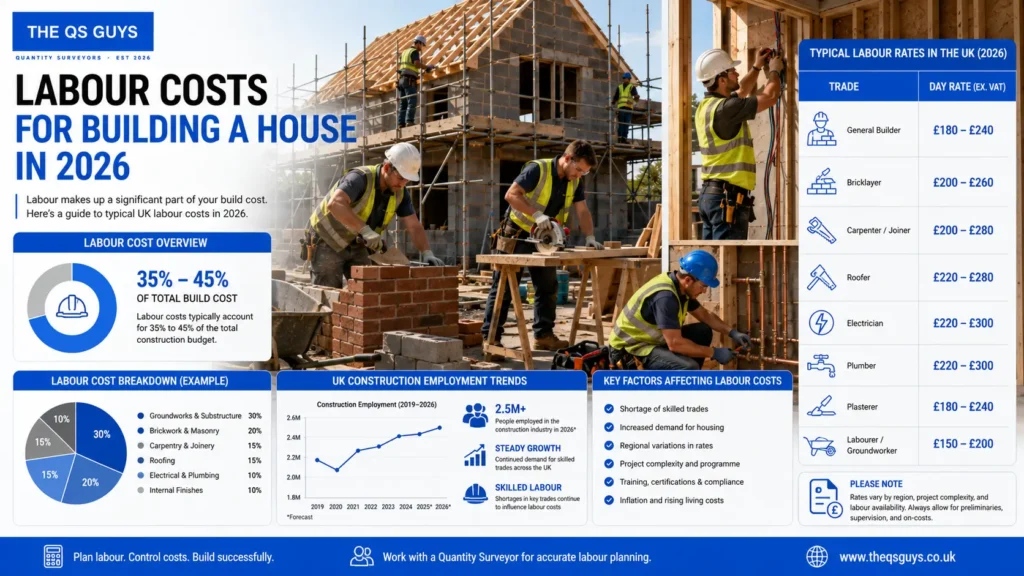
Material Cost Trends Affecting UK House Builds In 2026
Material prices remain one of the most important factors influencing house building costs across the UK. While labour expenses continue to affect project budgets, fluctuations in the cost of construction materials can significantly impact the overall price of a new-build home. In 2026, developers, self-builders, and homeowners are expected to face ongoing challenges related to material pricing, procurement planning, and supply chain pressures. Understanding these trends can help improve budgeting accuracy and reduce the risk of unexpected costs during construction.
Construction Materials Seeing Price Changes
Several key construction materials continue to experience price fluctuations due to market demand, manufacturing costs, energy prices, and global supply conditions. Since these materials make up a substantial portion of most residential construction projects, even modest increases can affect the total build cost.
Timber
Timber remains one of the most widely used materials in UK residential construction. It is commonly used for roof structures, timber-frame systems, flooring, internal joinery, and finishing work.
Price changes in the timber market are often influenced by:
- Global Demand: Increased demand from residential and commercial construction sectors can place pressure on supply.
- Import Dependency: The UK imports a significant amount of timber, making prices vulnerable to international market conditions.
- Transportation Costs: Shipping and distribution expenses can directly affect material pricing.
For self-builders and developers, timber price increases can impact structural framing costs as well as interior finishing budgets.
Concrete
Concrete is essential for foundations, groundworks, floor slabs, retaining structures, and other structural components. Its cost is closely linked to energy prices, raw material availability, and transportation expenses.
Factors affecting concrete pricing include:
- Cement Production Costs: Energy-intensive manufacturing processes can increase production expenses.
- Aggregate Availability: Local supply shortages may affect pricing and availability.
- Fuel Costs: Transportation expenses influence the final delivered price of ready-mix concrete.
Because concrete is used extensively during the early stages of construction, price increases can affect project budgets before the building shell is even complete.
Steel
Steel plays a critical role in many modern house designs, particularly where large open-plan spaces, structural supports, or complex architectural features are involved.
Several factors continue to influence steel pricing:
- Manufacturing Costs: Energy and production expenses directly affect steel prices.
- International Markets: Global demand and trade conditions can create price volatility.
- Construction Activity Levels: Increased building activity often drives higher demand for structural steel products.
Projects that rely heavily on steel-framed construction may experience greater exposure to market price fluctuations.
Insulation
Energy-efficiency requirements continue to shape modern building standards, making insulation a major component of residential construction costs.
Common insulation products include:
- Rigid Insulation Boards: Frequently used in walls, roofs, and floors.
- Mineral Wool Insulation: Popular for thermal and acoustic performance.
- Spray Foam Systems: Used in specific applications requiring enhanced insulation performance.
Changes in manufacturing costs and environmental regulations can influence insulation pricing. As energy-performance standards become stricter, builders may also require larger quantities of insulation products to meet compliance requirements.
Roofing Products
Roofing materials vary significantly in price depending on the chosen specification and design requirements.
Popular roofing products include:
- Concrete Roof Tiles: Often considered a cost-effective option.
- Clay Roof Tiles: Generally more expensive but valued for durability and appearance.
- Metal Roofing Systems: Increasingly popular for modern house designs.
- Slate Roofing: Typically associated with premium residential projects.
Material availability, transportation costs, and manufacturing expenses can all influence roofing prices throughout 2026.
Supply Chain And Procurement Factors
Beyond material pricing itself, supply chain conditions continue to affect construction projects across the UK. Even when material prices remain relatively stable, delays and availability issues can create additional costs and scheduling challenges.
Availability
Material availability remains a critical consideration when planning a new-build project. Certain products may experience temporary shortages due to manufacturing disruptions, increased demand, or import-related challenges.
Builders can reduce potential delays by:
- Planning Early: Identifying key materials before construction begins.
- Confirming Supply: Checking availability with suppliers during the design phase.
- Allowing Flexibility: Considering suitable alternative products where appropriate.
Early procurement planning often helps prevent costly project interruptions.
Lead Times
Lead times refer to the period between ordering materials and receiving them on-site. Extended lead times can delay construction schedules and increase overall project costs.
Products commonly affected by longer lead times include:
- Custom Windows And Doors: Bespoke products often require extended manufacturing periods.
- Structural Steel Components: Fabrication and delivery schedules can vary.
- Specialist Roofing Materials: Imported or premium products may require additional lead time.
Accurate scheduling and procurement planning can help minimise the impact of delivery delays.
Import Costs
Many construction products used in UK residential projects are imported from overseas markets. Changes in exchange rates, shipping expenses, customs charges, and international trade conditions can all influence final material costs.
Import-related factors may include:
- Currency Fluctuations: Exchange rate changes can affect purchasing costs.
- Freight Charges: Increased shipping costs can raise product prices.
- Trade Regulations: Import requirements may influence supply availability and pricing.
Monitoring these factors can help builders make informed purchasing decisions throughout the project lifecycle.
How Material Costs Affect Overall Budgets
Material costs represent a major component of every house building budget. Understanding their impact allows homeowners and developers to create more realistic financial plans and reduce the likelihood of cost overruns.
Typical Percentage Of Build Costs
Materials typically account for a substantial share of overall construction expenses. While exact figures vary depending on the project type and specification level, materials often represent between 30% and 50% of total build costs.
The proportion can increase when:
- Premium Finishes Are Selected: High-end products generally carry higher material costs.
- Complex Designs Are Used: Bespoke construction often requires specialised materials.
- Energy-Efficiency Standards Increase: Additional insulation and performance-related products may be required.
Understanding this percentage helps improve budgeting accuracy during the planning stage.
Risk Management Strategies
Managing material-related risks is an important part of controlling construction costs. A proactive approach can help protect budgets from sudden price increases and supply chain disruptions.
Effective strategies include:
- Early Cost Planning: Establishing realistic budgets before construction begins.
- Fixed-Price Quotations: Securing pricing where possible before market conditions change.
- Supplier Diversification: Reducing reliance on a single supplier.
- Contingency Allowances: Including a financial buffer for unexpected cost increases.
- Professional Cost Monitoring: Regularly reviewing budgets throughout the project.
Working with experienced construction professionals and quantity surveyors can help identify potential risks early and provide greater financial certainty throughout the build process.
Material costs will continue to play a significant role in determining the average cost to build a house in the UK during 2026. By understanding current pricing trends, monitoring supply chain conditions, and implementing effective procurement strategies, homeowners and developers can make more informed decisions and maintain better control over their construction budgets.
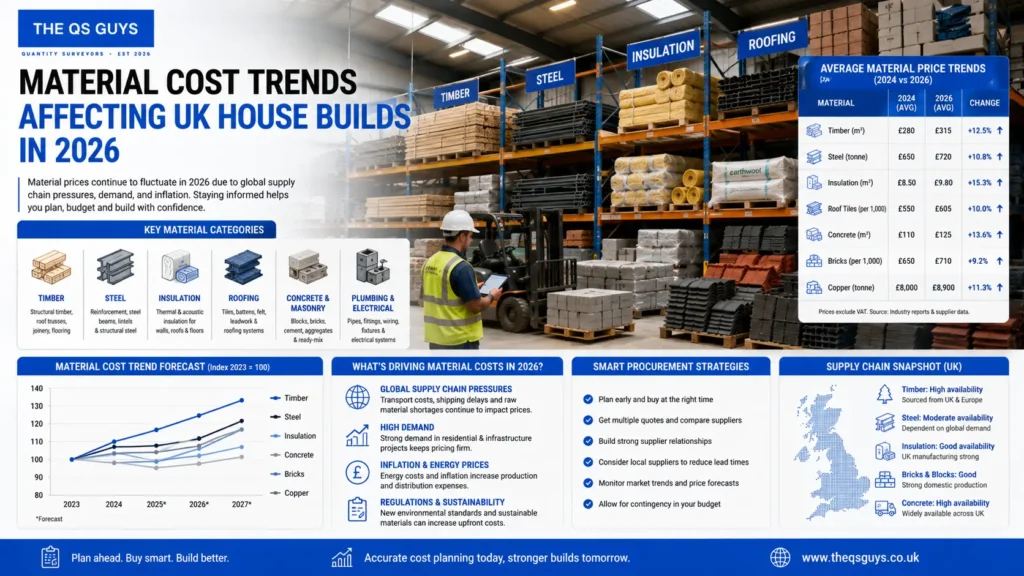
Hidden Costs Many Self-Builders Overlook
Many people focus on the visible costs of constructing a home, such as materials, labour, and finishes, but a significant portion of the budget is often spent on expenses that are not immediately obvious. These hidden costs can catch self-builders by surprise and place unnecessary pressure on finances if they are not accounted for early in the planning process. Understanding these expenses before construction begins can help create a more realistic budget and reduce the risk of delays or unexpected financial challenges.
Planning And Building Regulation Fees
Before any construction work can begin, most self-build projects require approvals, assessments, and inspections to ensure compliance with local regulations. These administrative costs are often overlooked during early budgeting but can add a substantial amount to the overall project cost.
Planning Applications
Planning permission may be required depending on the size, location, and nature of the proposed development. The application process involves submitting detailed plans and supporting documentation to the local authority for review.
- Application Fees: Local councils charge fees to assess planning applications and process approvals.
- Supporting Documentation: Additional reports such as environmental assessments, drainage strategies, or ecological surveys may be required.
- Professional Preparation: Many homeowners hire planning consultants or architects to prepare and submit applications correctly.
The complexity of the project often determines how much these expenses will cost, making it important to investigate planning requirements before purchasing land or finalising designs.
Building Control Fees
Building regulations exist to ensure that new homes meet safety, structural, and energy-efficiency standards. Building control fees are separate from planning permission costs and apply throughout the construction process.
- Plan Review Charges: Building control officers assess construction drawings before work begins.
- Site Visit Fees: Inspections are carried out at key construction stages to verify compliance.
- Completion Certification: Final certification is required before the property can be occupied or sold.
These fees vary depending on the size and complexity of the project but should always be included in a self-build budget.
Inspections
Various inspections may be required during construction to verify that work complies with approved plans and building regulations.
- Foundation Inspections: Checks ensure foundations meet structural requirements before concrete is poured.
- Structural Assessments: Critical structural elements may require approval before construction continues.
- Final Inspections: The completed property is assessed before certification is issued.
Missing or delaying inspections can lead to costly corrective work, making careful scheduling essential.
Professional Consultant Costs
Many successful self-build projects rely on professional advice from experienced consultants. While some homeowners attempt to reduce costs by limiting professional involvement, expert guidance often prevents expensive mistakes and improves project outcomes.
Architects
Architects play a key role in transforming ideas into practical, buildable designs that meet planning and building regulation requirements.
- Concept Design: Architects help develop layouts that maximise space and functionality.
- Planning Support: Detailed drawings and documentation are prepared for planning approval.
- Construction Documentation: Technical plans provide contractors with clear instructions during construction.
Architect fees vary depending on project size, complexity, and the level of involvement required throughout the build.
Structural Engineers
Structural engineers ensure that the property can safely support loads and withstand environmental conditions.
- Foundation Design: Ground conditions are assessed to determine suitable foundation systems.
- Structural Calculations: Detailed calculations ensure beams, walls, and structural components meet safety requirements.
- Problem Solving: Engineers provide solutions when unexpected structural challenges arise during construction.
Although these services add to project costs, they help avoid structural issues that could become far more expensive later.
Quantity Surveyors
A quantity surveyor provides cost planning and financial oversight throughout the project.
- Budget Preparation: Accurate cost estimates help establish realistic financial expectations.
- Cost Monitoring: Spending is tracked against the budget as construction progresses.
- Risk Identification: Potential cost overruns and financial risks are identified early.
Many self-builders find that professional cost planning helps prevent budget blowouts and supports better decision-making throughout the project.
Utility And Infrastructure Charges
Connecting a new home to essential services often costs more than expected. These expenses vary depending on site location, existing infrastructure, and service provider requirements.
Water
Water supply connections can represent a significant hidden cost, particularly on undeveloped sites.
- Connection Charges: Utility providers charge fees to connect the property to the public network.
- Pipe Installation: Additional excavation and pipework may be required across the site.
- Meter Installation: Water meters are often installed as part of the connection process.
The distance between the property and existing infrastructure can greatly influence overall costs.
Electricity
Electrical connections involve more than simply connecting power to the property.
- Network Connection Fees: Charges apply for connecting to the local electricity network.
- Infrastructure Upgrades: Some sites require additional equipment or network improvements.
- Temporary Power Supply: Construction projects may require temporary electrical services before completion.
These expenses should be investigated early to avoid unexpected costs during construction.
Sewer Connections
Connecting to public sewer systems can be expensive, especially in rural or semi-rural locations.
- Connection Costs: Utility providers charge for linking the property to existing sewer infrastructure.
- Excavation Work: Trenching and installation may be required across the site.
- Alternative Systems: Properties without access to public sewers may require septic tanks or treatment systems.
Site-specific conditions often have a major impact on these costs.
Broadband Installation
Modern homeowners expect reliable internet access, yet broadband installation is frequently overlooked during budgeting.
- Connection Fees: Service providers may charge installation and activation fees.
- Infrastructure Requirements: Additional cabling or network upgrades may be necessary.
- Future-Proofing: Installing suitable infrastructure during construction can reduce future upgrade costs.
Considering connectivity requirements early can help avoid disruption once the property is occupied.
Contingency Budget Requirements
Even the most carefully planned self-build projects can encounter unexpected expenses. A contingency fund provides financial protection when circumstances change or unforeseen challenges arise.
Unexpected Ground Conditions
Ground conditions can only be fully understood once excavation begins.
- Poor Soil Quality: Additional engineering solutions may be required to support the structure.
- Rock Excavation: Removing rock can increase excavation costs significantly.
- Drainage Issues: Groundwater or poor drainage conditions may require additional work.
These challenges often result in higher-than-expected foundation and site-preparation costs.
Design Changes
Changes made during construction are one of the most common causes of budget increases.
- Material Upgrades: Choosing higher-specification products can increase costs quickly.
- Layout Adjustments: Altering room layouts may require redesign and additional labour.
- Additional Features: Adding elements after construction begins often costs more than including them in the original design.
Making key decisions before construction starts helps minimise costly variations.
Inflation Allowances
Construction costs rarely remain static over the lifespan of a building project.
- Material Price Increases: Building materials can fluctuate in price due to market conditions.
- Labour Cost Growth: Skilled-trade shortages can drive labour rates higher.
- Supply Chain Delays: Extended lead times can create additional expenses and project delays.
Including an inflation allowance within the budget helps protect against market-driven cost increases during construction.
Many self-builders focus heavily on visible construction expenses while underestimating the impact of planning fees, consultant costs, utility connections, and unforeseen project risks. Building a realistic budget that accounts for these hidden costs can provide greater financial control, reduce stress throughout the project, and improve the likelihood of completing a successful house build within budget.
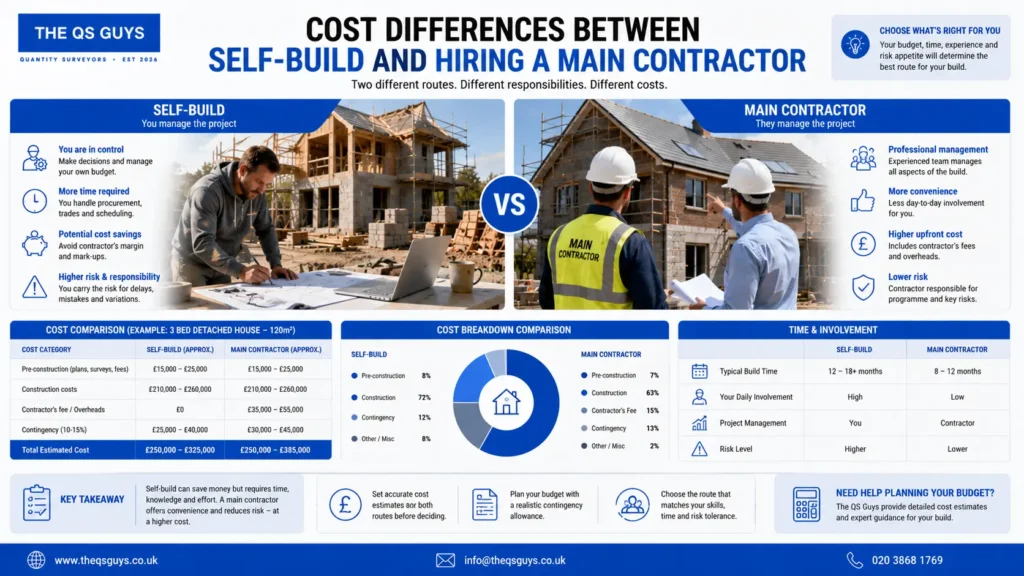
Cost Differences Between Self-Build And Hiring A Main Contractor
Choosing between a self-build approach and hiring a main contractor is one of the most important decisions when planning a new home. Both options can influence your budget, timeline, level of involvement, and overall project outcome. While some homeowners are attracted by the potential savings of managing their own build, others prefer the convenience and reduced risk that comes with appointing an experienced contractor. Understanding the advantages, challenges, and financial implications of each route can help you determine which option best suits your circumstances in 2026.
Self-Build Cost Advantages
A self-build project can offer meaningful cost savings for homeowners who have the time, knowledge, and willingness to take an active role in the construction process. By managing various aspects of the build yourself, it may be possible to reduce overhead costs that would otherwise be included in a contractor’s pricing.
- Potential Savings: One of the biggest attractions of self-build is the opportunity to save money on project management and contractor margins. Homeowners who source materials directly, negotiate with trades, and carefully manage budgets can often reduce overall construction costs.
- Greater Control: Self-build gives homeowners direct control over decision-making throughout the project. This includes selecting suppliers, choosing materials, approving costs, and adjusting specifications when necessary. Greater involvement can help ensure that spending aligns with personal priorities and project goals.
- Flexible Purchasing Decisions: Managing your own project allows you to compare suppliers, negotiate prices, and take advantage of discounts when available. This level of purchasing flexibility can help reduce costs on certain materials and services.
- Customised Budget Allocation: Homeowners can decide where to invest more money and where savings can be achieved. For example, funds may be directed towards energy-efficient features while opting for more cost-effective finishes in less critical areas.
Self-Build Risks And Challenges
Although self-build can reduce costs in some areas, it also introduces significant responsibilities and risks that should not be underestimated. Many first-time self-builders find that managing a construction project requires more time and expertise than expected.
- Time Commitment: Coordinating a construction project requires ongoing involvement from start to finish. Homeowners may spend considerable time obtaining quotations, scheduling trades, ordering materials, resolving issues, and monitoring progress.
- Project Management Responsibilities: Managing multiple contractors and suppliers requires strong organisational skills. Delays, scheduling conflicts, and communication issues can quickly affect both timelines and budgets if not handled effectively.
- Risk Of Cost Overruns: Inexperienced project management can lead to costly mistakes. Ordering incorrect materials, overlooking key construction requirements, or failing to anticipate delays may result in additional expenses that offset initial savings.
- Increased Stress Levels: Self-build projects often require constant decision-making and problem-solving. Unexpected challenges such as adverse weather, labour shortages, or supply delays can place additional pressure on homeowners throughout the construction process.
Main Contractor Benefits
Hiring a main contractor offers a more structured and professionally managed approach to house construction. While this option may involve higher upfront costs, many homeowners value the convenience, expertise, and reduced workload that it provides.
- Single Point Of Responsibility: A main contractor manages the entire project and acts as the primary contact throughout construction. This simplifies communication and ensures accountability for the coordination of trades, suppliers, and project activities.
- Reduced Project Risk: Experienced contractors understand common construction challenges and have systems in place to manage them effectively. Their knowledge can help minimise delays, prevent costly mistakes, and improve overall project efficiency.
- Established Trade Networks: Reputable contractors typically have long-standing relationships with trusted subcontractors and suppliers. This can improve workmanship quality and help maintain project schedules.
- Professional Project Management: Contractors oversee daily operations, monitor progress, manage site safety, and coordinate inspections. This allows homeowners to remain informed without becoming responsible for every aspect of project delivery.
- Greater Budget Predictability: Many contractor-led projects are supported by detailed quotations and contractual agreements that provide clearer cost expectations from the outset.
Which Option Offers Better Value In 2026?
There is no universal answer when comparing self-build and contractor-led projects because value depends on individual circumstances, experience, and project complexity. The best option is often the one that balances financial goals with realistic expectations about time, knowledge, and risk tolerance.
Cost Comparison
In some cases, a self-build project may achieve savings compared to hiring a main contractor, particularly when the homeowner has construction experience or access to reliable trade contacts. However, these savings can quickly diminish if delays, errors, or poor planning result in additional costs.
A contractor-managed build generally includes management fees and business overheads, making the initial price higher. Despite this, professional oversight often helps avoid expensive mistakes and can contribute to a smoother construction process.
Suitability For Different Homeowners
The right approach depends largely on the homeowner’s skills, availability, and confidence in managing a complex project.
- Self-Build May Suit: Individuals with construction knowledge, strong organisational abilities, flexible schedules, and a willingness to manage day-to-day project responsibilities.
- Main Contractor May Suit: Busy professionals, first-time builders, investors, or homeowners seeking a more hands-off experience with reduced administrative demands.
- Complex Projects Often Benefit From Professional Management: Large custom homes, challenging sites, and high-specification builds typically involve greater coordination requirements, making contractor-led delivery an attractive option.
Whether you choose a self-build approach or hire a main contractor, success depends on careful planning, realistic budgeting, and a clear understanding of your responsibilities. Taking the time to evaluate both options thoroughly can help you make a decision that aligns with your financial goals.
How To Reduce House Building Costs Without Compromising Quality
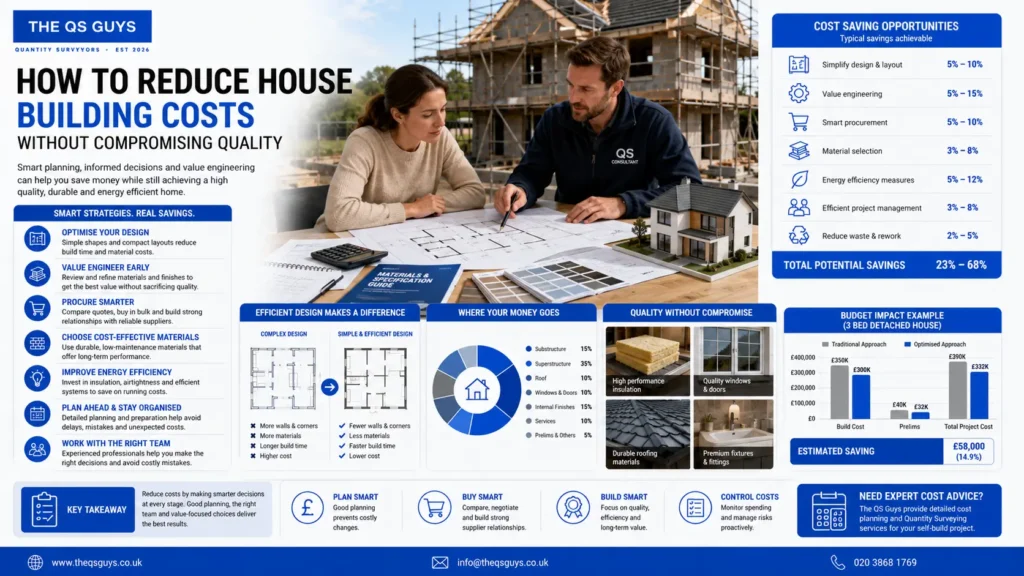
Keeping construction costs under control does not mean cutting corners or choosing the cheapest option available. The most successful projects focus on smart planning, efficient design choices, and informed decision-making from the beginning. By understanding where money is best invested and where savings can be achieved, homeowners can reduce unnecessary expenses while still creating a durable, comfortable, and high-quality home.
Simplify The Design
One of the most effective ways to reduce house building costs is to simplify the overall design. Complex layouts, unusual shapes, and custom-built features often require more labour, additional materials, and longer construction timelines. A well-planned design can deliver excellent functionality without creating avoidable costs.
Efficient Layouts
Efficient layouts make better use of available space while reducing construction complexity. Homes that are carefully designed often feel larger and more practical without increasing the building footprint.
- Reduced Construction Costs: Simple floor plans generally require fewer materials and less labour than complicated layouts.
- Improved Space Utilisation: Open-plan living areas and well-positioned rooms can maximise usable space without increasing square metre requirements.
- Faster Construction Times: Straightforward designs allow contractors to complete work more efficiently, reducing labour expenses.
- Better Energy Performance: Compact layouts often improve heating and cooling efficiency, helping lower future energy bills.
Standardised Dimensions
Using standard-sized building components can create significant savings throughout the project. Custom dimensions frequently require additional manufacturing, specialist installation, and increased material waste.
- Lower Material Costs: Standard-sized windows, doors, and building materials are generally more affordable.
- Reduced Waste: Builders can work with common material sizes, resulting in fewer offcuts and less wastage.
- Simplified Installation: Standard products are often easier and quicker to install.
- Improved Availability: Common building materials are typically easier to source and replace if needed.
Improve Procurement Planning
Procurement planning plays a major role in controlling construction costs. Poor purchasing decisions, delayed orders, and last-minute changes can quickly increase expenses. Careful planning helps ensure materials and services are secured at the right time and at competitive prices.
Early Material Purchasing
Purchasing key materials early can protect the project from future price increases and supply shortages.
- Price Stability: Early purchasing can reduce exposure to market-driven cost increases.
- Improved Availability: Securing materials in advance helps avoid project delays caused by stock shortages.
- Better Supplier Relationships: Early communication with suppliers often results in improved service and planning support.
- Reduced Schedule Disruptions: Materials arriving when needed can help keep construction on track.
Competitive Quotations
Obtaining multiple quotations allows homeowners to compare pricing, scope, and service levels before making decisions.
- Cost Transparency: Comparing quotes helps identify realistic market pricing.
- Scope Verification: Reviewing detailed quotations can highlight differences in what is included.
- Better Negotiation Opportunities: Competitive pricing often encourages suppliers and contractors to provide their best offer.
- Improved Value Assessment: The lowest quote is not always the best option. Comparing experience, quality, and reliability helps identify the strongest overall value.
Focus On Long-Term Value
Reducing upfront costs should never come at the expense of long-term performance. Some investments may increase initial spending but deliver substantial savings throughout the life of the property.
Energy Efficiency
Energy-efficient features can lower operating costs while improving comfort and sustainability.
- Lower Utility Bills: Better insulation, high-performance windows, and efficient heating systems reduce energy consumption.
- Improved Indoor Comfort: Stable indoor temperatures enhance year-round living conditions.
- Future Compliance: Energy-efficient homes are better positioned to meet future regulatory requirements.
- Increased Property Appeal: Buyers increasingly value homes with lower running costs.
Durable Materials
Choosing durable materials can reduce repair and replacement expenses over time.
- Extended Lifespan: High-quality materials often last significantly longer than cheaper alternatives.
- Reduced Repair Costs: Durable products are less likely to suffer premature wear and damage.
- Improved Performance: Strong materials can better withstand weather conditions and daily use.
- Higher Long-Term Value: Durable construction contributes to property value retention.
Lower Maintenance Solutions
Selecting low-maintenance products can help homeowners avoid ongoing costs after construction is complete.
- Reduced Upkeep Requirements: Modern materials often require less painting, sealing, or treatment.
- Lower Ownership Costs: Fewer maintenance tasks can reduce annual property expenses.
- Time Savings: Homeowners spend less time managing repairs and upkeep.
- Consistent Appearance: Low-maintenance products often retain their appearance for longer periods.
Work With Experienced Construction Professionals
The expertise of construction professionals can have a direct impact on project costs, quality, and overall success. Experienced consultants, designers, and contractors often identify opportunities for savings that may not be obvious to homeowners.
Importance Of Accurate Cost Planning
Cost planning provides a realistic understanding of the financial requirements before construction begins.
- Budget Accuracy: Detailed cost estimates help establish achievable project budgets.
- Risk Identification: Potential financial challenges can be identified and addressed early.
- Improved Decision-Making: Clear cost information supports informed choices throughout the project.
- Financial Control: Regular cost monitoring helps prevent unexpected budget overruns.
Avoiding Costly Mistakes
Many construction cost increases result from errors, omissions, and poorly planned changes during the build.
- Design Coordination: Early planning reduces the likelihood of expensive revisions.
- Scope Clarity: Well-defined project requirements minimise misunderstandings.
- Construction Efficiency: Experienced professionals can anticipate and resolve issues before they become costly problems.
- Quality Assurance: Proper oversight helps ensure work is completed correctly the first time.
Reducing house building costs without compromising quality requires a balanced approach that combines careful planning, efficient design, smart purchasing decisions, and professional guidance. By focusing on long-term value rather than short-term savings alone, homeowners can create a well-built property that meets their needs while maintaining greater control over their overall construction budget.
House Building Cost Examples By Property Type
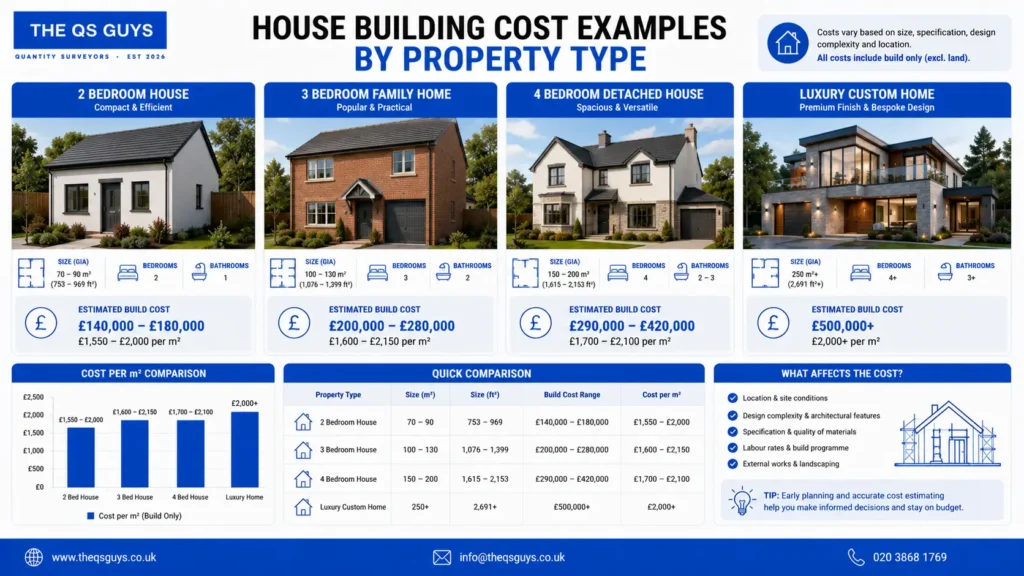
Understanding how construction costs vary by property type can help homeowners create a more realistic budget before starting a project. While average cost per square metre is a useful benchmark, the total cost of building a house depends on factors such as size, layout, specification level, site conditions, and location. Looking at practical examples can provide a clearer picture of what different types of homes may cost to build in the UK during 2026.
Example Cost For A 2-Bedroom House
A typical 2-bedroom house is often one of the most affordable options for self-builders and developers. These properties generally range between 70 and 100 square metres and are commonly chosen by first-time homeowners, small families, and property investors.
Estimated build range:
- Lower-range build: £140,000 to £180,000
- Mid-range build: £180,000 to £250,000
- Higher-specification build: £250,000 to £350,000+
The relatively compact size of a 2-bedroom home helps keep construction costs manageable. However, costs can still vary significantly depending on design choices and site requirements.
Major cost drivers include:
- Site preparation: Challenging ground conditions can increase foundation and excavation costs.
- Construction method: Timber-frame and traditional brick-and-block systems may have different cost implications.
- Internal finishes: Flooring, kitchens, bathrooms, and joinery selections can substantially affect the final budget.
- Energy efficiency measures: Solar panels, heat pumps, and enhanced insulation can increase initial costs while reducing future running expenses.
Example Cost For A 3-Bedroom Family Home
A 3-bedroom family home is one of the most common residential property types built across the UK. These homes typically range between 100 and 150 square metres and provide a balance between living space and affordability.
Estimated build range:
- Lower-range build: £200,000 to £300,000
- Mid-range build: £300,000 to £450,000
- Higher-specification build: £450,000 to £650,000+
Many homeowners view a 3-bedroom house as a long-term investment because it provides flexibility for growing families while maintaining strong resale appeal.
Major cost drivers include:
- Property size: Larger floor areas increase material and labour requirements.
- Kitchen and bathroom quality: Premium fixtures and finishes can significantly increase costs.
- Roof design: Complex roof structures require additional materials and skilled labour.
- Mechanical services: Heating, ventilation, electrical systems, and smart-home features can add to the overall budget.
A well-designed 3-bedroom house often delivers strong value by balancing construction costs with practical living space.
Example Cost For A 4-Bedroom Detached House
A 4-bedroom detached house generally offers more internal space, larger living areas, and increased design flexibility. These properties typically range between 150 and 250 square metres and are often associated with higher construction budgets.
Estimated build range:
- Lower-range build: £350,000 to £500,000
- Mid-range build: £500,000 to £800,000
- Higher-specification build: £800,000 to £1.2 million+
As property size increases, costs tend to rise due to the larger building footprint, more complex services, and greater finishing requirements.
Major cost drivers include:
- Foundation requirements: Larger structures require more extensive groundworks.
- Structural complexity: Open-plan spaces and large-span areas may require steelwork and specialist engineering.
- External works: Driveways, landscaping, retaining walls, and drainage systems can represent a significant additional expense.
- Premium finishes: High-quality kitchens, bathrooms, flooring, and bespoke joinery often contribute heavily to the final cost.
Detached homes also tend to have greater external wall and roof areas, increasing both material and labour costs compared to smaller properties.
Example Cost For A High-Specification Custom Home
A high-specification custom home is designed around the homeowner’s specific requirements and often incorporates unique architectural features, premium materials, and advanced building technologies. These homes vary significantly in size but frequently exceed 250 square metres.
Estimated build range:
- Entry-level luxury build: £750,000 to £1 million
- Premium custom build: £1 million to £2 million
- Ultra-high-end build: £2 million+
Custom homes require detailed planning, specialist design input, and close project management throughout the construction process. The level of personalization often makes these projects considerably more expensive than standard residential builds.
Major cost drivers include:
- Architect-designed layouts: Bespoke designs often require additional engineering and detailing.
- Luxury materials: Natural stone, premium timber, specialist glazing, and imported finishes can significantly increase costs.
- Advanced technology: Smart-home automation, renewable energy systems, and integrated security features add complexity.
- Specialist craftsmanship: Custom joinery, feature staircases, and high-end interior detailing require skilled trades and longer installation periods.
For luxury projects, design ambition often becomes one of the largest influences on overall construction costs, making professional cost planning especially valuable during the early stages.
While these examples provide useful benchmarks, every project is unique. Factors such as location, land conditions, specification choices, and market conditions can all influence final construction costs. Obtaining professional cost advice before committing to a project can help establish a realistic budget and reduce the risk of unexpected financial surprises during the build process.
Planning Your House Build Budget For 2026
Building a new home is one of the largest financial commitments most people will ever make. With construction costs continuing to fluctuate across the UK, creating a well-planned budget is essential before work begins. A realistic house build budget helps you understand the true cost of your project, prepare for unexpected expenses, and make informed decisions throughout the construction process. Whether you are planning a self-build project or working with a main contractor, taking the time to assess costs properly can reduce financial stress and improve the likelihood of a successful outcome.
Creating A Realistic Budget
A realistic budget starts with understanding every cost involved in building a house, not just the construction work itself. Many first-time builders focus on the headline build cost and overlook important expenses that arise before, during, and after construction. A comprehensive budget should include land costs, professional fees, planning expenses, utility connections, construction costs, landscaping, and contingency funds.
When estimating costs, it is important to use current market rates rather than outdated figures. Labour costs, material prices, and regulatory requirements can change significantly from year to year, making older estimates unreliable for a 2026 project.
Key areas to include in your budget include:
- Land Purchase Costs: The cost of acquiring a building plot, including legal fees, surveys, and taxes.
- Professional Services: Fees for architects, structural engineers, quantity surveyors, and planning consultants.
- Site Preparation: Ground investigations, excavation work, drainage installation, and utility connections.
- Construction Costs: Labour, materials, equipment, and contractor fees associated with building the property.
- Finishing Costs: Flooring, decorating, kitchens, bathrooms, and external landscaping.
- Contingency Allowance: A reserve fund to cover unforeseen expenses that may arise during construction.
Creating a detailed budget early in the planning process provides a stronger foundation for decision-making and helps avoid unrealistic expectations about project affordability.
Understanding Cost Risks Before Construction Begins
Every construction project involves a degree of financial risk. Identifying potential cost risks before work begins allows homeowners and developers to prepare appropriately and minimise disruptions later in the project.
One of the most common risks is unexpected ground conditions. Problems such as poor soil quality, hidden drainage issues, or the need for additional foundation work can increase costs considerably. These issues often remain unknown until excavation begins.
Material price fluctuations are another important consideration. The cost of timber, steel, insulation, roofing materials, and other construction products can change due to supply chain issues, inflation, or shifts in market demand. Even modest price increases can affect overall project budgets when multiplied across an entire build.
Design changes during construction can also create substantial additional costs. Altering layouts, specifications, or finishes after work has commenced often results in increased labour requirements, material waste, and project delays.
Common cost risks include:
- Ground Conditions: Additional excavation, foundation upgrades, or drainage solutions.
- Material Price Increases: Rising costs for key building materials and products.
- Labour Availability: Skilled labour shortages that increase contractor rates.
- Design Modifications: Mid-project changes that require rework and additional resources.
- Regulatory Requirements: New compliance measures or approval conditions that affect costs.
- Project Delays: Weather-related disruptions, supplier issues, or scheduling challenges.
Understanding these risks early allows for more accurate budgeting and better financial planning throughout the project lifecycle.
Why Professional Cost Planning Matters
Professional cost planning plays a vital role in helping homeowners and developers understand the financial implications of a construction project before major commitments are made. Accurate cost planning provides realistic expectations, supports informed decision-making, and reduces the likelihood of budget overruns.
Benefits Of Early Budgeting
Early budgeting allows project stakeholders to evaluate affordability before detailed design work begins. This approach helps identify whether the proposed scope aligns with available funding and highlights potential financial challenges before they become costly problems.
By establishing clear budget parameters from the outset, project teams can make design decisions that support both performance and cost objectives. Early budgeting also improves communication between clients, designers, and contractors by ensuring everyone works toward the same financial goals.
Benefits of early budgeting include:
- Better Decision-Making: Cost information supports informed design and specification choices.
- Improved Planning: Financial expectations are established before significant commitments are made.
- Greater Cost Control: Spending can be monitored against clearly defined budget targets.
- Reduced Financial Surprises: Potential issues are identified earlier in the process.
Improving Financial Certainty
Financial certainty is one of the most valuable outcomes of professional cost planning. Construction projects involve numerous variables, and uncertainty often creates stress for homeowners and investors alike.
Detailed cost assessments provide greater visibility into likely project expenses and help establish realistic funding requirements. This allows stakeholders to secure financing more effectively and plan for future expenditures with greater confidence.
Professional cost planning also helps evaluate alternative construction methods, materials, and specifications to determine which options offer the best value for money while meeting project objectives.
Reducing Project Overruns
Cost overruns are one of the most common challenges in residential construction. Many overruns occur because initial budgets fail to account for all project requirements or because risks are not identified early enough.
Professional cost planning reduces the likelihood of overruns by providing a detailed understanding of expected costs before construction begins. Regular cost reviews throughout the project help track expenditure, identify emerging issues, and maintain alignment with the approved budget.
Key ways professional cost planning helps reduce overruns include:
- Accurate Cost Forecasting: Detailed estimates based on current market conditions.
- Risk Identification: Early recognition of factors that may affect project costs.
- Budget Monitoring: Ongoing review of spending throughout the construction process.
- Value Engineering: Identifying opportunities to improve efficiency without sacrificing quality.
- Change Management: Assessing the financial impact of proposed design changes before approval.
A successful house build relies on more than construction expertise alone. Careful budgeting, realistic expectations, and professional cost planning provide the financial framework needed to keep a project on track. By understanding potential risks and establishing a detailed budget from the beginning, homeowners can move forward with greater confidence and improve their chances of delivering a home that meets both their goals and their budget.
Planning a house build starts with understanding the true cost of your project before construction begins. If you want greater confidence in your budget, timelines, and financial planning, explore our expert cost planning resources and professional estimating services. Our team helps homeowners, developers, and self-builders gain accurate insights into construction costs, identify potential risks, and make informed decisions that support a successful project outcome.
References
- Homebuilding & Renovating: How Much Does It Cost To Build A House In 2026?
https://www.homebuilding.co.uk/advice/how-much-does-it-cost-to-build-a-house - House Plans Direct: How Much Does It Really Cost To Build A House In The UK In 2026?
https://houseplansdirect.co.uk/self-build-costs-budgeting/how-much-does-it-cost-to-build-a-house-uk-2026/ - Build Partner: How Much Does It Cost To Build A House In 2026? A UK Guide
https://buildpartner.com/how-much-does-it-cost-to-build-a-house-in-2026-uk-guide/ - LivedIn: Cost To Build A House UK 2026 Guide
https://livedin.co.uk/self-build-cost - Doherty Builders: New Build House Cost 2026 UK Self Build Costs Per Square Metre
https://dohertybuilders.co.uk/cost/new-build-cost/
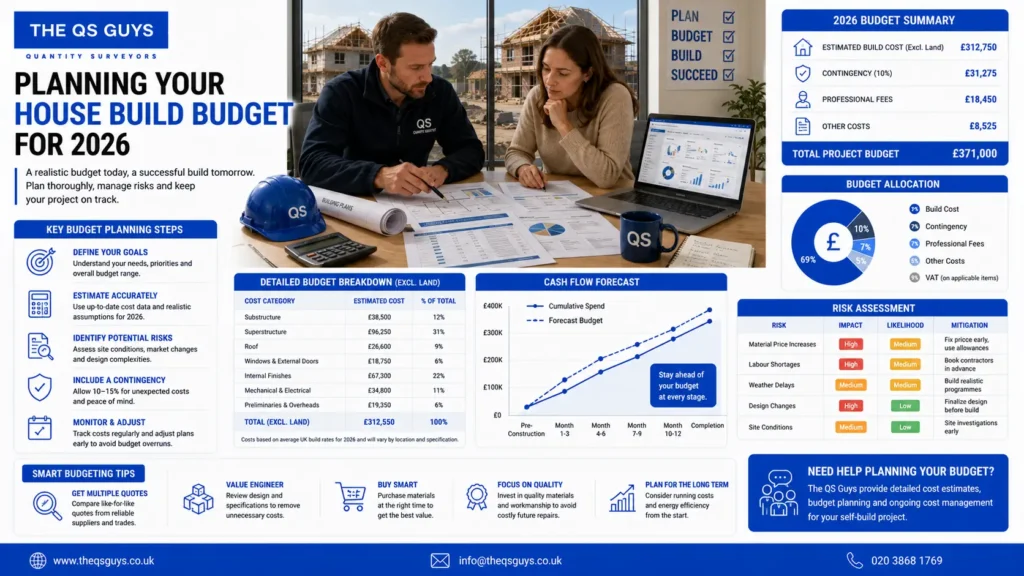
FAQs: About Average Cost To Build A House 2026 In UK
How much does it cost to build a house in the UK in 2026?
The average cost to build a house in the UK in 2026 is expected to range from £2,000 to £4,000 per square metre, depending on location, build quality, design complexity, and labour rates. Total project costs can vary significantly based on the size of the property and the specifications selected.
What is the average cost per square metre to build a house in 2026?
Most UK residential construction projects in 2026 are expected to fall between £2,000 and £4,000 per square metre. Basic homes generally sit at the lower end of the range, while custom-designed or luxury properties often exceed these figures.
Is it cheaper to build a house or buy an existing property?
In some areas, building a house can offer better value, especially when land is purchased at a reasonable price. The answer depends on local property values, construction costs, planning requirements, and the level of customization desired.
What is the most expensive part of building a house?
The structural shell, including foundations, walls, roofing, and external construction, often represents one of the largest portions of the budget. Labour costs and interior finishes can also account for a substantial share of overall project expenses.
How much should I budget for unexpected costs during construction?
Many construction professionals recommend setting aside a contingency fund of 10% to 15% of the total project budget. This helps cover unforeseen issues such as ground condition problems, design changes, material price increases, or delays.
Do house building costs vary across different regions of the UK?
Yes. Building costs in London and the South East are generally higher than in other parts of the UK due to increased labour rates, land values, and demand for construction services. Regional variations can significantly affect overall project budgets.
Are planning permission and building regulation fees included in build costs?
These costs are often separate from the main construction budget. Planning applications, building control fees, surveys, inspections, and consultant costs should be factored into your overall financial planning from the start.
How do material prices affect the cost of building a house?
Construction materials such as timber, concrete, steel, insulation, and roofing products can have a major impact on project costs. Market demand, supply chain disruptions, and inflation can all influence pricing throughout the construction process.
Can I reduce house building costs without compromising quality?
Yes. Choosing a simple design, improving procurement planning, avoiding unnecessary structural complexity, and working with experienced professionals can help control costs while maintaining quality and long-term value.
Why should I use a quantity surveyor when building a house?
A quantity surveyor provides professional cost planning, budgeting, and financial management throughout a construction project. Their expertise can help identify potential cost risks, improve budget accuracy, and reduce the likelihood of unexpected expenses during the build.
Conclusion
Understanding the average cost to build a house in 2026 UK requires looking beyond the headline figures and considering the many factors that influence a project’s overall budget. Construction costs are shaped by location, property size, design complexity, labour rates, material prices, site conditions, and the level of finish you choose. While average cost-per-square-metre figures provide a useful starting point, every project has unique requirements that can significantly affect the final build cost. This is why careful planning and realistic budgeting are essential before construction begins. Taking the time to understand potential expenses, including professional fees, planning costs, utility connections, and contingency allowances, can help reduce financial surprises and keep your project on track. Seeking advice from a qualified construction cost consultant or quantity surveyor can provide valuable insight into expected costs, identify potential risks, and help you develop a more accurate budget tailored to your specific plans. If you are considering a new-build home, requesting a professional cost estimate before committing to construction can give you greater confidence in your investment and help you make informed decisions throughout every stage of the project.