Survey And Quotation Process In Glasgow Explained

Welcome to your complete guide to the survey and quotation process Glasgow property owners can expect when planning a home improvement, renovation, construction, or maintenance project. Understanding how surveys and quotations work is essential for making informed decisions, comparing contractors accurately, and avoiding unexpected costs later in the project. From the initial consultation and site assessment to receiving a detailed quotation and reviewing project requirements, each stage plays an important role in ensuring transparency, accurate pricing, and successful outcomes. Whether you are considering a small upgrade or a larger property investment, this guide explains what happens at every step so you can approach your project with confidence, clarity, and realistic expectations.
The survey and quotation process Glasgow contractors use typically begins with an initial consultation and site survey to assess project requirements. After gathering measurements, site conditions, and scope details, the contractor prepares a detailed quotation outlining costs, materials, labour, timelines, and terms, helping property owners make informed decisions before work begins.
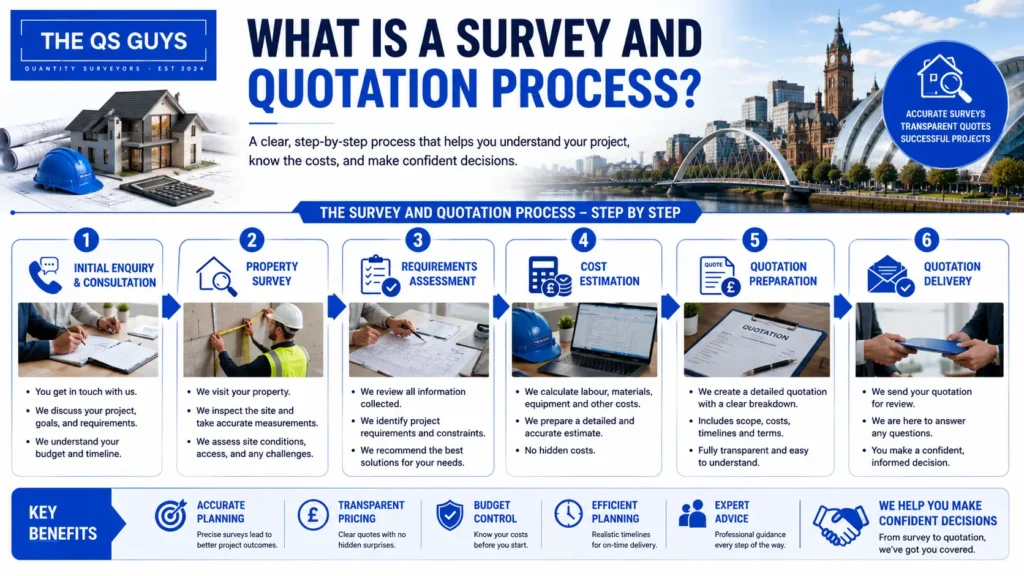
What Is A Survey And Quotation Process?
Before any successful property project begins, it is important to understand the survey and quotation process. Whether you are planning a home renovation, extension, roofing project, or general property improvement in Glasgow, this process provides the foundation for accurate planning and decision-making. A professional survey helps identify the specific requirements of the project, while a detailed quotation outlines the expected costs, scope of work, and project details. Together, these steps help property owners gain clarity, avoid misunderstandings, and move forward with confidence.
Understanding the Purpose of a Property Survey
A property survey is one of the most important stages of any project because it allows professionals to gather accurate information before preparing a quotation. Rather than relying on assumptions, contractors and specialists visit the property to assess the site, understand the work involved, and identify any factors that may affect costs, timelines, or project outcomes.
What a Survey Involves
A professional survey typically includes a detailed inspection of the property and the area where work is planned. During the visit, measurements are taken, existing conditions are reviewed, and important project details are recorded.
Some common activities during a property survey include:
- Site Measurements: Accurate dimensions are collected to ensure materials and labour requirements can be calculated correctly.
- Property Assessment: Existing structures, surfaces, and conditions are examined to determine the project’s scope.
- Photographic Records: Images may be taken to document current conditions and support the quotation process.
- Access Evaluation: Contractors assess how equipment, materials, and workers will access the site.
This information helps create a realistic project plan based on actual site conditions rather than estimates alone.
Why Site Assessments Are Necessary
A site assessment allows contractors to identify factors that may not be visible from photographs or initial discussions. Even seemingly straightforward projects can involve hidden challenges that influence costs or timelines.
For example, a roofing contractor may discover access restrictions that require additional safety equipment, while a renovation specialist may identify structural considerations that need attention before work begins.
A site assessment provides several important benefits:
- Improved Accuracy: Cost estimates are based on real conditions rather than assumptions.
- Better Planning: Contractors can prepare for potential challenges before work starts.
- Risk Reduction: Early identification of issues helps prevent costly surprises during the project.
By conducting a thorough assessment, contractors can provide a quotation that more accurately reflects the true requirements of the work.
Identifying Project Requirements and Constraints
Every property is different, which is why surveys focus on understanding both project goals and potential limitations. During the survey process, contractors work to identify what needs to be completed while also recognising factors that could affect delivery.
Common project requirements and constraints may include:
- Property Size: Larger projects typically require more labour, materials, and time.
- Site Accessibility: Limited access can affect equipment use and material delivery.
- Structural Conditions: Existing issues may require additional work before the main project begins.
- Client Objectives: Understanding the desired outcome ensures the proposed solution aligns with expectations.
By identifying these factors early, contractors can provide more accurate recommendations and realistic project expectations.
What Is Included in a Professional Quotation?
Once the survey has been completed, the collected information is used to prepare a professional quotation. A quotation is more than a price estimate. It is a detailed document that explains what work will be carried out, what it will cost, and how the project will be delivered.
A well-prepared quotation provides transparency and allows property owners to compare contractors fairly.
Scope of Work
The scope of work is one of the most important sections of any quotation because it defines exactly what services are included.
A detailed scope of work may outline:
- Project Activities: The specific tasks that will be completed.
- Materials Included: Products and materials covered by the quotation.
- Work Standards: The expected quality and completion standards.
- Project Deliverables: What the client can expect once the work is finished.
A clearly defined scope helps prevent confusion and ensures both parties share the same expectations.
Material Costs
Material costs represent the products and supplies required to complete the project. These costs can vary significantly depending on the type, quality, and availability of materials selected.
Factors influencing material costs often include:
- Material Quality: Premium products generally cost more than standard options.
- Quantity Required: Larger projects typically require greater material volumes.
- Supplier Pricing: Market conditions can influence current material costs.
- Special Orders: Custom products may increase overall project expenses.
A professional quotation should clearly explain which materials are included and whether alternatives are available.
Labour Costs
Labour costs reflect the time, expertise, and workforce needed to complete the project. Skilled trades often represent a significant portion of the overall project budget.
Labour pricing may depend on:
- Project Complexity: More technical work generally requires greater expertise.
- Project Duration: Longer projects involve additional labour hours.
- Specialist Requirements: Certain tasks may require qualified tradespeople.
- Site Conditions: Difficult access or challenging working environments can affect labour requirements.
Understanding labour costs helps property owners appreciate the resources needed to deliver quality workmanship.
Timeframes and Exclusions
A professional quotation should also explain estimated project timelines and identify any exclusions.
Timeframes provide an indication of how long the work is expected to take, while exclusions clarify what is not covered within the quoted price.
Common exclusions may include:
- Additional Repair Work: Issues discovered after work begins.
- Third-Party Services: Specialist reports or permits not included in the scope.
- Client Requested Changes: Variations made after approval of the quotation.
- Unexpected Site Conditions: Conditions that could not reasonably be identified during the survey.
Clear communication around timelines and exclusions helps reduce misunderstandings and supports a smoother project experience.
Why Surveys and Quotations Matter Before Any Project Begins
Surveys and quotations are not simply administrative steps. They provide essential information that helps property owners make informed decisions, establish realistic expectations, and reduce project risks.
When completed properly, they create a clear roadmap for everyone involved.
Budget Planning
One of the primary benefits of the survey and quotation process is improved budget planning. Property owners can understand the expected costs before committing to the project and can make adjustments if necessary.
Benefits of detailed budget planning include:
- Financial Clarity: Understanding the likely cost of the project.
- Better Decision-Making: Comparing options based on accurate information.
- Reduced Surprises: Minimising unexpected expenses during construction.
- Resource Allocation: Planning finances more effectively.
A detailed quotation provides the information needed to make confident financial decisions.
Accurate Project Expectations
Many project disputes occur because expectations are unclear from the beginning. Surveys and quotations help establish a shared understanding between the property owner and contractor.
This process helps clarify:
- Project Scope: What work will and will not be completed.
- Timeframes: Expected start and completion dates.
- Responsibilities: Roles and obligations of each party.
- Project Outcomes: The anticipated result upon completion.
Clear expectations improve communication and contribute to a more successful project experience.
Reduced Risk of Disputes
Disputes often arise when details are left open to interpretation. A thorough survey and detailed quotation provide documented information that both parties can reference throughout the project.
Key dispute prevention benefits include:
- Written Documentation: Important project details are recorded clearly.
- Cost Transparency: Pricing is explained before work begins.
- Defined Deliverables: Expectations are established from the outset.
- Improved Communication: Both parties understand the project requirements.
Taking the time to complete a proper survey and review a comprehensive quotation can help avoid many of the issues that commonly affect construction and property improvement projects.
A well-executed survey and quotation process provides the foundation for a successful project. By understanding site conditions, defining project requirements, and documenting costs and expectations, property owners can make informed decisions with greater confidence while reducing the likelihood of unexpected challenges along the way.
When Should You Request A Survey And Quotation In Glasgow?
Before starting any property improvement project, it is important to understand when a survey and quotation should be requested. A professional survey provides valuable information about the property’s condition, project requirements, and potential challenges, while a detailed quotation helps establish realistic costs and expectations. Whether you are planning a renovation, extension, roofing upgrade, or landscaping project, arranging a survey early in the process can help you make informed decisions and avoid unnecessary delays or expenses.
Common Projects That Require a Site Survey
Many residential and commercial projects benefit from a professional site survey before work begins. The survey allows contractors to assess the property accurately and gather the information needed to prepare a reliable quotation.
Home Renovations
Home renovation projects often involve changes to existing structures, layouts, or finishes. A site survey helps identify factors that may affect the project, such as access limitations, existing conditions, and structural considerations. This information allows contractors to provide accurate recommendations and realistic cost estimates based on the property’s specific requirements.
Extensions
Building an extension requires careful planning and assessment. A survey helps determine available space, ground conditions, drainage considerations, and how the new structure will connect to the existing building. Early evaluation can reveal potential issues that may need to be addressed before construction begins.
Roofing Projects
Roofing work often requires a detailed inspection to assess the current condition of the roof, identify damage, and determine the scope of repairs or replacement. During a survey, contractors can evaluate factors such as roof access, material requirements, and any underlying issues that may affect the project’s cost and timeline.
Landscaping Work
Landscaping projects can vary significantly depending on the property’s layout and existing features. A survey helps assess terrain, drainage, soil conditions, access points, and design possibilities. This allows contractors to develop practical solutions and prepare quotations that accurately reflect the work involved.
Construction Services
Construction projects often involve multiple trades, materials, and stages of work. A site survey provides a clear understanding of the project’s complexity and helps identify requirements that may influence scheduling, budgeting, and resource allocation. Accurate planning at this stage can prevent costly changes later in the project.
Signs You Should Arrange a Professional Assessment
Not every project starts with a clear understanding of costs or requirements. Certain situations make a professional survey particularly valuable.
Unclear Project Costs
If you are unsure how much a project is likely to cost, a survey can provide the information needed for a detailed quotation. Rather than relying on rough estimates, contractors can assess the property directly and provide pricing based on actual site conditions.
- Accurate Pricing: Helps reduce guesswork and provides realistic cost expectations.
- Detailed Breakdown: Identifies labour, materials, equipment, and other project expenses.
- Budget Planning: Supports informed financial decisions before committing to work.
Structural Concerns
Visible cracks, uneven floors, roof damage, or signs of deterioration may indicate underlying issues that require professional assessment. A survey can help identify potential structural concerns and determine whether additional work may be necessary before the main project begins.
- Early Detection: Identifies problems before they become more expensive to address.
- Project Planning: Helps determine whether repairs are required before new work starts.
- Risk Reduction: Minimises the likelihood of unexpected complications during construction.
Multiple Contractor Comparisons
When obtaining quotations from several contractors, arranging site surveys ensures each contractor assesses the same conditions and project requirements. This creates a fair basis for comparing pricing, scope, and proposed solutions.
- Consistent Information: Allows contractors to prepare quotations based on similar findings.
- Better Comparisons: Makes it easier to evaluate value rather than price alone.
- Improved Transparency: Helps identify differences in scope, materials, and project approach.
Benefits of Early Planning
Requesting a survey and quotation early in the process provides advantages that can positively affect the entire project. Early planning supports better decision-making and helps establish realistic expectations from the outset.
Better Budgeting
A detailed survey provides the information required to create a more accurate quotation. This allows property owners to understand likely costs and plan their finances accordingly.
- Cost Visibility: Provides a clearer picture of expected expenses.
- Financial Preparation: Helps allocate funds appropriately before work begins.
- Reduced Surprises: Minimises the risk of unforeseen costs during the project.
Improved Scheduling
Early planning allows contractors and property owners to coordinate timelines more effectively. Understanding the project’s scope and requirements from the beginning helps establish realistic schedules and identify potential delays before they occur.
- Project Coordination: Supports smoother communication and planning.
- Resource Management: Ensures materials and labour can be scheduled efficiently.
- Timeline Clarity: Creates realistic expectations for project completion.
More Accurate Project Scope
A survey helps define exactly what work is required and what outcomes can realistically be achieved. This reduces misunderstandings and provides a solid foundation for the quotation and project plan.
- Clear Objectives: Establishes what is included in the work.
- Defined Expectations: Helps both parties understand project requirements.
- Reduced Variations: Limits the likelihood of major changes once work begins.
Taking the time to arrange a professional survey and quotation before starting a project can save significant time, money, and stress. By understanding the property’s requirements early and receiving a detailed assessment, homeowners and property owners in Glasgow can move forward with greater confidence, clearer expectations, and a stronger foundation for a successful project.

The Initial Enquiry And Consultation Stage
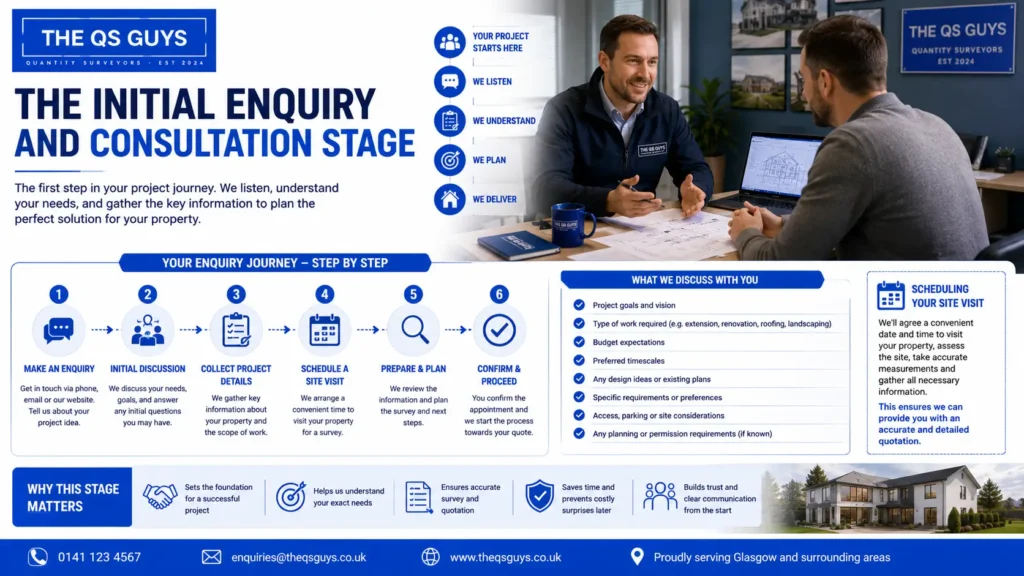
The initial enquiry and consultation stage lays the foundation for a successful project. Before any survey takes place or a quotation is prepared, contractors need to understand the property’s requirements, the client’s objectives, and any factors that could influence the scope of work. This early communication helps ensure that expectations are aligned from the start and allows professionals to gather the information needed to provide accurate recommendations and pricing. Whether the project involves home improvements, renovations, construction work, or specialist services, a well-managed consultation process can save time, reduce misunderstandings, and support better project planning.
Providing Project Information
One of the most important parts of the consultation stage is providing clear and accurate project information. The more details shared during the initial enquiry, the easier it becomes for professionals to understand the project’s requirements and determine whether a site survey is necessary.
Property Details
Property details help contractors assess the scale and complexity of the project before visiting the site. Basic information about the property often allows professionals to prepare for the survey and identify potential considerations in advance.
Key details commonly requested include:
- Property Type: Whether the property is a detached house, semi-detached home, flat, commercial building, or another type of structure.
- Property Age: Older buildings may have unique construction methods, materials, or structural considerations.
- Current Condition: Existing issues such as damage, wear, access limitations, or previous alterations can influence the survey process.
- Location Information: The property’s location may affect site access, parking availability, and local planning requirements.
Providing accurate property details allows contractors to arrive prepared and conduct a more productive assessment.
Project Goals
Every project starts with a specific objective. Understanding these goals helps professionals recommend suitable solutions and determine the most appropriate scope of work.
Examples of common project goals include:
- Improving Functionality: Creating more usable space or improving the property’s layout.
- Increasing Property Value: Making upgrades that enhance long-term value and market appeal.
- Addressing Existing Problems: Repairing damage, correcting defects, or resolving maintenance issues.
- Modernising Features: Updating outdated elements to improve appearance and performance.
Clearly communicating these goals helps ensure that the proposed work aligns with the client’s priorities.
Desired Outcomes
Beyond general goals, contractors also want to understand what success looks like from the client’s perspective. Desired outcomes provide important context that helps shape recommendations and project planning.
Examples may include:
- Specific Design Preferences: Desired finishes, materials, or visual styles.
- Performance Expectations: Improved energy efficiency, durability, or functionality.
- Budget Objectives: Achieving the best results within a defined spending range.
- Completion Targets: Finishing work before a particular date or event.
The more clearly these expectations are communicated, the easier it becomes to create a quotation that reflects the client’s needs.
Scheduling The Site Visit
Once the initial information has been reviewed, the next step is arranging a site visit. This stage allows professionals to assess the property in person, verify information, and gather the details required for accurate pricing and project planning.
Booking Process
The booking process is usually straightforward and begins once the contractor has enough information about the proposed work.
A typical booking process may involve:
- Initial Contact: Discussing project requirements through a phone call, email, or online enquiry form.
- Information Review: Reviewing photographs, measurements, or property details provided by the client.
- Appointment Confirmation: Agreeing on a suitable date and time for the site visit.
- Pre-Visit Preparation: Confirming any information needed before the survey takes place.
A well-organised booking process helps both parties prepare effectively and ensures the visit is productive.
Typical Waiting Times
Waiting times can vary depending on demand, project complexity, and the contractor’s schedule. While some surveys can be arranged within a few days, larger projects or peak periods may require additional lead time.
Factors that can influence waiting times include:
- Seasonal Demand: Certain industries experience busier periods throughout the year.
- Project Size: Larger projects often require more planning and coordination.
- Location: Travel requirements and service area coverage may affect availability.
- Survey Requirements: Specialist assessments may require additional scheduling considerations.
Asking about expected timelines early can help avoid delays and support better project planning.
Preparing For The Survey
Property owners can help ensure a smooth survey by preparing the site before the appointment. Simple preparation steps allow surveyors to assess the property efficiently and gather accurate information.
Helpful preparation may include:
- Providing Access: Ensuring all relevant areas can be safely accessed.
- Removing Obstacles: Clearing items that could restrict visibility or measurements.
- Gathering Documents: Having plans, drawings, or previous reports available if relevant.
- Preparing Questions: Listing any concerns or priorities that should be discussed during the visit.
Good preparation often leads to a more accurate assessment and a more detailed quotation.
Questions Professionals May Ask
During the consultation and survey process, contractors ask questions to gain a complete understanding of the project. These discussions help ensure that recommendations, timelines, and costs are aligned with the client’s expectations.
Budget Expectations
Budget discussions allow professionals to recommend realistic solutions and avoid proposing options that fall outside the client’s preferred spending range.
Questions may focus on:
- Budget Range: Whether a specific budget has already been established.
- Priority Areas: Which aspects of the project are most important.
- Future Planning: Whether work may be completed in stages over time.
- Cost Flexibility: The ability to adjust specifications if required.
Open conversations about budget often lead to more practical and achievable project recommendations.
Timeline Requirements
Project timing is another important consideration during the consultation stage. Understanding deadlines helps contractors assess feasibility and plan resources effectively.
Common timeline discussions may include:
- Preferred Start Date: When the client would like work to begin.
- Completion Requirements: Whether the project needs to be finished by a specific date.
- Availability Constraints: Factors that may affect scheduling.
- Project Duration Expectations: Understanding how long different stages may take.
Early discussions about timing help establish realistic expectations and reduce the risk of future scheduling issues.
Property Access Considerations
Access can significantly affect project planning, labour requirements, and overall costs. Surveyors often assess how easily workers, materials, and equipment can reach the work area.
Important access considerations include:
- Parking Availability: Space for work vehicles and deliveries.
- Restricted Access Areas: Narrow pathways, staircases, or limited entry points.
- Neighbouring Properties: Shared access arrangements or boundary considerations.
- Health And Safety Requirements: Site-specific safety factors that may influence work methods.
Addressing access challenges early allows contractors to develop practical solutions and provide more accurate quotations.
A thorough enquiry and consultation process creates a strong foundation for every successful project. By sharing clear information, preparing for the survey, and discussing expectations openly, property owners can help ensure that the survey and quotation process runs smoothly and leads to accurate recommendations, transparent pricing, and well-planned project outcomes.
What Happens During The Property Survey?
A property survey is one of the most important stages in the survey and quotation process Glasgow property owners go through before work begins. It provides contractors with the information needed to understand the property, assess the scope of work, and prepare an accurate quotation. Rather than relying on assumptions, a site survey allows professionals to evaluate real-world conditions, identify requirements, and uncover any factors that could affect costs, timelines, or project delivery. A thorough survey helps create a clear foundation for planning and reduces the likelihood of misunderstandings later in the project.
Site Inspection and Measurements
The site inspection is where professionals gather essential information about the property and the proposed work. Accurate measurements and observations allow contractors to develop realistic plans and detailed quotations that reflect the actual conditions on-site.
Property Dimensions
Measuring the property is often the first step during a survey. Accurate dimensions help determine the amount of materials required, labour hours needed, and the overall scale of the project. Whether the work involves a home renovation, extension, roofing project, or landscaping installation, precise measurements ensure that estimates are based on factual information rather than rough assumptions.
Contractors may measure floor areas, wall lengths, ceiling heights, external spaces, boundaries, and access routes. Even small measurement errors can affect material quantities and project costs, making this stage critical for accurate planning.
Existing Conditions
Understanding the current condition of the property helps professionals assess what work may be required before the main project begins. Existing conditions can influence construction methods, material choices, and project timelines.
Surveyors and contractors often evaluate:
- Structural Elements: Existing walls, foundations, roofs, and supporting structures.
- Surface Conditions: Signs of wear, damage, moisture issues, or deterioration.
- Previous Modifications: Earlier renovations, repairs, or extensions that may impact the project.
- Safety Concerns: Areas that require additional precautions during construction.
Documenting existing conditions helps create a realistic project plan and reduces the risk of unexpected discoveries once work starts.
Access and Logistical Considerations
Property access can significantly affect project planning and costs. A survey allows contractors to assess how materials, equipment, and workers will enter and move around the site.
Factors commonly reviewed include:
- Vehicle Access: Availability of parking and delivery areas.
- Storage Space: Areas suitable for materials and equipment.
- Restricted Access: Narrow pathways, limited entry points, or neighbouring properties.
- Site Safety: Hazards that could affect workers or residents during the project.
Addressing logistical challenges early helps contractors develop efficient work plans and avoid delays.
Assessing Project Requirements
Once the physical survey is complete, attention turns to understanding exactly what is needed to deliver the project successfully. This stage allows contractors to determine resources, timelines, and overall project requirements.
Materials
Material selection is a key factor in both project quality and cost. During the survey, contractors evaluate which materials will be most suitable based on the property’s condition, project objectives, and budget considerations.
Material planning often includes assessing:
- Durability Requirements: Materials suited to the intended use and local conditions.
- Aesthetic Preferences: Finishes, colours, and design preferences.
- Availability: Current supply conditions and lead times.
- Compatibility: Ensuring new materials work effectively with existing structures.
Accurate material planning contributes to a more reliable quotation and helps avoid delays caused by supply shortages.
Labour Needs
Labour requirements vary depending on project size, complexity, and specialist skills required. During the survey, contractors assess the number of tradespeople needed and the estimated time required to complete the work.
Key considerations include:
- Trade Specialisations: Electricians, plumbers, carpenters, roofers, or other specialists.
- Project Duration: Estimated labour hours and scheduling requirements.
- Site Conditions: Factors that may increase labour demands.
- Coordination Needs: Managing multiple trades across different project stages.
Understanding labour requirements helps create realistic timelines and cost estimates.
Equipment Requirements
Some projects require specialised equipment to complete work safely and efficiently. The survey helps determine what tools, machinery, or access systems may be necessary.
Examples include:
- Access Equipment: Scaffolding, elevated platforms, or ladders.
- Excavation Machinery: Diggers or earth-moving equipment.
- Lifting Equipment: Cranes or hoists for heavy materials.
- Specialist Tools: Equipment specific to the project type.
Factoring equipment requirements into the quotation ensures all necessary resources are accounted for from the outset.
Identifying Potential Challenges Early
One of the biggest advantages of a professional survey is the ability to identify issues before work begins. Early detection allows contractors and property owners to make informed decisions and reduce the risk of unexpected costs.
Structural Issues
Structural concerns can affect project scope, budget, and safety. During the survey, professionals look for visible signs that may require further investigation or additional work.
Common examples include:
- Foundation Movement: Cracks or settlement issues.
- Roof Damage: Deterioration, leaks, or weakened supports.
- Wall Defects: Structural cracks or instability.
- Load-Bearing Concerns: Areas requiring engineering assessment.
Identifying structural issues early allows appropriate solutions to be planned before construction starts.
Ground Conditions
For external projects, extensions, and construction work, ground conditions can have a major impact on project planning. The survey helps identify factors that may affect excavation, drainage, or foundation design.
Ground assessments may reveal:
- Drainage Issues: Poor water management or standing water.
- Soil Conditions: Stability and load-bearing capacity.
- Sloping Terrain: Challenges that may require additional preparation.
- Underground Services: Existing utilities or infrastructure.
Understanding ground conditions helps reduce risks and supports accurate costing.
Compliance Considerations
Many projects must comply with local regulations, planning requirements, and building standards. During the survey, contractors review any factors that could affect compliance obligations.
Areas commonly considered include:
- Planning Permissions: Requirements for extensions or significant alterations.
- Building Regulations: Standards governing construction work.
- Safety Requirements: Compliance with current health and safety expectations.
- Property Restrictions: Conditions that apply to listed buildings or protected areas.
Addressing compliance requirements early can prevent delays and costly revisions later.
Gathering Information for Accurate Costing
The final stage of the survey focuses on collecting detailed information that will be used to prepare a professional quotation. Accurate data leads to more transparent pricing and helps property owners understand exactly what is included.
Data Collection Methods
Contractors use a combination of measurement tools, site observations, discussions, and technical assessments to gather relevant information.
Typical methods include:
- Physical Measurements: Recording dimensions and quantities.
- Visual Assessments: Inspecting conditions and identifying issues.
- Client Discussions: Understanding goals, preferences, and expectations.
- Technical Evaluations: Reviewing specific project requirements.
The more accurate the data collected, the more precise the quotation will be.
Documentation and Photographs
Photographs and detailed notes provide valuable records that support project planning and pricing. They help contractors reference site conditions after leaving the property and ensure no important details are overlooked.
Documentation may include:
- Site Photographs: Visual records of key areas.
- Measurement Records: Detailed dimensions and layouts.
- Condition Reports: Notes regarding existing structures and surfaces.
- Project Discussions: Client requirements and agreed objectives.
This information creates a reliable foundation for preparing the quotation.
Project-Specific Factors
Every property and project is unique. During the survey, contractors identify factors that may influence pricing, timelines, and project execution.
Examples include:
- Custom Design Requirements: Bespoke features or finishes.
- Property Layout: Unique site characteristics.
- Working Restrictions: Limited access or occupancy requirements.
- Scheduling Considerations: Seasonal factors or client deadlines.
Considering these project-specific details helps create a quotation that accurately reflects the work involved and reduces the likelihood of unexpected adjustments.
A thorough property survey is far more than a simple site visit. It provides the information needed to assess requirements, identify challenges, and prepare a detailed quotation that reflects the realities of the project. By investing time in a careful survey, both contractors and property owners can move forward with greater confidence, clearer expectations, and a stronger foundation for project success.

How Quotations Are Prepared After The Survey
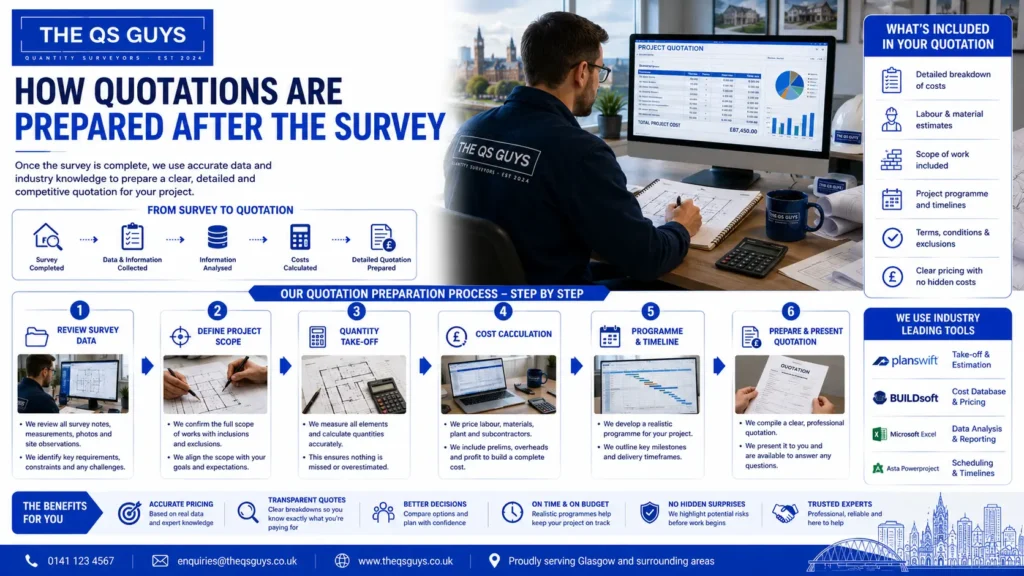
Once a property survey has been completed, the information gathered during the site visit is used to prepare a detailed quotation. This stage involves much more than simply assigning a price to the project. Contractors and service providers carefully review measurements, site conditions, material requirements, labour needs, and project objectives to create an accurate estimate. A well-prepared quotation helps property owners understand what is included in the proposed work, how costs have been calculated, and what to expect throughout the project. This level of detail supports informed decision-making and reduces the likelihood of misunderstandings once work begins.
Calculating Labour and Material Costs
One of the most important stages of preparing a quotation is calculating the labour and material costs required to complete the project successfully. Accurate cost estimation helps ensure that the quotation reflects the true scope of work while providing transparency for the client.
Estimating Resources
Resource estimation involves determining exactly what is needed to complete the project safely and efficiently. This process is based on the information collected during the site survey and the specific requirements of the work.
- Labour Requirements: Contractors assess how many workers will be needed and how much time each stage of the project is expected to take.
- Equipment Needs: Certain projects require specialist tools, machinery, or access equipment that must be factored into the overall cost.
- Material Quantities: Accurate measurements allow estimators to calculate the amount of materials required, helping to reduce waste and improve budgeting accuracy.
- Project-Specific Resources: Some projects require additional resources such as temporary fencing, waste removal services, or safety equipment.
Supplier Pricing Considerations
Material pricing can vary significantly depending on supplier availability, product quality, and market demand. Professional contractors often obtain current pricing information before finalising a quotation.
- Material Quality: Higher-grade materials generally cost more but may offer better durability and performance.
- Supplier Availability: Product shortages or limited stock can influence pricing and lead times.
- Delivery Costs: Transportation expenses may be included depending on the size and location of the project.
- Bulk Purchasing Opportunities: Larger projects may benefit from volume discounts that can help manage costs.
Market Influences
External factors can also affect the pricing included within a quotation. These influences are often beyond the contractor’s control but play an important role in cost calculations.
- Material Price Fluctuations: Construction materials can increase or decrease in price due to changes in manufacturing and supply chains.
- Labour Market Conditions: Skilled trades can become more expensive during periods of high demand.
- Economic Factors: Inflation and changes in operating expenses can impact project pricing.
- Seasonal Demand: Certain industries experience peak periods that can influence both costs and scheduling availability.
Evaluating Project Complexity
Every project presents its own set of challenges. Before finalising a quotation, contractors carefully evaluate the complexity of the work to ensure that pricing and scheduling accurately reflect the level of effort required.
Custom Requirements
Projects that involve customised designs or unique specifications often require additional planning and resources.
- Bespoke Designs: Custom-built features typically involve more detailed preparation and workmanship.
- Special Material Requests: Unique products may require sourcing from specialist suppliers.
- Client Preferences: Individual requirements can affect installation methods, timelines, and overall costs.
- Additional Planning: Complex projects often require more coordination before work begins.
Site Accessibility
Access to the property can significantly influence both project costs and timelines. A site that is easy to access usually requires fewer resources than one with logistical challenges.
- Restricted Access Areas: Limited space may affect equipment movement and material delivery.
- Urban Locations: Busy streets and parking limitations can create additional planning requirements.
- Property Layout: Difficult terrain or confined workspaces may slow progress.
- Safety Considerations: Additional safety measures may be necessary in challenging environments.
Specialist Work Considerations
Some projects require specialised skills, certifications, or technical expertise that must be reflected in the quotation.
- Qualified Trades: Electrical, structural, or specialist installation work often requires certified professionals.
- Technical Requirements: Certain projects involve advanced techniques or equipment.
- Compliance Standards: Industry regulations and safety requirements may add to project costs.
- Additional Inspections: Specialist work may require testing or verification before completion.
Developing a Detailed Scope of Work
A detailed scope of work forms the foundation of a professional quotation. It clearly defines what is included, what responsibilities each party holds, and how the project will progress from start to finish.
Deliverables
Deliverables outline the specific work and outcomes the client can expect upon project completion.
- Defined Outcomes: Clear descriptions of the finished work reduce uncertainty.
- Included Services: Clients can see exactly what has been priced within the quotation.
- Quality Expectations: Standards and specifications are often outlined to establish expectations.
- Completion Criteria: Deliverables help determine when the project has been successfully completed.
Responsibilities
Clearly identifying responsibilities helps prevent confusion throughout the project.
- Contractor Responsibilities: The quotation explains what services the contractor will provide.
- Client Responsibilities: Property owners may need to provide access, approvals, or project information.
- Communication Expectations: Both parties benefit from understanding how updates and decisions will be managed.
- Variation Procedures: Responsibilities relating to project changes are typically outlined in advance.
Project Stages
Breaking a project into stages helps improve organisation and transparency.
- Preparation Phase: Includes planning, material ordering, and site preparation.
- Construction or Installation Phase: Covers the primary work activities.
- Inspection Phase: Allows quality checks and issue identification.
- Completion Phase: Includes final reviews and project handover.
Establishing Estimated Timelines
A professional quotation should also provide realistic expectations regarding how long the project is likely to take. Timelines help property owners plan effectively and understand the sequence of work.
Project Duration
The estimated project duration is based on the size, complexity, and resource requirements identified during the survey.
- Scope of Work: Larger projects naturally require more time to complete.
- Resource Availability: Labour and material scheduling can influence overall duration.
- Site Conditions: Challenging environments may affect productivity.
- Approval Requirements: Certain projects require permissions that can impact scheduling.
Key Milestones
Milestones provide clear checkpoints throughout the project and help track progress.
- Project Start Date: Establishes when work is expected to commence.
- Major Completion Points: Significant stages are identified for monitoring purposes.
- Inspection Dates: Quality reviews may be scheduled at specific points.
- Final Handover: Marks the completion of all agreed work.
Scheduling Factors
Several factors can influence the timeline included within a quotation. Understanding these variables helps set realistic expectations from the beginning.
- Weather Conditions: Outdoor projects may be affected by adverse weather.
- Material Lead Times: Certain products require advance ordering.
- Labour Availability: Skilled trades may have scheduling constraints.
- Project Changes: Variations requested during construction can extend timelines.
A carefully prepared quotation provides far more than a simple price estimate. It serves as a detailed roadmap that explains project costs, requirements, responsibilities, and expected timelines. By understanding how quotations are developed after a survey, property owners can review proposals with greater confidence and make informed decisions that support a smoother and more successful project outcome.
What Should Be Included In A Professional Quotation?
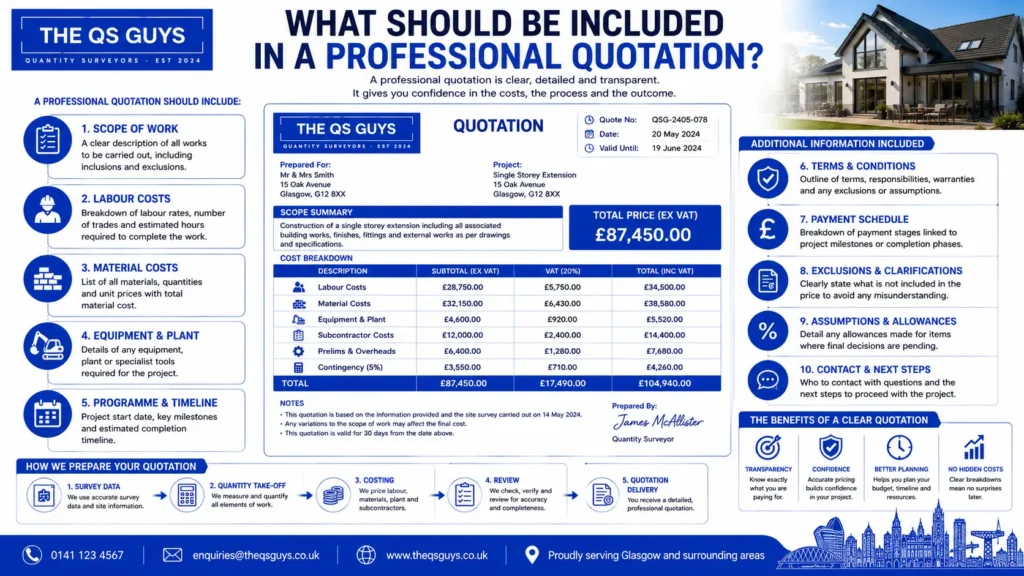
A professional quotation is much more than a simple price estimate. It serves as an important document that outlines exactly what work will be carried out, how much it will cost, how long it is expected to take, and the terms that both parties agree to follow. For homeowners and property owners in Glasgow, a detailed quotation provides transparency and helps avoid misunderstandings once a project begins. Reviewing each section carefully allows you to compare contractors accurately and make informed decisions based on value rather than price alone.
Clear Breakdown of Costs
One of the most important parts of any professional quotation is a clear and itemized breakdown of costs. Rather than presenting a single total figure, reputable contractors explain where the costs come from and what is included. This level of detail helps property owners understand how their budget is being allocated and provides confidence that there are no hidden charges.
Materials
Material costs should outline the products and supplies required to complete the project. This may include building materials, fixtures, fittings, finishes, and any specialist products needed for the work.
- Product Details: Information about the type and quality of materials being supplied.
- Quantity Estimates: An overview of how much material is expected to be used throughout the project.
- Supplier Considerations: Material pricing may vary based on availability, delivery costs, and market conditions.
- Upgrade Options: Some quotations include alternative material choices for clients who want to compare costs and quality levels.
Labour
Labour costs represent the time and expertise required to complete the work. Skilled tradespeople, specialist contractors, and project managers all contribute to the overall labour cost.
- Trade-Specific Work: Costs may be separated based on different trades involved in the project.
- Estimated Working Hours: Labour calculations are often based on expected project duration.
- Specialist Skills: Projects requiring advanced expertise may carry higher labour costs.
- Site Management: Larger projects may include supervision and project coordination costs.
Equipment
Certain projects require equipment, machinery, or specialist tools that contribute to overall costs. Including these expenses within the quotation provides greater transparency.
- Machinery Hire: Equipment such as lifts, excavators, or access platforms.
- Specialist Tools: Project-specific tools needed to perform certain tasks safely and efficiently.
- Transportation Costs: Delivery and collection of equipment to and from the site.
- Safety Equipment: Protective equipment required to meet health and safety standards.
Additional Services
Some projects require services beyond the core scope of work. These should be clearly identified within the quotation.
- Waste Removal: Collection and disposal of construction debris.
- Site Preparation: Ground preparation, clearing, or demolition work before the main project begins.
- Permits and Applications: Assistance with approvals or regulatory requirements where applicable.
- Post-Project Services: Final cleaning, inspections, or maintenance recommendations.
Scope Of Work And Deliverables
The scope of work explains exactly what the contractor is agreeing to deliver. This section helps establish expectations and reduces the likelihood of disputes later in the project.
Detailed Project Description
A comprehensive project description outlines the work that will be completed and the objectives of the project.
- Work Summary: A clear explanation of the proposed work.
- Project Objectives: The intended outcome and expected results.
- Site-Specific Requirements: Details relating to the property’s unique conditions.
- Technical Specifications: Any standards, measurements, or requirements relevant to the work.
Included Services
This section identifies all services covered within the quoted price. Understanding what is included helps clients compare quotations fairly.
- Preparation Work: Activities completed before construction or installation begins.
- Core Services: The primary work being carried out.
- Finishing Work: Final adjustments, finishing touches, and completion activities.
- Clean-Up Responsibilities: Details regarding site cleanliness and waste removal.
Exclusions
Exclusions are equally important because they clarify what is not included within the quoted price. Knowing these limitations helps prevent confusion and unexpected expenses.
- Additional Work Requests: Tasks outside the agreed scope.
- Unforeseen Repairs: Issues discovered after work begins that were not visible during the survey.
- Third-Party Services: Work performed by external specialists not included in the quotation.
- Permit Fees: Certain applications or regulatory charges may be excluded.
Project Timeline And Milestones
A well-prepared quotation should provide realistic timing expectations. This allows property owners to plan around the project and understand when key stages are expected to occur.
Start Dates
The anticipated start date gives clients an indication of when work can begin.
- Scheduling Availability: Start dates may depend on contractor workload and resource availability.
- Material Procurement: Some projects require materials to be ordered before work starts.
- Approval Requirements: Certain projects may need approvals before commencement.
- Client Readiness: Site access and preparation can influence scheduling.
Completion Estimates
Estimated completion dates help establish realistic expectations for project duration.
- Project Complexity: Larger projects typically require longer completion periods.
- Weather Conditions: External work may be affected by seasonal factors.
- Supply Chain Factors: Delays in material availability can impact schedules.
- Unexpected Discoveries: Hidden issues identified during construction may extend timelines.
Project Phases
Breaking work into phases helps clients understand how the project will progress from beginning to end.
- Preparation Stage: Initial setup, planning, and site preparation.
- Construction Stage: The primary work is carried out.
- Inspection Stage: Quality checks and verification of completed work.
- Completion Stage: Final handover and project sign-off.
Terms, Conditions, And Payment Schedules
The terms and conditions section protects both the contractor and the client by establishing clear expectations regarding payments, responsibilities, and warranties.
Deposits
Many contractors require an initial deposit before work begins. This helps secure scheduling and cover early project expenses.
- Booking Confirmation: Deposits often secure a place in the contractor’s schedule.
- Material Purchases: Initial funds may be used to purchase required materials.
- Project Commitment: Demonstrates commitment from both parties.
- Payment Clarity: The quotation should specify the exact deposit amount and due date.
Progress Payments
For larger projects, payments are often divided into stages based on completed work.
- Milestone-Based Payments: Payments tied to specific project achievements.
- Cash Flow Management: Helps balance costs throughout the project.
- Progress Verification: Clients can review completed work before making payments.
- Transparency: Clearly defined payment stages reduce misunderstandings.
Warranty Information
Warranty details provide reassurance that the contractor stands behind the quality of their work.
- Workmanship Coverage: Protection against installation or construction defects.
- Material Warranties: Coverage offered by manufacturers for supplied products.
- Warranty Periods: Specific timeframes during which issues will be addressed.
- Claim Procedures: Information on how warranty-related concerns should be reported.
A professional quotation provides far more than a price. It establishes expectations, outlines responsibilities, and creates a clear roadmap for the project ahead. Taking the time to review every section carefully can help you choose the right contractor, avoid unexpected costs, and move forward with greater confidence from the very beginning.
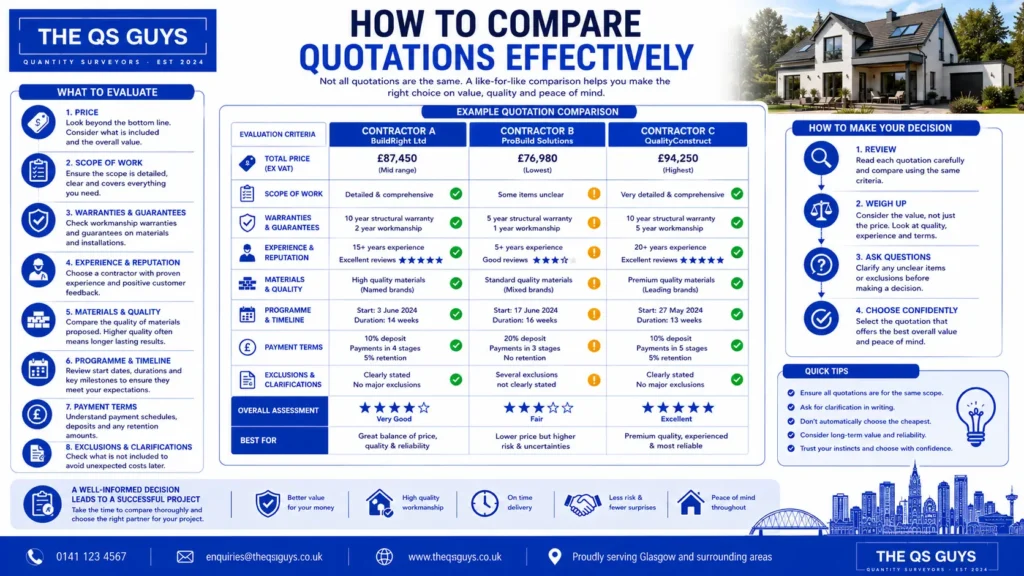
How To Compare Quotations Effectively
Receiving multiple quotations is a smart step when planning a property improvement, renovation, or construction project. While it may be tempting to focus on the final price, a thorough comparison involves much more than identifying the cheapest option. A well-prepared quotation provides insight into the contractor’s professionalism, attention to detail, and understanding of the project. By carefully evaluating costs, scope, transparency, and experience, property owners can make informed decisions that support successful project outcomes and reduce the likelihood of unexpected issues later.
Looking Beyond the Lowest Price
The lowest quotation is not always the best value. While cost is an important factor, it should be considered alongside quality, reliability, and the level of service being offered. A lower price may sometimes indicate that important elements have been excluded or underestimated.
Value Versus Cost
When comparing quotations, it is important to understand the difference between cost and value. Cost refers to the amount you pay, while value relates to what you receive in return.
- Comprehensive Inclusions: A slightly higher quotation may include services, materials, or warranties that are not provided by a lower-priced competitor.
- Project Accuracy: Detailed quotations often reflect a more thorough site assessment and planning process, reducing the risk of additional costs later.
- Professional Service: Experienced contractors may charge more because they invest time in project management, quality control, and customer support.
Quality Considerations
The quality of materials and workmanship can significantly affect the lifespan and performance of a completed project. Choosing solely based on price can sometimes lead to compromises that create future expenses.
- Material Standards: Higher-quality materials may offer greater durability and lower maintenance requirements.
- Workmanship Expectations: Skilled tradespeople often deliver better finishes and more reliable results.
- Compliance Requirements: Professional contractors are more likely to follow relevant building standards and industry practices.
Long-Term Outcomes
A project should be evaluated based on its long-term performance rather than its initial price alone.
- Reduced Repairs: Quality work can help prevent avoidable repairs and maintenance costs.
- Property Value: Well-executed improvements may contribute positively to property value.
- Peace Of Mind: Reliable workmanship often provides confidence that the project will perform as intended for years to come.
Assessing Scope and Transparency
A quotation should clearly explain what work is included, what materials will be used, and any limitations or exclusions. Transparency helps prevent misunderstandings and ensures that all parties share the same expectations.
Identifying Missing Items
Not all quotations include the same level of detail. Missing information can lead to unexpected charges once work begins.
- Labour Details: Confirm whether labour costs are fully included.
- Material Specifications: Check if specific products or materials are listed.
- Site Preparation: Determine whether preparation and cleanup services are part of the quotation.
- Additional Charges: Look for potential costs related to permits, waste removal, or equipment hire.
Comparing Like-For-Like Proposals
A fair comparison requires evaluating quotations based on the same project requirements.
- Scope Consistency: Ensure each contractor is pricing the same work.
- Material Equivalents: Verify that similar material grades and product types are being quoted.
- Timeline Comparisons: Consider project duration and scheduling commitments.
- Warranty Coverage: Compare guarantees and after-completion support.
Reviewing Contractor Experience and Reputation
The quality of a quotation often reflects the experience and professionalism of the contractor preparing it. Evaluating a company’s reputation can provide valuable insight before making a decision.
Customer Reviews
Customer feedback can reveal how a contractor performs in real-world situations.
- Communication Quality: Reviews often highlight responsiveness and professionalism.
- Project Satisfaction: Consistent positive feedback may indicate reliable service.
- Problem Resolution: Look for evidence that issues are handled professionally when they arise.
Previous Projects
Past work can demonstrate the contractor’s ability to deliver results similar to your own project requirements.
- Relevant Experience: Focus on projects that match the type and scale of work you need completed.
- Quality Of Finish: Examine photographs or project portfolios carefully.
- Project Variety: A broad portfolio may indicate adaptability and technical capability.
Industry Expertise
Knowledge and experience contribute significantly to project success.
- Technical Understanding: Experienced contractors can identify potential challenges before work begins.
- Practical Recommendations: Industry expertise often results in useful suggestions that improve outcomes.
- Accurate Estimating: Professionals with extensive experience typically provide more reliable quotations.
Questions to Ask Before Accepting a Quote
Before committing to a contractor, take time to discuss the quotation and clarify any areas that may be unclear. Open communication helps establish realistic expectations and reduces the risk of misunderstandings.
Clarifications
A quotation should be fully understood before acceptance.
- Included Services: Ask for confirmation of exactly what is covered.
- Excluded Work: Identify any tasks that are not part of the quotation.
- Material Choices: Request clarification regarding products and specifications.
Variations Process
Changes sometimes occur during projects, making it important to understand how variations will be handled.
- Approval Procedures: Confirm whether written approval is required before additional work proceeds.
- Cost Adjustments: Ask how changes will affect the final project cost.
- Documentation Standards: Ensure variations are recorded clearly and transparently.
Communication Expectations
Good communication supports smoother project delivery from start to finish.
- Primary Contact: Determine who will be responsible for updates and project coordination.
- Progress Updates: Ask how frequently project updates will be provided.
- Issue Resolution: Understand the process for addressing concerns if they arise during the project.
Taking the time to compare quotations carefully can lead to better project outcomes, improved value, and greater confidence in your chosen contractor. A detailed, transparent quotation combined with proven experience and clear communication often provides a stronger foundation for success than simply selecting the lowest price.
Common Factors That Influence Quotation Costs In Glasgow
When reviewing quotations for property improvements, construction work, or renovation projects, many homeowners are surprised by how much prices can vary between contractors. While every project is unique, several key factors directly affect the final quotation. Understanding these cost drivers can help property owners evaluate quotes more effectively, ask informed questions, and gain a clearer understanding of what influences project pricing in Glasgow.
Property Size and Complexity
The size and complexity of a property are among the most significant factors that influence quotation costs. Larger projects generally require more materials, labour, equipment, and planning, which naturally increases the overall investment.
Larger Properties
Larger homes, commercial buildings, and extensive outdoor spaces often require additional resources to complete the work safely and efficiently. More square footage means greater material quantities, longer installation times, and increased labour requirements.
Some examples include:
- Additional Materials: Larger projects typically require more concrete, timber, roofing materials, insulation, or finishing products.
- Extended Labour Time: Bigger properties often involve additional work hours and larger teams to meet project deadlines.
- Increased Equipment Needs: Certain projects may require specialised machinery or access equipment to reach larger work areas.
As project size increases, contractors must carefully assess both direct costs and project management requirements to ensure the quotation accurately reflects the scope of work.
Unique Project Requirements
No two properties are exactly alike. Certain projects involve custom-built features, non-standard layouts, or specialised construction methods that can increase costs.
Examples of unique project requirements may include:
- Custom Design Elements: Bespoke features often require additional planning, fabrication, and installation time.
- Older Property Challenges: Period homes may present structural concerns or hidden issues that require specialist attention.
- Complex Construction Work: Projects involving unusual dimensions, multiple phases, or structural modifications typically require more detailed planning.
Contractors often spend considerable time assessing these factors during the survey stage to ensure quotations reflect the true complexity of the work involved.
Material Selection and Availability
The materials chosen for a project can significantly affect the overall quotation. Material costs can vary considerably depending on quality, availability, durability, and supplier pricing.
Premium Materials
Many property owners choose higher-quality materials because of their appearance, longevity, or performance. While these products often provide long-term value, they usually come at a higher initial cost.
Examples include:
- Premium Finishes: High-end flooring, worktops, cladding, or decorative materials generally cost more than standard alternatives.
- Enhanced Durability: Materials designed to withstand harsh weather conditions may carry a higher purchase price.
- Specialist Products: Custom-made or imported materials can increase both procurement and installation costs.
A professional quotation should clearly identify material specifications so clients understand exactly what is included.
Supply Chain Considerations
Material pricing is not always stable. Supply chain conditions can affect both availability and cost, particularly for specialist or imported products.
Several factors may influence pricing:
- Supplier Availability: Limited stock levels can increase costs and extend lead times.
- Transportation Costs: Rising fuel and logistics expenses may impact material pricing.
- Market Demand: High demand for certain products can affect availability and overall project costs.
Contractors often monitor supplier pricing closely to provide accurate quotations based on current market conditions.
Labour Requirements
Labour is a major component of most project quotations. The amount of labour required depends on the complexity of the work, the skills needed, and the estimated project duration.
Specialist Trades
Certain projects require highly trained professionals with specific qualifications and experience. Specialist trades often command higher rates due to their expertise and certification requirements.
Examples include:
- Electrical Work: Certified electricians must comply with current safety regulations.
- Structural Work: Structural modifications often require experienced construction professionals.
- Plumbing Installations: Qualified plumbers are essential for water, drainage, and heating systems.
Although specialist labour may increase costs, it helps ensure work is completed safely and to industry standards.
Project Duration
The length of time required to complete a project has a direct impact on labour costs. Projects that extend over several weeks or months generally require more workforce planning and resource allocation.
Factors affecting project duration include:
- Scope of Work: Larger projects naturally require more working days.
- Weather Conditions: Outdoor projects may experience delays due to adverse weather.
- Coordination Between Trades: Multiple trades often need to work in a specific sequence to maintain project efficiency.
Accurate scheduling during the survey and quotation process helps establish realistic timelines and cost expectations.
Site Access and Local Conditions
Site conditions can significantly influence both labour efficiency and project logistics. Even relatively straightforward work can become more complex when access is limited or site-specific challenges exist.
Restricted Access
Properties with difficult access often require additional planning and labour to transport materials, equipment, and waste safely.
Common access challenges include:
- Narrow Driveways: Limited vehicle access can increase manual handling requirements.
- Terraced Properties: Closely spaced homes may restrict equipment movement.
- Limited Storage Space: Smaller sites often require more frequent material deliveries.
These logistical factors can increase project costs due to the additional time and coordination involved.
Urban Property Challenges
Many properties in Glasgow are located within densely populated urban areas where construction work must be carefully managed.
Potential challenges include:
- Parking Restrictions: Contractors may need permits or alternative arrangements for work vehicles.
- Neighbouring Properties: Close proximity to adjacent buildings can affect working methods.
- Traffic Management: Busy streets may limit delivery schedules and equipment access.
These considerations can affect project efficiency and influence quotation pricing.
Glasgow-Specific Considerations
Glasgow presents several local factors that contractors often consider during the survey process. Weather conditions, property age, and regional construction requirements can all influence project costs.
Examples include:
- Older Housing Stock: Many Glasgow properties contain traditional construction features that require specialist knowledge.
- Weather Exposure: Frequent rainfall may affect project scheduling and material selection.
- Local Building Requirements: Compliance with local regulations and planning considerations can influence project scope and costs.
Experienced contractors familiar with Glasgow’s property market are often better equipped to identify these factors early and provide realistic, transparent quotations.
Understanding the factors that influence quotation costs can help property owners make better-informed decisions when comparing contractors and planning projects. A detailed survey combined with a transparent quotation provides greater clarity, reduces uncertainty, and helps ensure that both the contractor and client share realistic expectations from the beginning of the project.

Avoiding Common Mistakes During The Survey And Quotation Process
A survey and quotation process is designed to provide clarity before a project begins, but mistakes made during this stage can lead to confusion, unexpected expenses, and dissatisfaction later. Whether you are planning a renovation, construction project, or property improvement in Glasgow, understanding the most common pitfalls can help you make better decisions and protect your investment. Taking the time to review quotations carefully, ask questions, and verify credentials often results in a smoother experience from start to finish.
Accepting Incomplete Quotes
One of the most common mistakes property owners make is accepting a quotation without reviewing whether it contains enough detail. A professional quotation should provide a clear explanation of the work involved, the materials being used, estimated timelines, and any conditions that may affect pricing. When important information is missing, misunderstandings can arise once the project begins.
Missing Details
An incomplete quotation may appear attractive because it seems straightforward, but a lack of detail often creates uncertainty.
- Scope Of Work: The quotation should clearly explain exactly what services are included and what work will be carried out.
- Material Specifications: Details about materials help ensure you know the quality and type of products being used.
- Project Timeline: Expected start dates and completion estimates help establish realistic expectations.
- Responsibilities: The document should identify who is responsible for permits, waste removal, site preparation, or other project requirements.
Without these details, comparing quotations from different contractors becomes difficult because you may not be comparing the same level of service.
Hidden Costs
Hidden costs are often the result of unclear quotations rather than deliberate actions. If certain services or materials are not specified, they may be treated as additional charges later.
- Additional Materials: Extra materials may be required if quantities were underestimated during the quoting stage.
- Site Conditions: Unexpected issues discovered during work can affect costs if they were not identified during the survey.
- Specialist Services: Electrical, plumbing, structural, or compliance-related work may not always be included unless specifically listed.
- Disposal Fees: Waste removal and cleanup costs can sometimes be excluded from initial quotations.
Reviewing quotations thoroughly and asking for clarification before accepting them can reduce the likelihood of unexpected expenses.
Focusing Solely On Price
While budget is an important factor, choosing a contractor based only on the lowest price can create problems later. A quotation should be evaluated based on overall value rather than cost alone. A slightly higher quotation may include better materials, stronger workmanship, or a more detailed project plan.
Risks Of Low-Cost Estimates
Low-cost estimates may appear appealing at first, but they can sometimes indicate that important elements have been overlooked.
- Incomplete Costing: Some quotations may exclude necessary items to appear more competitive.
- Lower-Grade Materials: Cheaper materials can reduce upfront costs but may lead to earlier repairs or replacements.
- Limited Scope: Certain tasks may not be included, resulting in additional charges later.
- Reduced Resources: Insufficient labour allocation can affect project timelines and outcomes.
A well-prepared quotation should balance affordability with realistic project requirements.
Quality Implications
Quality should remain a major consideration when comparing quotations. The lowest price does not always provide the best long-term result.
- Workmanship Standards: Skilled professionals often invest significant time in preparation and quality control.
- Material Durability: Higher-quality materials can offer greater longevity and performance.
- Project Reliability: Experienced contractors typically provide more accurate planning and communication.
- Future Costs: Poor-quality work can lead to repairs that ultimately cost more than selecting a reputable contractor from the start.
Evaluating both cost and quality helps ensure better value for your investment.
Not Clarifying Project Expectations
Many disputes occur because the client and contractor have different expectations about the project outcome. Clear communication before work begins is one of the most effective ways to avoid misunderstandings.
Scope Misunderstandings
The project scope should be discussed in detail before accepting a quotation. Even small assumptions can lead to significant differences in expectations.
- Project Deliverables: Both parties should understand what work will be completed.
- Material Choices: Product selections should be agreed upon before work begins.
- Site Access Requirements: Access arrangements can affect scheduling and logistics.
- Completion Standards: Expectations regarding the finished result should be clearly communicated.
Documenting these details helps create a shared understanding between all parties involved.
Change Requests
Changes during a project are common, but they should be managed carefully to avoid confusion and budget issues.
- Cost Adjustments: Any changes may affect labour and material costs.
- Timeline Changes: Additional work can extend project completion dates.
- Written Approval: Updated quotations or variation documents help maintain transparency.
- Clear Communication: Discussing changes before work proceeds reduces the risk of disagreements.
A structured approach to change requests keeps the project organised and predictable.
Skipping Due Diligence
Choosing a contractor without proper research can expose property owners to unnecessary risks. Taking time to verify qualifications and credentials helps ensure you are working with a reputable professional.
Contractor Verification
Before accepting a quotation, it is important to evaluate the contractor’s background and track record.
- Customer Reviews: Independent reviews can provide insight into reliability and customer satisfaction.
- Previous Projects: Examples of completed work demonstrate experience and capability.
- Industry Experience: Established professionals often have stronger processes and project management skills.
- References: Speaking with previous clients can help confirm the quality of service provided.
Verification helps build confidence before entering into a working relationship.
Insurance And Credentials
Insurance and professional credentials provide important protection for both the contractor and the property owner.
- Public Liability Insurance: Protects against damage or incidents that may occur during the project.
- Trade Certifications: Relevant qualifications demonstrate technical knowledge and competence.
- Health And Safety Compliance: Professional contractors should follow appropriate safety standards.
- Business Legitimacy: Registered businesses with clear contact details often provide greater accountability.
Confirming these details before work begins can help prevent complications and provide greater peace of mind throughout the project.
Taking a careful and informed approach during the survey and quotation process can help you avoid unnecessary costs, misunderstandings, and project delays. By reviewing quotations thoroughly, prioritising value over price alone, clarifying expectations, and verifying contractor credentials, you place yourself in a stronger position to achieve a successful project outcome with confidence.
If you are planning a property project and want clear pricing, accurate assessments, and professional guidance from the start, take the next step by arranging a survey and quotation with an experienced specialist. A thorough evaluation can help you understand your options, avoid costly surprises, and move forward with confidence, giving you the information you need to make the right decision for your property and budget.
References
- The Complete Guide to Residential Construction Estimating
https://blog.constructiononline.com/the-complete-guide-to-residential-construction-estimating - Free Construction Quote Template & How-To Guide
https://pro.houzz.com/pro-learn/blog/startup-guide-residential-construction-quote-template - Construction Cost Estimating: A Step-By-Step Guide
https://www.procore.com/library/construction-estimating - Land Surveying Quote Template
https://www.quotientapp.com/examples/land-surveying-quote-template - How to Quote for Construction Work: A Step-by-Step Guide for Accurate Estimates
https://www.e-a-a.com/how-to-quote-for-construction-work/ - Construction Quotation Guide: How To Quote A Construction Job
https://invoicefly.com/academy/construction-quotation/
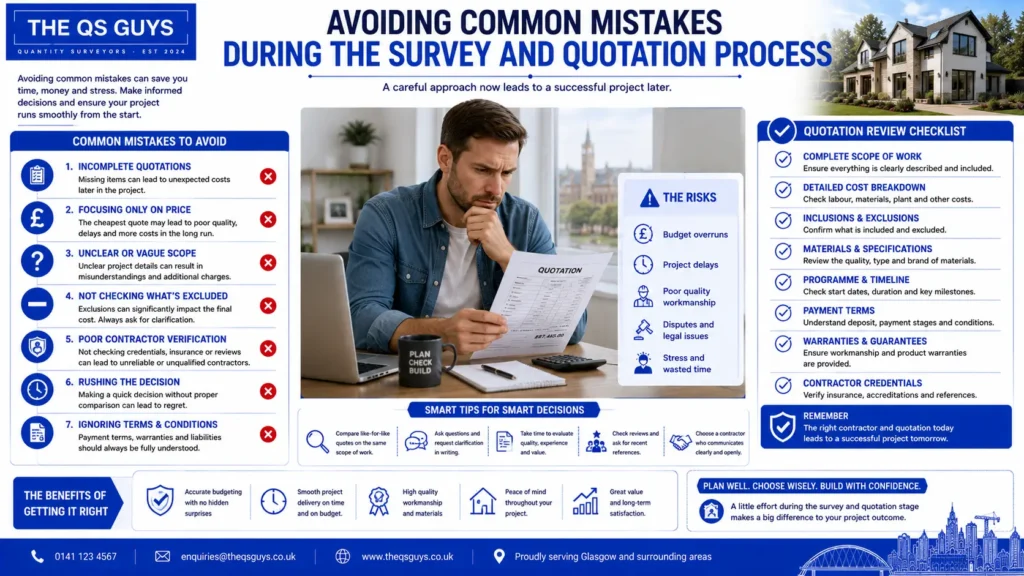
FAQs: About Survey and Quotation Process Glasgow
What is the survey and quotation process in Glasgow?
The survey and quotation process involves an initial consultation, a site visit to assess the property, and the preparation of a detailed quotation. The quotation outlines project costs, materials, labour requirements, timelines, and any relevant terms so property owners can make informed decisions.
Why is a property survey important before receiving a quotation?
A property survey allows professionals to assess site conditions, take measurements, identify challenges, and understand project requirements. This information helps create a more accurate quotation and reduces the risk of unexpected costs later.
How long does a site survey usually take?
The duration depends on the size and complexity of the project. Smaller residential surveys may take less than an hour, while larger or more complex projects can require additional time to gather all necessary information.
Is a survey always required before a quotation is provided?
Many contractors prefer to conduct a survey before issuing a detailed quotation because it improves accuracy. Some smaller projects may receive an initial estimate based on photos or information provided by the property owner, but a site visit often produces a more reliable quote.
What information is typically included in a professional quotation?
A professional quotation usually includes a breakdown of labour costs, material costs, project scope, estimated timelines, payment terms, and any exclusions. It should clearly explain what work will be completed and under what conditions.
Can the final project cost differ from the original quotation?
In some cases, costs can change if unforeseen issues are discovered after work begins or if the project scope changes. Reputable contractors typically discuss variations with the client and provide updated pricing before proceeding.
How can I compare quotations from different contractors?
Look beyond the total price and compare the scope of work, materials, timelines, warranties, and level of detail provided. A lower quote may not always represent better value if important items have been omitted.
How long are quotations usually valid for?
Most quotations remain valid for a specified period, often between 30 and 90 days. This allows for fluctuations in material costs, supplier pricing, and scheduling availability while giving customers time to make a decision.
What factors influence quotation costs in Glasgow?
Several factors can affect pricing, including property size, project complexity, labour requirements, material selection, site access, and local market conditions. Each project is unique, which is why detailed surveys are important for accurate costing.
What happens after I accept a quotation?
Once a quotation is accepted, the contractor typically confirms scheduling, finalises project details, and prepares for the work to begin. Both parties should have a clear understanding of the scope, timeline, payment arrangements, and communication process before construction starts.
Conclusion
A clear understanding of the survey and quotation process can make a significant difference when planning any property improvement, renovation, or construction project. Many homeowners focus on the final price alone, but the survey and quotation stages provide valuable information that helps prevent misunderstandings, manage budgets, and establish realistic expectations from the beginning. A professional survey identifies the specific requirements of the property, while a detailed quotation outlines the proposed work, estimated costs, materials, labour, and project timelines. Together, these steps give property owners the confidence to compare options, assess value, and make informed decisions that support successful project outcomes.