Builder Cost Estimator Garage UK Cost Guide
Welcome to our comprehensive guide on using a builder cost estimator for a garage in the UK, where you will learn how much it typically costs to build a garage, what factors influence pricing, and how to create a realistic budget before starting your project. Whether you are planning a simple single garage, a larger double garage, or a custom design with additional features, understanding the true costs involved can help you avoid unexpected expenses and make informed decisions. In this guide, we break down construction costs, labour rates, materials, planning requirements, and regional price differences across the UK so you can confidently estimate your investment and plan your garage build with greater accuracy.
A builder cost estimator for a garage in the UK helps homeowners calculate the likely cost of building a garage based on factors such as size, materials, labour, foundations, roofing, and location. Most UK garage projects range from several thousand pounds for basic builds to significantly more for larger or custom-designed garages.
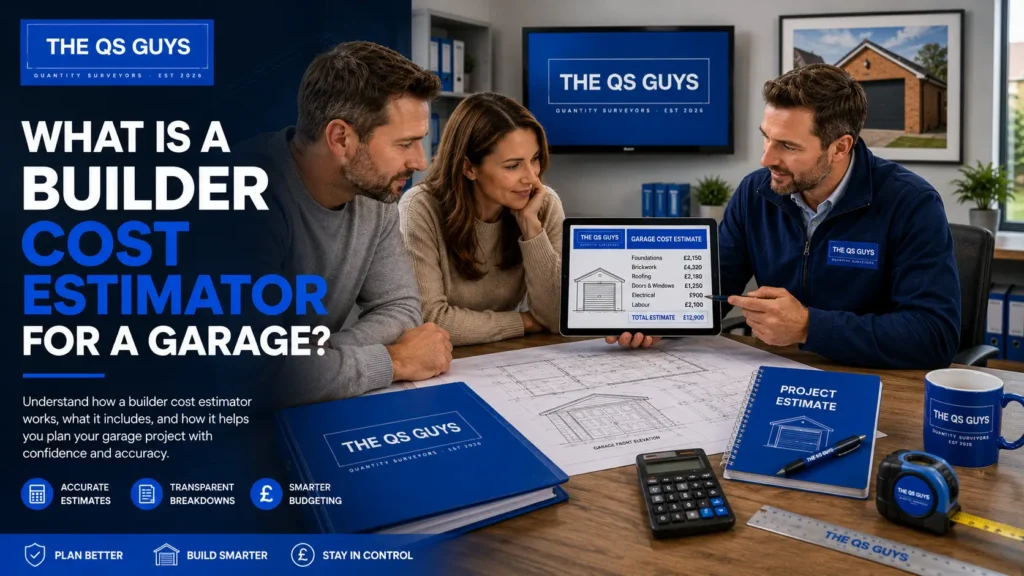
What Is A Builder Cost Estimator For A Garage?
A builder cost estimator for a garage is a practical tool or calculation process used to work out the likely cost of building a garage before construction begins. It helps homeowners understand what they may need to budget for, from materials and labour to foundations, roofing, doors, electrics, and planning requirements. For anyone researching builder cost estimator garage UK guidance, this step is important because garage-building costs can vary widely depending on the size, design, location, and level of finish.
Understanding Garage Construction Cost Estimates
A garage construction cost estimate gives you an early idea of how much your project may cost based on the details available at the planning stage. It usually considers the garage size, construction method, material choices, site conditions, and any additional features you want included. A simple single-garage estimate will look very different from a double-garage estimate with insulation, electric doors, lighting, and storage space.
A builder cost estimator does not just produce a random figure. It breaks the project into smaller cost areas so you can see where your money is likely to go. This helps you make better decisions before speaking to builders, requesting quotes, or adjusting your plans. For example, you may realise that a pitched roof, premium garage door, or complex foundation design could increase the final budget.
It is also important to understand the difference between a rough estimate and a detailed builder quotation. A rough estimate is useful during the early planning stage, but it is usually based on average prices and general assumptions. A detailed builder quotation is more accurate because it is based on your specific site, design, measurements, materials, and local labour rates.
Accurate budgeting matters because garage projects often involve costs that are easy to overlook. Site access, drainage, excavation, waste removal, building-control fees, and electrical work can all affect the final price. By using a realistic garage cost estimate early, homeowners can avoid under-budgeting and reduce the chance of unexpected expenses once work begins.
- Early-stage planning: A builder cost estimator helps you understand whether your garage project is financially realistic before you commit to designs, applications, or contractor quotes.
- Cost comparison: It allows you to compare different garage types, such as brick-built, block-built, timber-framed, attached, or detached garages.
- Budget control: A clear estimate makes it easier to prioritise important features and avoid spending too much on upgrades that may not be essential.
- Quote preparation: When you already understand the likely cost areas, you can ask builders better questions and compare quotations more confidently.
Factors Included In A Garage Cost Estimate
A reliable garage cost estimate should include more than the basic shell of the building. Many homeowners focus only on walls and roofing, but the true cost of building a garage in the UK depends on several connected parts of the project. A proper estimate should reflect the full scope of work from ground preparation to final fittings.
Labour costs are one of the biggest parts of any garage-building budget. These costs cover the skilled work needed to prepare the site, lay foundations, build walls, install roofing, fit doors and windows, and complete finishing work. Labour rates can vary depending on the region, the complexity of the design, and the experience of the builder.
Materials also have a major impact on the final price. A brick-built garage may cost more than a basic timber structure, but it can offer stronger long-term durability and a better match with the existing property. Roofing materials, insulation, windows, garage doors, guttering, and internal finishes should all be included when estimating the total cost.
Foundations are another key cost area because they support the entire structure. The required foundation type will depend on the garage size, ground conditions, soil quality, and whether the garage is attached or detached. Poor ground conditions may require deeper excavation, reinforced concrete, or additional preparation, which can increase the overall budget.
Roofing costs depend on the roof shape, materials, and structural requirements. A flat-roof garage is often cheaper to build, while a pitched-roof garage may cost more but can provide better drainage, a more traditional appearance, and possible loft-storage space. The choice between felt, tiles, slate, or other roof coverings will also affect the estimate.
Doors and windows should be included carefully because prices can vary significantly. A basic manual garage door will usually cost less than an insulated sectional door or electric roller door. Windows, side-access doors, security locks, and glazing choices can also change the final figure.
Electrical installations are another common cost that should not be ignored. Many garages need lighting, sockets, external security lights, or power for an electric garage door. If the garage will be used as a workshop, gym, utility space, or storage area, it may require a more detailed electrical layout.
Planning and building regulations can also affect the cost. Some garages may fall under permitted-development rights, while others may need planning permission, building-regulation approval, inspections, or professional drawings. These requirements depend on the garage size, height, location, use, and relationship to the existing property.
- Labour costs: These cover the skilled trades required to complete the build, including groundwork, brickwork, roofing, joinery, electrical work, and finishing.
- Materials: The estimate should include structural materials, roofing products, doors, windows, insulation, guttering, and any internal finishes.
- Foundations: The cost will depend on soil conditions, garage size, excavation depth, concrete requirements, and drainage needs.
- Roofing: A garage estimate should allow for the roof structure, covering, waterproofing, guttering, and any insulation or ventilation.
- Doors and windows: These can affect both cost and usability, especially when choosing secure, insulated, or electric options.
- Electrical installations: Lighting, sockets, consumer-unit upgrades, external lights, and garage-door power supplies should be considered early.
- Planning and regulations: Application fees, building-control inspections, drawings, and compliance work may need to be included depending on the project.
A builder cost estimator for a garage is most useful when it reflects real project details rather than broad assumptions. By understanding what goes into the estimate, homeowners can plan more confidently, compare quotes fairly, and make informed decisions before moving ahead with a garage build.
Average Cost To Build A Garage In The UK
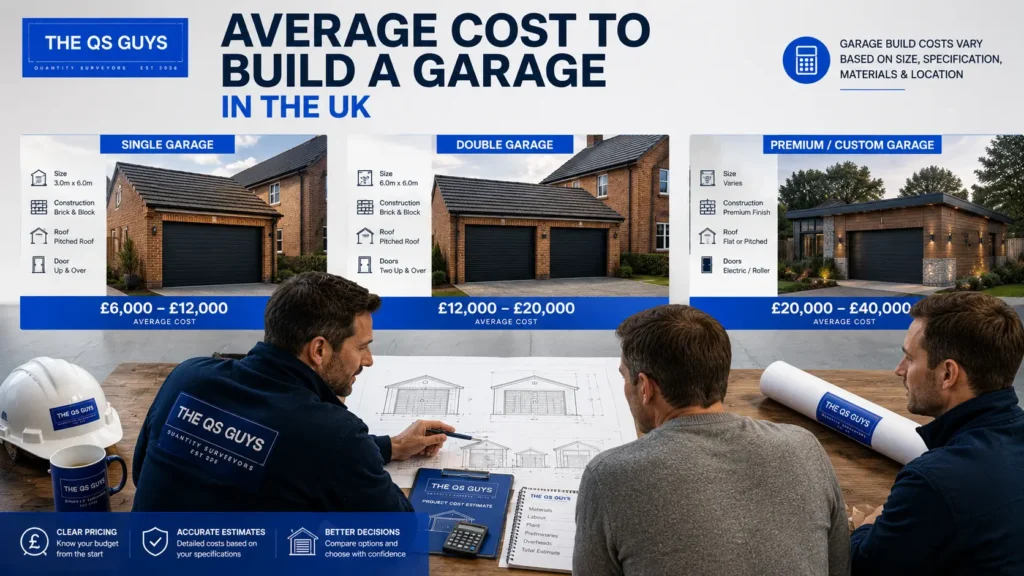
The average cost to build a garage in the UK depends on the garage size, construction method, roof type, ground conditions, location, and finish level. As a broad guide, current UK garage-build prices can range from around £21,000 to £58,000 for many new garage projects, while larger, higher-specification builds can cost more. A builder cost estimator for garage UK projects should always treat these figures as a starting point, not a fixed quote, because site-specific factors can change the final price.
Single Garage Cost Estimates
A typical single garage is often designed for one vehicle, with enough space for basic storage or movement around the car. A common UK single-garage size is around 3 metres wide by 6 metres deep, although many homeowners choose a slightly wider layout if they want shelving, bikes, tools, or a small workbench.
The cost of a single garage usually sits at the lower end of the garage-build scale because it needs less excavation, fewer materials, a smaller roof structure, and less labour than a double or custom garage. However, the final price can still rise if the project includes a pitched tiled roof, brickwork to match the house, upgraded doors, electrical wiring, drainage, insulation, or difficult ground preparation.
- Typical Size: A standard single garage is commonly around 3m x 6m, but a more practical design may be wider if the garage will be used for storage as well as parking.
- Basic Specification: A simple flat-roof single garage will usually cost less than a brick-built, pitched-roof option with power, lighting, and premium finishes.
- Cost Drivers: Foundations, roof style, garage-door type, local labour rates, and access to the site can all affect the total cost.
Double Garage Cost Estimates
A double garage is usually designed for two vehicles or for one vehicle plus a generous storage or workshop area. Because the footprint is much larger than a single garage, the project needs more ground preparation, more concrete, more walling materials, a wider roof span, and often a larger or more complex garage-door system.
In many UK garage cost guides, double garages sit noticeably higher than single garages because the build involves a larger structure and a longer construction programme. For example, recent UK cost data shows that a brick garage measuring around 6m wide by 6m deep can cost between £24,000 and £32,000, while broader double-garage estimates can rise much higher depending on roof type, region, and finish level.
- Larger Footprint: A double garage commonly needs around twice the floor area of a single garage, which increases material, labour, and foundation costs.
- Roof Structure: A larger roof can add significant expense, especially if the design uses tiles, insulation, guttering, and more complex structural support.
- Better Functionality: Although a double garage costs more upfront, it can offer stronger long-term value for homeowners who need parking, storage, workshop space, or future conversion potential.
Triple And Custom Garage Costs
Triple and custom garages sit at the higher end of the UK garage-building market. These projects are rarely priced accurately using a simple online calculator because the design, specification, and site conditions can vary so widely. A triple garage may include multiple doors, additional roof spans, reinforced foundations, electric access, storage zones, a workshop area, or even a room above the garage.
Custom designs also cost more because they often require more planning, design input, specialist trades, and higher-quality materials. A bespoke garage may be built to match the main property, include premium brickwork, use a pitched tiled roof, or require extra structural detailing to suit the site.
- Premium Materials: Higher-quality brick, roof tiles, doors, windows, insulation, and internal finishes can increase the total build cost quickly.
- Bespoke Design: Custom layouts often need more design work and more detailed pricing than standard single or double-garage builds.
- Specialist Requirements: Projects with rooms above, complex drainage, sloping sites, or integrated utilities may need input from structural engineers, electricians, drainage specialists, or planning consultants.
Garage Cost Per Square Metre
Garage cost per square metre is one of the most useful ways to compare different garage-building quotes. It helps homeowners understand whether a quote is broadly in line with the size and specification of the project. Recent UK figures show that garage-build costs can vary widely, with some double-garage benchmarks ranging from around £1,558 to £2,290 per square metre depending on roof type, region, and specification.
Square-metre pricing is useful, but it should not be used on its own. A small single garage can sometimes have a higher cost per square metre than a larger double garage because fixed costs, such as site setup, foundations, drainage, and professional labour, are spread across a smaller floor area.
- Useful Comparison Tool: Cost per m² helps compare quotes for different garage sizes and specifications more fairly.
- Not A Final Price: It does not always include extras such as planning fees, electrical work, drainage changes, driveway alterations, or landscaping.
- Specification Matters: A basic blockwork garage and a high-specification brick garage may have very different square-metre rates, even if they are the same size.
Overall, the best way to estimate garage-building costs is to use average UK figures as an early guide, then request a detailed builder quote based on your site, preferred materials, garage size, and finish level. A well-prepared estimate should include foundations, walls, roofing, doors, access, utilities, and any planning or building-regulation requirements so there are fewer surprises once the project begins.
Key Factors That Affect Garage Building Costs
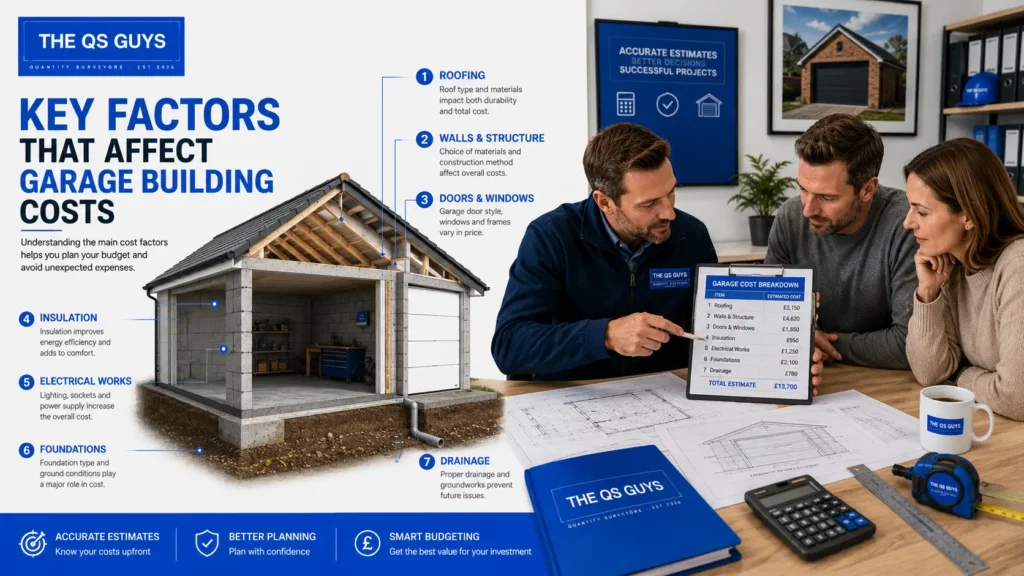
Garage building costs can vary widely because no two projects are exactly the same. A simple single garage on a level site will usually cost less than a larger detached garage with premium materials, electrics, heating, and custom features. Understanding the main cost factors helps homeowners use a builder cost estimator garage UK guide more accurately and prepare a realistic budget before requesting quotes.
Garage Size and Dimensions
Garage size is one of the biggest cost drivers because it affects the amount of labour, materials, groundwork, roofing, and finishing required. A larger floor area means more concrete, more walling, more roof coverage, and often more time on-site, all of which increase the overall budget.
A single garage is usually the most cost-effective option because it has a smaller footprint and a simpler layout. A double garage costs more, but the price does not always double because some labour and setup costs are shared across the larger build. A detached garage may also cost more than an attached garage because it often needs separate foundations, walls, roof structure, drainage, and utility connections.
- Floor area: A bigger garage requires more materials and labour, so even a small increase in width or length can affect the final quote.
- Garage type: Single, double, attached, and detached garages each have different cost considerations.
- Future use: A garage designed for storage, parking, or workshop use may need different dimensions and features.
Construction Materials
The materials used for the walls and structure have a major impact on both upfront cost and long-term durability. Choosing the right material depends on budget, appearance, maintenance needs, insulation goals, and how well the garage should match the existing property.
Brick garages are often chosen for their strong appearance and long-lasting finish, especially when the garage needs to blend with a brick-built home. Blockwork garages can be practical and durable, often providing a solid structure at a more flexible price point. Timber garages may suit homeowners looking for a faster or more characterful build, while steel-framed garages can be useful for larger spaces, workshops, or more industrial-style designs.
- Brick garages: Brick offers durability and visual appeal, but labour and material costs can be higher.
- Blockwork garages: Blockwork is strong, practical, and often used as a reliable base for rendered or finished garages.
- Timber garages: Timber can create a warm, natural look, but it may require more ongoing maintenance.
- Steel-framed garages: Steel-framed construction can suit larger spans and functional designs, especially where strength and open space matter.
Roof Design and Materials
The roof is another key part of a garage cost estimate because it affects weather protection, appearance, structural design, and labour time. A basic flat roof is often more affordable, while a pitched roof usually costs more due to added materials, framing, and installation work.
Flat roofs can work well for simple garages, especially where height limits apply. However, they need proper drainage and high-quality waterproofing to avoid long-term issues. Pitched roofs are often more attractive and can match the main house, but they usually require more planning and a higher budget. Tile and slate options can also increase costs depending on the finish, weight, and installation requirements.
- Flat roofs: A flat-roof garage is often cheaper to build, but drainage and waterproofing must be done correctly.
- Pitched roofs: A pitched-roof garage usually costs more but can improve appearance and long-term weather performance.
- Tile options: Concrete or clay tiles can help the garage match the main property.
- Slate options: Slate can create a premium finish, but it usually comes with higher material and labour costs.
Garage Door Options
Garage doors can make a noticeable difference to the final price because they vary in size, design, security level, insulation, and operating system. A simple manual up-and-over door will usually cost less than an insulated electric roller or sectional door.
Manual doors are usually the most budget-friendly option and can work well for basic garages. Roller doors save space and are practical for short driveways. Sectional doors offer a clean finish and good insulation options, while electric garage doors add convenience and security but increase the overall cost.
- Manual doors: Manual doors are cost-effective and suitable for simple garage builds.
- Roller doors: Roller doors are space-saving and useful when driveway space is limited.
- Sectional doors: Sectional doors provide a neat finish and can improve insulation and security.
- Electric doors: Electric garage doors offer convenience but require a power supply, installation, and possible maintenance.
Ground Conditions and Foundations
Ground conditions can significantly affect garage building costs because the structure needs a stable base. If the site is level, clear, and easy to access, foundation work is usually more straightforward. If the ground is uneven, soft, sloped, or difficult to excavate, costs can rise quickly.
Foundations are not the place to cut corners. Poor foundation work can lead to cracking, movement, drainage problems, and expensive repairs later. A builder may need to assess soil conditions, drainage, access, and excavation depth before providing an accurate garage construction quote.
- Site preparation: Clearing vegetation, removing old structures, and levelling the ground can add to the project cost.
- Excavation work: Deeper or more difficult excavation may be needed if the soil is unstable or the site is sloped.
- Soil conditions: Clay, soft ground, or poorly drained soil can require stronger foundation solutions.
- Access limits: Tight access can make it harder to bring in machinery, materials, and concrete, which may increase labour costs.
Utilities and Additional Features
Extra features can turn a basic garage into a more useful, comfortable, and secure space, but they also increase the budget. Homeowners who want to use the garage as a workshop, utility area, home gym, or storage space may need more than a basic shell.
Lighting and power points are common additions, especially if the garage will be used regularly. Heating can make the space more comfortable during colder months, while plumbing may be useful for utility sinks, washing machines, or future conversion plans. These features should be planned early because adding them later can be more disruptive and expensive.
- Lighting: Good lighting improves safety, visibility, and usability, especially for workshops or storage areas.
- Power points: Extra sockets are useful for tools, chargers, appliances, and electric garage doors.
- Heating: Heating may be worth considering if the garage will be used as a workspace or hobby area.
- Plumbing connections: Plumbing can add flexibility, but it may require drainage work, water supply, and additional approvals.
A garage cost estimate becomes much more accurate when these details are considered early. By thinking carefully about size, materials, roofing, doors, foundations, and extra features, homeowners can plan a garage that suits their budget, adds practical value, and avoids costly surprises during construction.
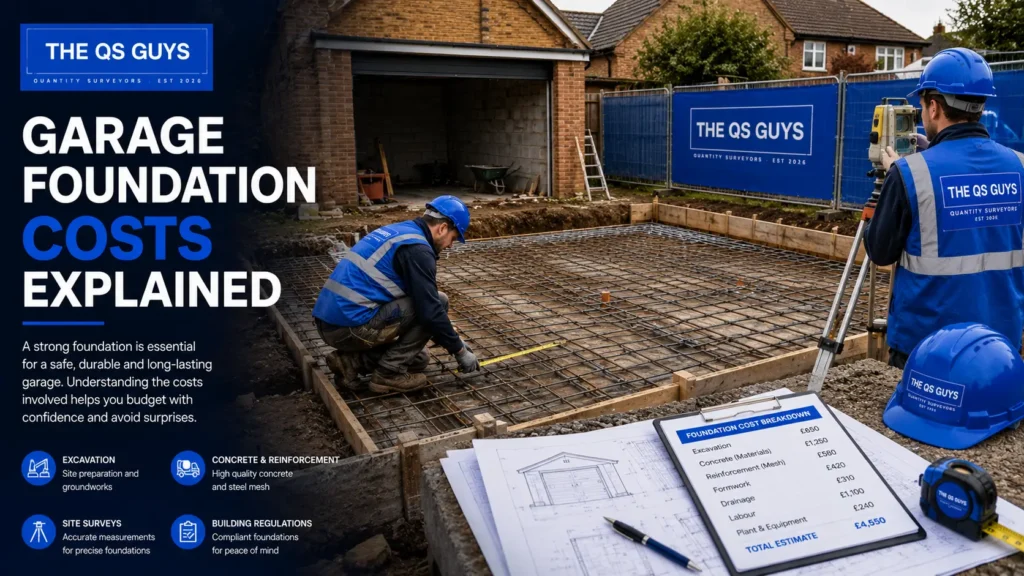
Garage Foundation Costs Explained
Garage foundation costs are one of the most important parts of any builder cost estimator garage UK calculation because the foundation supports the full structure above it. A garage may look simple from the outside, but its base must be suitable for the soil, building size, vehicle weight, drainage needs, and long-term movement of the ground. Poor foundation planning can lead to cracking, uneven floors, damp problems, and expensive repairs later.
Why Foundations Matter
Foundations give a garage the strength it needs to stay level, stable, and safe over time. Even a basic single garage places steady weight on the ground, and that pressure increases if the garage is built with brick, blockwork, a pitched roof, storage areas, or heavy doors. The right foundation spreads that load properly so the structure does not sink, shift, or crack.
A well-planned foundation also protects the garage from common UK weather conditions. Rain, frost, and changing soil moisture can all affect the ground beneath a building. If the foundation is too shallow, poorly reinforced, or built on unsuitable ground, movement may appear through wall cracks, uneven flooring, or gaps around doors and frames.
- Structural stability: A properly designed foundation keeps the garage level and supports the walls, roof, doors, and floor without unnecessary movement.
- Long-term durability: Strong foundations help reduce the risk of cracks, damp issues, settlement, and future repair costs.
- Vehicle support: Garages used for parking need a base that can handle repeated vehicle loads without surface damage or sinking.
- Weather resistance: Good foundation design helps protect the structure from frost movement, water pooling, and ground-softening caused by heavy rain.
Typical Foundation Costs In The UK
Typical foundation costs in the UK depend on the size of the garage, the foundation type, soil conditions, excavation depth, concrete volume, labour rates, and whether reinforcement is required. A simple single-garage foundation on clear, level ground will usually cost less than a double-garage base on sloping or poor-quality ground. Costs can also rise if the site needs extra drainage, deeper excavation, or specialist preparation before concrete is poured.
Concrete slab foundations are a common choice for garages because they provide both the structural base and the finished garage floor. This can make them practical and cost-effective for straightforward builds. However, the slab must be thick enough, properly compacted underneath, and laid with suitable damp-proofing and reinforcement where needed.
Trench foundations may be used when the garage has brick or block walls that need stronger edge support. In this setup, trenches are dug beneath the wall lines and filled with concrete. This can be more labour-intensive than a simple slab, but it may be necessary for heavier structures or certain ground conditions.
Reinforced foundation options are often used when extra strength is needed. This may apply to larger garages, poor ground, sloped sites, or garages that will include heavy storage, workshop equipment, or future conversion potential. Reinforcement adds cost, but it can be a sensible investment when the garage needs greater load-bearing capacity.
- Concrete slab foundations: Often suitable for standard garages and can act as both the base and floor, making them a practical option for many UK homeowners.
- Trench foundations: Common for brick-built or block-built garages where the walls need deeper structural support around the perimeter.
- Reinforced foundations: Useful for larger garages, weak ground, heavy-use spaces, or projects where long-term strength is a priority.
- Cost variation: Prices can change significantly based on excavation depth, concrete quantity, labour, access, drainage, and local builder rates.
Site Preparation Expenses
Site preparation can have a major impact on garage foundation costs because the ground must be ready before any concrete or structural work begins. A flat, clear, easy-access site will usually be cheaper to prepare than a tight, sloped, overgrown, or poorly drained area. This is why a reliable garage cost estimate should always include a site-specific assessment rather than relying only on average online figures.
Ground clearance may involve removing old sheds, vegetation, tree roots, paving, debris, or an existing garage base. If the existing ground is uneven or unstable, the builder may need to excavate deeper, bring in compacted hardcore, or adjust levels before forming the foundation. These preparation steps add cost, but they help prevent future movement and drainage problems.
Drainage is another important consideration. Water should not sit around the garage base because it can soften the ground, increase damp risk, and reduce the lifespan of the structure. Depending on the site, the builder may need to plan surface water runoff, drainage channels, soakaways, or falls in the concrete slab to keep water moving away from the garage.
Access limitations can also affect the final price. If machinery, concrete lorries, skips, or delivery vehicles cannot easily reach the work area, labour time usually increases. Builders may need smaller equipment, manual digging, wheelbarrow transport, or extra handling, all of which can raise the overall cost.
- Ground clearance: Removing old structures, vegetation, waste, or uneven surfaces prepares the site for accurate excavation and stable construction.
- Drainage considerations: Proper water management helps prevent damp problems, ground-softening, and long-term damage around the garage base.
- Access limitations: Narrow driveways, tight gardens, steep plots, or restricted parking can increase labour time and delivery costs.
- Ground conditions: Clay soil, made ground, tree roots, or soft areas may require deeper foundations, extra compaction, or reinforced solutions.
A garage foundation is not the best place to cut corners. Getting the base right from the start helps protect the full build, keeps future repair costs down, and gives homeowners a more accurate understanding of their total garage construction budget.
Planning Permission And Building Regulations
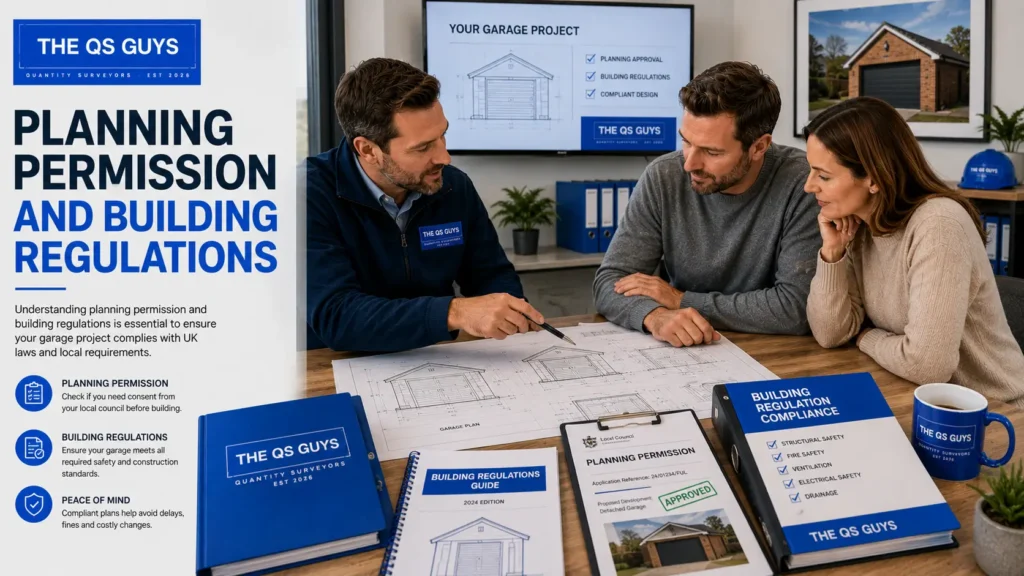
Planning permission and building regulations are two of the most important areas to check before building a garage in the UK. They are often confused, but they serve different purposes. Planning permission looks at whether the garage is acceptable for the location, size, appearance, and impact on nearby properties, while building regulations focus on whether the structure is safe, compliant, and suitable for long-term use. Understanding both early can help you avoid delays, redesign costs, or enforcement issues later.
Do You Need Planning Permission For A Garage?
Many garage projects in the UK may fall under permitted development rights, which means you may not need to submit a full planning application if the garage meets certain limits. This usually depends on the garage’s height, position, size, use, and distance from boundaries. For example, a modest detached garage built within the rear garden may be allowed without formal planning approval, provided it is not used as separate living accommodation and does not exceed permitted limits.
However, permitted development is not automatic in every case. Rules can be different if the property is in a conservation area, national park, listed building setting, or an area where permitted development rights have been restricted. Attached garages, large outbuildings, or garages placed close to highways may also need extra checks before work begins.
- Permitted development rights: These may allow homeowners to build a garage without full planning permission if the structure stays within specific size, height, and placement limits.
- Location restrictions: Homes in protected areas, listed properties, or designated land may face tighter planning controls.
- Change of use: A garage intended for sleeping accommodation, business use, or self-contained living space is more likely to need approval.
- Neighbour impact: Garages that affect light, privacy, access, drainage, or the street scene may require closer review by the local planning authority.
The safest approach is to check with the local council before starting construction. A builder cost estimator for a garage in the UK can help with budgeting, but it should not replace planning advice from the local authority or a qualified professional.
Building Regulations Requirements
Building regulations are separate from planning permission and are designed to make sure the garage is structurally sound, safe, and compliant. Even if planning permission is not needed, building regulations may still apply. This is especially important for attached garages, garages with electrical installations, drainage work, or structures built close to boundaries.
Structural safety is a key requirement. The foundations, walls, roof, and openings must be designed to handle the expected load and remain stable over time. Poor foundation work can lead to cracking, movement, water problems, and expensive repair work, so this is an area where cutting corners can create long-term issues.
Fire safety is also important, particularly when a garage is attached to a house. A garage connected to the main home may need fire-resistant walls, proper separation, and a suitable fire-rated door between the garage and living space. This helps reduce risk if a vehicle, stored fuel, tools, or electrical equipment causes a fire.
- Structural safety: The garage must be built on suitable foundations with walls, beams, and roofing designed to support the structure safely.
- Fire protection: Attached garages often need fire-resistant construction between the garage and the home to protect occupants.
- Electrical work: Lighting, sockets, electric doors, and consumer-unit connections should be completed by a competent electrician.
- Drainage and water control: Surface water must be managed properly to prevent flooding, damp, or damage to nearby structures.
- Boundary considerations: Garages built close to a boundary may need specific fire-safety measures and careful design checks.
A professional builder, building-control officer, or surveyor can confirm which requirements apply to your project. This is especially useful if the garage includes insulation, power, plumbing, storage space, or future conversion potential.
Associated Approval Costs
Approval costs should be included in your garage budget from the beginning. Many homeowners focus on materials and labour but forget about planning applications, drawings, inspections, and professional advice. These costs may seem small compared with the full build, but they can affect the final estimate and project timeline.
Planning application fees vary depending on the type of application and local authority requirements. Some homeowners may also choose to apply for a lawful-development certificate, which provides written confirmation that the garage falls within permitted development rights. This can be useful when selling the property because it gives future buyers confidence that the work was carried out correctly.
Surveyor and inspection costs may also apply. A surveyor can assess the site, prepare drawings, check boundary issues, and advise on compliance. Building-control inspections may be needed at key stages, such as foundation excavation, damp-proofing, structural work, and final completion.
- Planning application fees: These cover the cost of submitting a formal application when planning permission is required.
- Lawful-development certificate: This can provide written confirmation that the garage is allowed under permitted development rules.
- Architect or designer fees: Drawings may be needed for planning, building regulations, or accurate builder quotations.
- Surveyor fees: A surveyor can help assess boundaries, levels, drainage, and structural considerations before work starts.
- Building-control fees: These may apply when inspections are needed to confirm the garage meets safety and compliance standards.
Including approval costs in your early estimate gives you a more realistic view of the total garage-build budget. It also helps avoid unexpected expenses once the project is already underway.
Checking planning permission and building regulations before building a garage protects your budget, your property, and your peace of mind. With the right advice, clear drawings, and a reliable builder, you can move forward with a garage project that is practical, compliant, and built to last.
Detached Vs Attached Garage Costs
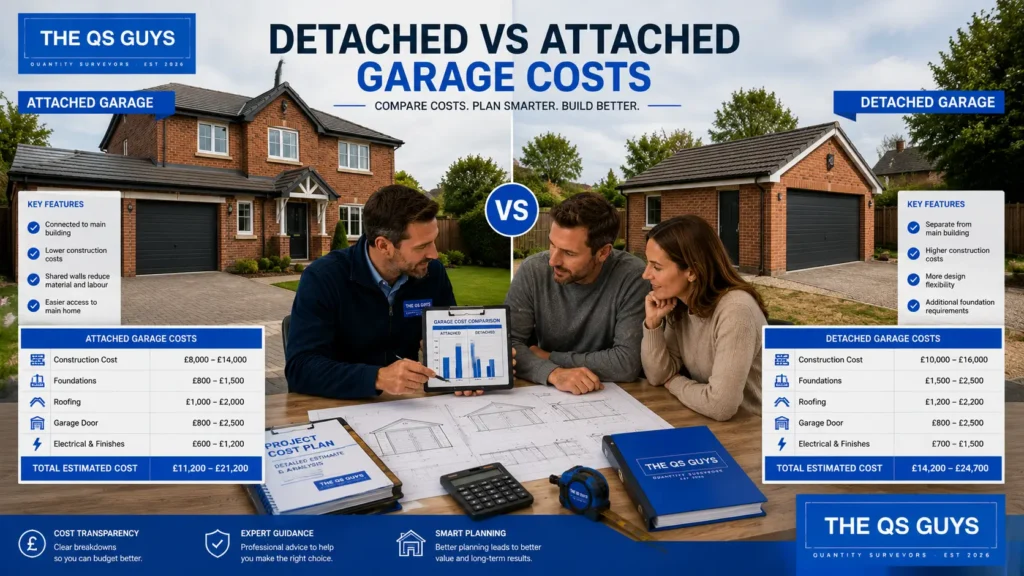
Choosing between a detached and attached garage can make a noticeable difference to your overall garage building cost in the UK. Both options can work well, but the right choice depends on your property layout, available space, budget, planning requirements, and how you plan to use the garage long term. A detached garage often gives more design freedom, while an attached garage can be more convenient and may reduce some construction costs when it connects efficiently with the existing home.
Detached Garage Advantages and Costs
A detached garage is built as a separate structure from the main house, which gives homeowners more flexibility with placement, design, and future use. This can be especially useful if you have a larger plot, want to create a workshop, need extra storage away from the house, or prefer to keep noise and vehicle fumes separate from the living space. Because it stands on its own, a detached garage usually needs its own foundations, walls, roofing, drainage, access route, electrical supply, and sometimes additional groundwork.
The cost of a detached garage is often higher than a simple attached garage because more standalone construction work is required. A basic single detached garage will usually sit at the lower end of the garage cost range, while a double detached garage, brick-built garage, insulated garage, or custom-designed garage can cost significantly more. Features such as a pitched roof, electric garage door, windows, security lighting, internal storage, and workshop fittings will also increase the final price.
- Design flexibility: A detached garage can be positioned where it works best for parking, storage, garden access, or future workshop use.
- Reduced disruption: Because it is separate from the main property, construction may cause less disturbance to everyday life inside the home.
- Higher groundwork costs: Separate foundations, drainage, and utility connections can increase the total builder cost estimate for a garage.
- Better separation: A detached layout can help keep noise, smells, tools, and vehicle storage away from the main living area.
Attached Garage Construction Costs
An attached garage is connected directly to the home, either built onto the side, front, or rear of the property. This type of garage can be convenient because it may allow direct access from the house, making it easier to bring in shopping, store household items, or use the space during bad weather. In some cases, an attached garage can also cost less because one existing house wall may be used as part of the structure, reducing some material and labour requirements.
However, attached garage construction can bring extra complexity. The builder must consider how the new structure connects to the existing property, including the roofline, walls, foundations, damp-proofing, fire safety, insulation, drainage, and access points. If the garage shares a wall with the house, building regulations may require specific fire-resistant materials and proper separation between the garage and living space. These requirements can add to the overall cost, even when the garage appears simpler at first.
- Convenient access: An attached garage can connect directly to the home, which is useful for daily parking, storage, and household access.
- Potential material savings: Using part of the existing building structure may reduce some wall and construction costs.
- Building-regulation requirements: Fire safety, ventilation, insulation, and structural connections may need careful planning and professional input.
- Design limitations: The garage must work with the existing home layout, roof shape, exterior finish, and available side or front space.
Which Option Offers Better Value?
The better-value option depends on more than the initial build cost. A detached garage may cost more upfront, but it can offer greater flexibility, stronger separation from the home, and better potential for workshop use, hobby space, or future adaptation. An attached garage may offer better everyday convenience and could be more cost-effective if the property layout allows a simple, well-integrated design.
From a property-value perspective, both options can be worthwhile if the garage is well built, practical, and suited to the home. Buyers often value secure parking, extra storage, and useful outdoor-building space. However, poor design, limited access, awkward placement, or low-quality materials can reduce the benefit. The best approach is to compare the full long-term value, not just the cheapest quote.
- Lifestyle fit: An attached garage may suit daily household use, while a detached garage may suit storage, tools, vehicles, or workshop activities.
- Future flexibility: A detached garage can sometimes be easier to adapt for different uses, depending on planning and building regulations.
- Resale appeal: A practical, well-designed garage can improve a property’s appeal, especially in areas where parking and storage are important.
- Total project cost: The true cost should include foundations, roofing, drainage, doors, electrics, permissions, finishes, and future maintenance.
When comparing detached and attached garage costs, focus on how the garage will serve your property over time. A cheaper build is not always better if it limits access, storage, durability, or future use, so it is worth getting a detailed builder cost estimate before deciding.
Optional Features That Can Increase Garage Costs
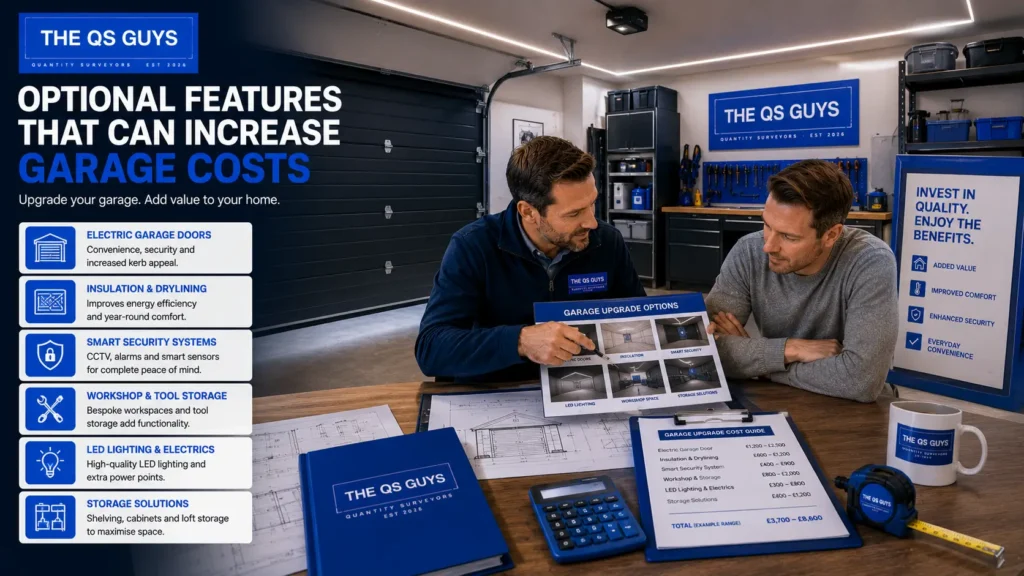
Optional features can make a garage more practical, secure, comfortable, and future-ready, but they also increase the overall garage building cost. When using a builder cost estimator for a garage in the UK, it is important to include these extras early so the quote reflects the real scope of the project rather than only the basic structure.
Garage Conversion Preparation
Preparing a garage for a future living-space conversion can add to the upfront cost, but it may save money later if you plan to turn the garage into an office, gym, bedroom, utility room, or hobby space. Instead of building a basic storage-only garage, the builder may need to consider insulation, ceiling height, damp-proofing, ventilation, lighting, drainage, and stronger internal finishes.
Future-proofing is especially useful if the garage is attached to the house or likely to become part of the main living area. A builder may recommend better wall construction, insulated flooring, improved access, or service connections that make a future conversion easier and less disruptive.
- Structural planning: The garage may need stronger foundations, suitable wall construction, and a layout that can support future changes.
- Service connections: Adding electrical points, lighting routes, plumbing access, or heating options during the build can be cheaper than installing them later.
- Comfort upgrades: Better ventilation, damp protection, and insulation can make the garage easier to convert into a usable year-round space.
Insulation And Energy Efficiency Upgrades
Insulation is one of the most common optional upgrades that can increase garage costs, especially if the garage will be used for more than parking or basic storage. A well-insulated garage can feel more comfortable, reduce heat loss, and protect stored items from cold, damp, and temperature changes.
Wall insulation can be added during construction, particularly in brick, blockwork, or timber-framed garages. Roof insulation is also important because heat often escapes through the roof area, especially in garages with pitched roofs or rooms above. If the garage is attached to the home, good insulation may also help reduce heat transfer between the garage and the house.
- Wall insulation: Insulated walls help control temperature and make the garage more suitable for hobbies, storage, or future conversion.
- Roof insulation: Adding insulation above the ceiling or within the roof structure can improve comfort and reduce heat loss.
- Energy savings: Better insulation can support lower heating demand if the garage is used as a workspace, gym, or utility area.
Security Enhancements
Security upgrades can also raise the cost of building a garage, but they are often worth considering if the garage will store vehicles, tools, bikes, garden equipment, or expensive household items. Basic garage doors may be suitable for simple storage, but stronger doors, better locks, alarms, and smart-garage technology can improve protection and peace of mind.
A secure garage door is usually one of the most important investments. Roller doors, sectional doors, and electric garage doors often cost more than standard manual doors, but they can offer better convenience, insulation, and security. Some homeowners also choose motion sensors, CCTV, smart locks, or app-controlled access for added control.
- Alarm systems: A garage alarm can help protect valuable tools, vehicles, and stored items from theft.
- Smart-garage technology: App-controlled doors, sensors, and cameras allow homeowners to monitor access remotely.
- Secure doors and locks: High-quality doors, reinforced frames, and reliable locking systems can improve the garage’s overall security.
Storage And Workshop Features
Storage and workshop features can turn a basic garage into a more useful, organised, and efficient space. These additions are especially valuable if the garage will be used for DIY, trade work, gardening equipment, sports gear, or household overflow storage. While shelving and workbenches may seem simple, built-in features can increase labour and material costs.
Shelving helps keep items off the floor and makes the garage easier to maintain. A fixed workbench creates a practical area for repairs, tools, and hobbies. Mezzanine storage can be useful in garages with enough roof height, but it may require stronger structural support and careful planning to remain safe and accessible.
- Shelving: Wall-mounted or built-in shelving improves storage capacity and keeps the floor area clear.
- Workbenches: A sturdy workbench is useful for DIY projects, repairs, and tool organisation.
- Mezzanine storage: Overhead storage can maximise space, but it may need additional structural support and safe access planning.
Optional upgrades should be chosen based on how the garage will be used now and in the future. A simple garage may only need secure doors and basic lighting, while a garage used as a workshop or future living space may justify insulation, storage, electrics, and stronger construction from the start.
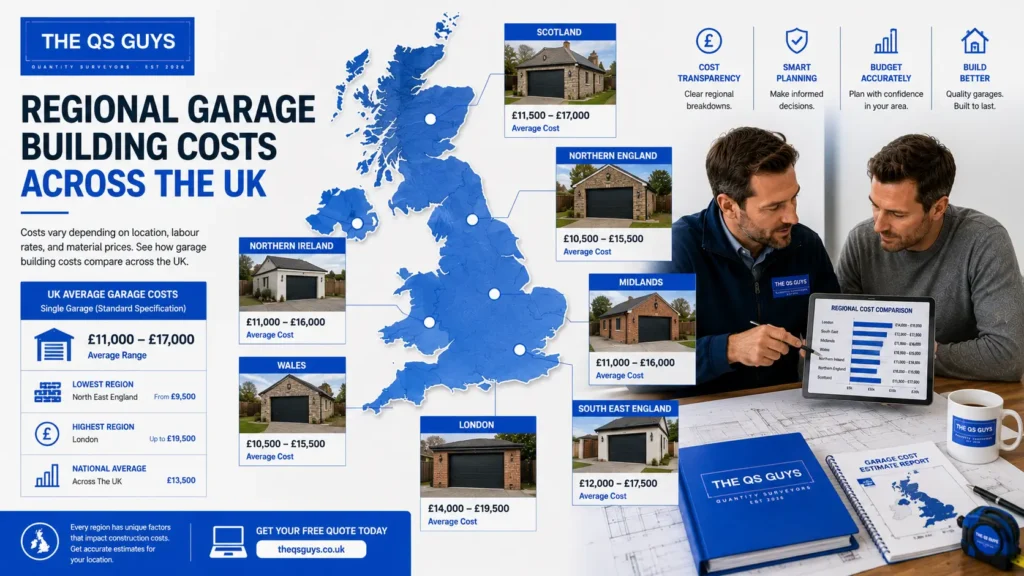
Regional Garage Building Costs Across The UK
Garage building costs can vary widely across the UK, even when the garage size, design, and materials are similar. A builder cost estimator garage UK guide should always consider regional pricing because labour rates, material availability, land conditions, and local demand can all affect the final quote. Understanding these differences helps homeowners set a realistic budget before comparing builders.
London And South East England
London and South East England are usually among the most expensive areas for garage construction. Labour costs are often higher because builders, electricians, roofers, and groundworkers face greater operating expenses, stronger demand, and higher travel or parking costs. Materials may also cost more, especially when deliveries are affected by restricted access, congestion, or limited storage space on-site.
In these areas, even a simple single-garage build can become more expensive if the property has tight access, limited driveway space, or complex planning requirements. Homeowners may also pay more for professional services such as structural drawings, planning advice, or building-control support. For attached garages, costs can rise further if the work involves fire-safety upgrades, drainage alterations, or changes to the existing property structure.
- Labour rates: Builders and specialist trades in London and the South East often charge more due to higher business costs and strong local demand.
- Access issues: Narrow roads, parking restrictions, and small plots can increase delivery, waste-removal, and site-management costs.
- Planning sensitivity: Some areas have conservation rules, listed-building restrictions, or tighter design expectations that can affect garage plans.
Midlands And Northern England
The Midlands and Northern England often provide more moderate garage building costs compared with London and the South East. Labour rates are generally more competitive, and many areas have better site access, lower operating costs, and more available building space. This can make a standard single or double garage more affordable, especially when using common materials such as brick, blockwork, concrete, and standard roof tiles.
That said, prices still vary from one town or city to another. Large cities such as Manchester, Leeds, Birmingham, and Nottingham may have higher costs than nearby rural areas because demand for skilled builders is stronger. Ground conditions can also affect pricing, particularly if the site needs excavation, drainage work, or reinforced foundations before construction begins.
- More competitive pricing: Many homeowners in the Midlands and Northern England may receive lower quotes than those in higher-cost southern regions.
- Urban price differences: Larger cities can still carry premium labour costs due to higher demand and busier construction markets.
- Site-specific costs: Sloped land, poor soil, drainage problems, or restricted access can increase the final garage build price.
Scotland, Wales, And Northern Ireland
Scotland, Wales, and Northern Ireland each have their own regional cost considerations. In many areas, garage building costs may be lower than in London and the South East, but remote locations can bring extra expenses. If materials need to travel long distances or specialist trades are less available, delivery charges and labour costs can increase.
Weather can also influence planning and build schedules, particularly in exposed, rural, coastal, or high-rainfall areas. A garage in these locations may need stronger weatherproofing, improved drainage, durable roof materials, or a more robust foundation design. Local planning rules and building standards should also be checked carefully, as requirements may differ depending on the country, council area, and property type.
- Remote-location costs: Rural and island locations may involve higher transport fees and longer lead times for materials.
- Weather exposure: Coastal or high-rainfall areas may require stronger roof details, drainage planning, and weather-resistant materials.
- Local rules: Planning and building standards can vary, so homeowners should confirm local requirements before starting work.
Why Location Influences Builder Quotes
Location affects garage building quotes because builders price projects based on more than materials and labour alone. A quote also reflects travel time, delivery access, local demand, waste removal, subcontractor availability, and the level of preparation needed on-site. This is why two garages with the same design can have noticeably different prices in different parts of the UK.
Material transportation costs are another important factor. Heavy materials such as concrete, bricks, blocks, steel, timber, and roof tiles can be expensive to deliver, especially when the property is far from suppliers or difficult to access. Labour-market differences also matter because areas with high demand and fewer available tradespeople often attract higher prices.
- Labour availability: If skilled builders are in short supply, quotes may be higher due to demand.
- Material delivery: Long-distance transport, limited access, or small delivery windows can increase costs.
- Local site conditions: Soil type, drainage, slope, and access can change the amount of preparation work required.
- Compliance needs: Planning permission, building regulations, and inspections can vary by location and affect the overall budget.
When estimating garage building costs across the UK, it is best to treat national averages as a starting point rather than a fixed price. A detailed local quote from an experienced builder will give a more accurate picture of the true cost, especially when it accounts for your site conditions, preferred materials, garage size, and regional pricing.
How To Get An Accurate Garage Building Estimate
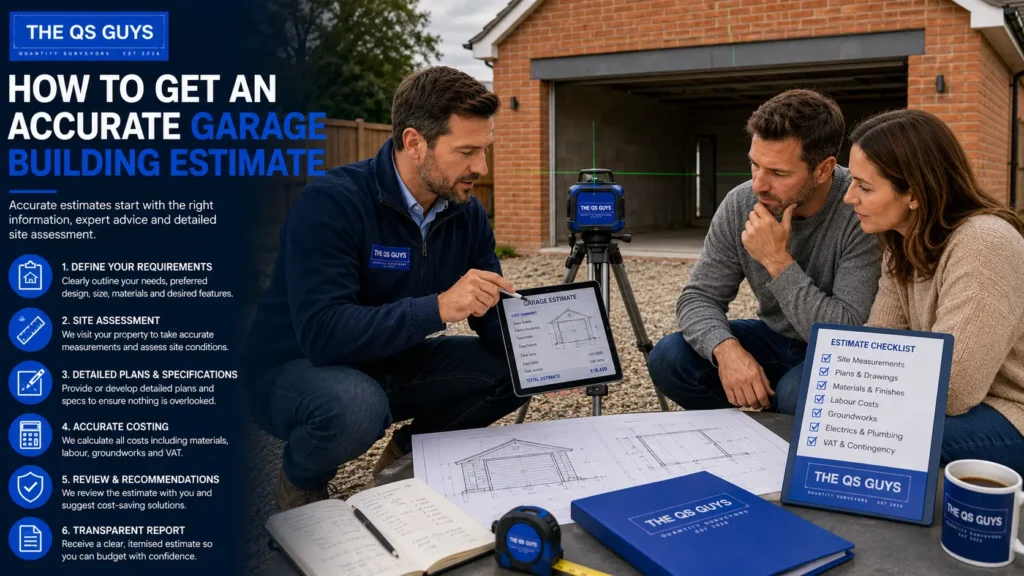
Getting an accurate garage building estimate starts with giving your builder clear, complete, and realistic project information. A reliable estimate is not just based on the size of the garage. It also depends on the site condition, design choices, intended use, materials, access, drainage, foundations, roofing, electrics, and any planning or building-control requirements. The more detail you provide at the beginning, the easier it is for a builder to prepare a quote that reflects the true cost of the work rather than a rough guess.
Information Builders Need
Before a builder can give a useful garage construction estimate, they need to understand the site and the purpose of the build. A basic online garage cost estimator can give a starting figure, but a professional quote needs project-specific details. This helps the builder assess labour, materials, preparation work, and possible risks before pricing the job.
- Site measurements: Builders need accurate measurements of the available space, including the width, length, slope, boundary position, and access points. These details help determine the garage size, foundation requirements, drainage needs, and whether machinery or materials can be brought onto the site easily.
- Design preferences: Your chosen design has a major impact on the final garage building cost. A simple single garage with a flat roof will usually cost less than a double garage with a pitched roof, brickwork, insulation, windows, and an electric door.
- Intended garage use: A garage used only for parking will usually have different requirements from one used as a workshop, home gym, storage area, or future conversion space. If you need lighting, power sockets, heating, plumbing, insulation, or reinforced flooring, these should be included in the estimate from the start.
Comparing Multiple Quotes
Getting more than one garage building quote is one of the best ways to understand fair pricing and avoid overpaying. However, the cheapest quote is not always the best choice. A low price may exclude important items such as groundwork, waste removal, electrics, drainage, or building-control fees, which can lead to extra costs later.
- Detailed breakdowns: Look for quotes that clearly separate labour, materials, foundations, roofing, doors, electrics, drainage, and finishing work. A transparent quote makes it easier to compare builders and understand exactly what is included.
- Like-for-like pricing: Make sure each builder is quoting for the same garage size, materials, roof type, specification, and level of finish. If one quote includes insulation and electrics while another does not, the prices cannot be compared fairly.
- Builder experience: Ask whether the builder has completed similar garage projects before. A builder with real garage construction experience is more likely to identify site issues early and provide practical advice about cost, design, and compliance.
- Questions to ask: Ask how long the work will take, whether planning permission may be needed, who handles building-control matters, what materials are included, and how unexpected costs are managed. Clear answers show professionalism and help build trust before work begins.
Avoiding Hidden Costs
Hidden costs are common when the original garage estimate is too vague or based on incomplete information. Many homeowners focus on the visible parts of the garage, such as walls, roof, and doors, but overlook the preparation and compliance work that can affect the total price. A realistic budget should include both the main construction cost and a sensible allowance for unexpected items.
- Common overlooked expenses: Site clearance, excavation, skip hire, drainage, foundation upgrades, electrical work, planning applications, building-control inspections, and access restrictions can all increase the final cost. These should be discussed before accepting a quote.
- Ground-condition issues: Poor soil, tree roots, uneven ground, or drainage problems can make foundations more expensive. A site visit helps the builder identify these issues before work begins.
- Specification changes: Costs can rise if you change the garage size, roof style, door type, materials, or internal features after the quote has been agreed. Finalising your design early helps keep the project on budget.
- Contingency budgeting: It is sensible to allow a contingency of around 10 to 15 percent for unexpected costs. This does not mean you should expect problems, but it gives you financial flexibility if extra groundwork, material changes, or compliance work is needed.
A well-prepared garage building estimate gives you more than a price. It helps you understand the full scope of the project, compare builders fairly, avoid hidden costs, and plan your budget with confidence before construction begins.
Ways To Reduce Garage Construction Costs Without Compromising Quality
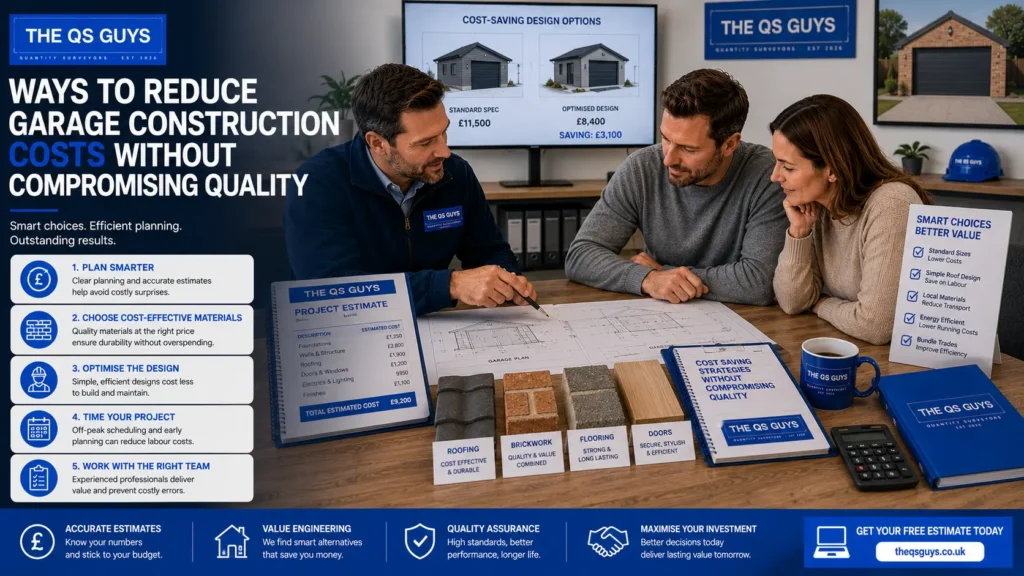
Reducing garage construction costs does not mean choosing the cheapest materials or cutting corners on important structural work. A well-planned garage build can stay within budget while still delivering long-term durability, practical storage, secure parking, and good property value. The key is to make smart decisions early, keep the design realistic, and work with builders who understand how to control costs without affecting safety or quality.
Simplifying the Design
A simple garage design is usually more cost-effective because it requires fewer specialist materials, less complex labour, and a shorter construction timeline. Standard layouts are often easier for builders to price accurately, which can also reduce the risk of unexpected costs once work begins.
- Standard layout: A rectangular or square garage is generally cheaper to build than a custom-shaped structure because it uses materials more efficiently and reduces labour time.
- Cost-effective dimensions: Choosing common single-garage or double-garage sizes can help keep the project affordable because standard doors, roofing materials, and structural components are easier to source.
- Simple roof design: A basic flat roof or straightforward pitched roof usually costs less than a complex roofline with multiple angles, valleys, or decorative features.
- Practical layout choices: Placing doors, windows, and access points in sensible positions can reduce extra framing, wiring, and finishing costs.
Choosing Materials Wisely
Material selection has a major impact on the total garage-building cost. The cheapest option is not always the best value, especially if it leads to higher maintenance or earlier repairs. A better approach is to compare materials based on durability, lifespan, appearance, insulation needs, and ongoing upkeep.
- Brick and blockwork: These materials are strong, durable, and suitable for many UK garage builds, although they can cost more than basic timber or metal options.
- Timber construction: Timber can be a cost-effective choice for some detached garages, but it needs proper treatment and maintenance to protect it from moisture and weather damage.
- Roofing materials: Standard roofing sheets, tiles, or felt systems can keep costs controlled, while premium finishes may increase the budget without always being necessary.
- Garage doors: A manual up-and-over door is usually more affordable than an electric roller or sectional door, but homeowners should also consider security, convenience, and long-term use.
- Insulation choices: If the garage will only be used for parking and storage, full insulation may not be required. If it may become a workshop, gym, or utility space, adding insulation during construction can be more cost-effective than retrofitting it later.
Planning Ahead
Good planning is one of the most reliable ways to reduce garage construction costs. Many budget problems happen when homeowners change the design during the build, overlook site conditions, or forget to include essential features in the original estimate.
- Clear project scope: Decide early whether the garage will be used for parking, storage, a workshop, or future conversion, as this affects foundations, insulation, electrics, and ventilation.
- Detailed quote review: Ask for itemised quotes so you can see what is included, what is excluded, and where the main costs are coming from.
- Site preparation: Check access, drainage, ground conditions, and clearance needs before work begins to avoid delays and additional labour costs.
- Planning and compliance: Confirm whether planning permission or building regulations apply before construction starts, as delays or corrections can become expensive.
- Contingency budget: Set aside a realistic allowance for unexpected costs, especially if the site has poor ground conditions or limited access.
Working With Experienced Builders
An experienced builder can often save money by preventing avoidable mistakes, improving build efficiency, and recommending practical alternatives that suit the budget. While a cheaper quote may seem attractive at first, poor workmanship can lead to higher repair costs, delays, or compliance problems later.
- Accurate estimating: Skilled builders are more likely to provide realistic garage-construction estimates based on labour, materials, site access, foundations, and local conditions.
- Better sequencing: A well-organised builder can manage each stage efficiently, from excavation and foundations to roofing, doors, electrics, and finishing.
- Problem prevention: Experienced tradespeople can identify issues early, such as drainage concerns, weak ground, boundary restrictions, or unsuitable materials.
- Quality control: A reliable builder will understand where savings are sensible and where quality must not be reduced, especially with foundations, structural work, roofing, and weatherproofing.
- Long-term value: Good workmanship helps the garage last longer, perform better, and add more practical value to the property.
A cost-effective garage build comes from careful planning, sensible design choices, durable materials, and skilled workmanship. By focusing on value rather than simply choosing the lowest price, homeowners can control their budget while still creating a strong, practical, and long-lasting garage.
If you are considering building a garage and want a more accurate understanding of potential costs, explore our expert resources and planning guides designed to help homeowners make confident decisions. Our insights cover budgeting, construction considerations, planning requirements, and cost-saving opportunities, giving you the information you need to move forward with clarity and avoid costly surprises throughout your project.
References
- Homebuilding & Renovating: How Much Does It Cost to Build a Garage?
https://www.homebuilding.co.uk/advice/garage-cost - Checkatrade: How Much Does a Garage Cost to Build in the UK?
https://www.checkatrade.com/blog/cost-guides/build-garage-cost/ - MyJobQuote: Garage Building Cost Guide
https://www.myjobquote.co.uk/costs/building-a-garage - HouseholdQuotes: Garage Construction Costs in the UK
https://householdquotes.co.uk/garage-cost/ - PriceYourJob: Garage Building Costs Explained
https://www.priceyourjob.co.uk/garage-building-cost/
FAQs: About Builder Cost Estimator Garage UK
What is a builder cost estimator garage UK guide used for?
A builder cost estimator garage UK guide helps homeowners understand the likely cost of building a garage before requesting quotes. It considers size, materials, labour, foundations, roofing, doors, and location.
How much does it cost to build a garage in the UK?
Garage building costs in the UK vary depending on the design, size, materials, and site conditions. A basic single garage usually costs less than a double or custom-built garage with insulation, electrics, and premium finishes.
What affects the cost of building a garage?
The main cost factors include garage size, construction materials, foundation type, roof design, labour rates, garage doors, windows, electrics, drainage, and site access. Regional labour prices can also make a noticeable difference.
Is a detached garage more expensive than an attached garage?
A detached garage can cost more because it may need separate foundations, walls, utilities, drainage, and access work. An attached garage may be more cost-effective, but it can involve extra structural and fire safety requirements.
Do I need planning permission to build a garage in the UK?
Some garages may fall under permitted development rights, but this depends on size, height, location, and how the garage will be used. Always check local planning rules before starting work.
Do building regulations apply to garage construction?
Building regulations may apply, especially if the garage is attached to the house, includes electrics, has drainage, or is built close to a boundary. A qualified builder or local authority can confirm what applies.
What is the cheapest type of garage to build?
A simple single garage with a basic design, standard materials, and minimal extras is usually the cheapest option. Costs rise when adding insulation, electric doors, plumbing, pitched roofing, or bespoke finishes.
How can I reduce garage building costs without losing quality?
Choose a simple layout, avoid unnecessary custom features, compare several builder quotes, and plan the project carefully before work begins. Spending properly on foundations and weatherproofing is still important for long-term value.
Should I use an online garage cost calculator or get a builder quote?
An online estimator is useful for early budgeting, but it cannot replace a detailed builder quote. A builder can assess your site, access, ground conditions, materials, and local requirements more accurately.
Does building a garage add value to a UK property?
A well-built garage can improve storage, parking, security, and overall property appeal. The added value depends on location, build quality, design, and whether the garage suits the needs of future buyers.
Conclusion
Understanding the true cost of building a garage in the UK involves much more than looking at a basic online estimate. Factors such as garage size, construction materials, foundation requirements, roofing choices, labour rates, site conditions, planning requirements, and additional features can all have a significant impact on the final project cost. While online garage cost calculators can provide a useful starting point for budgeting, they cannot account for the unique details of your property or the specific requirements of your build. This is why obtaining detailed quotations from experienced builders is essential, as professional assessments can identify potential challenges, provide accurate pricing, and help prevent unexpected expenses later in the project. Taking the time to carefully plan your garage build, establish a realistic budget, and ensure compliance with local planning and building regulations can help create a smoother construction process and deliver better long-term value. Whether you are considering a simple single garage or a larger custom-built structure, consulting a qualified builder or garage specialist can provide a tailored cost estimate based on your location, property conditions, and project goals, helping you move forward with confidence and make informed decisions from the very beginning.